Northern England’s Industrial Legacy
Northern England is famous for its major cities, spectacular landscapes, and wild coastlines, as well as an industrial history that for almost two centuries formed the backbone of England’s prosperity.
In the 19th century, the North bristled with textile mills. Smoke from their chimneys often blocked out the sun, while wisps of cotton choked workers’ lungs and caused the dreaded byssinosis, or brown lung disease.
Today, few mills remain, most having been abandoned, torn down, or repurposed as housing, restaurants, or cultural spaces. Fortunately for history lovers, a handful have been preserved to showcase the conditions in which many of our ancestors toiled.
Preserving the Mill Experience
Quarry Bank Mill
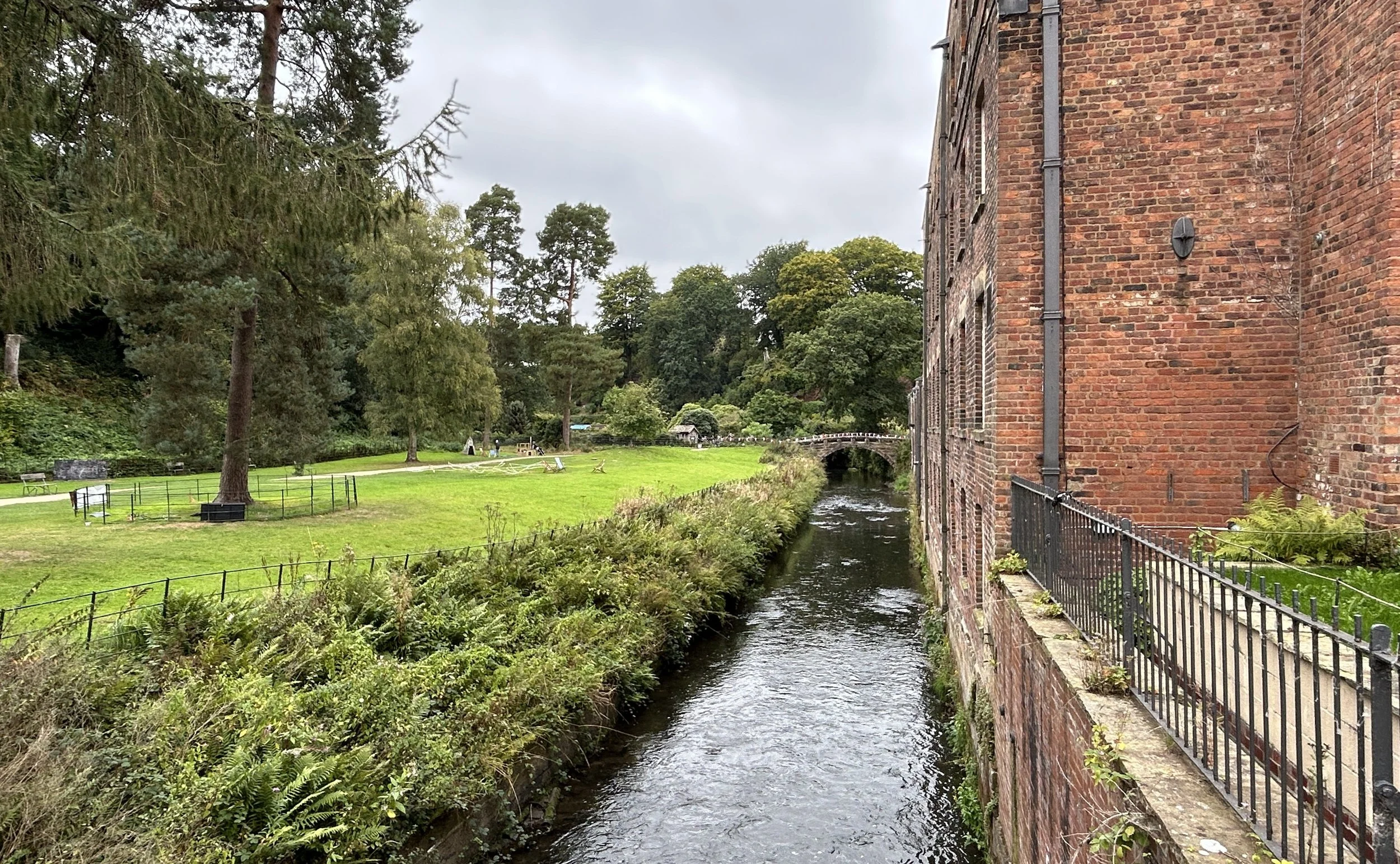
One of the most beautifully preserved and welcoming of these sites is Quarry Bank Mill in Cheshire. Run as a museum by the National Trust, Quarry Bank Mill is described as “one of Britain’s greatest industrial heritage sites, home to a complete industrial community.”
The property is extensive, with several notable areas: the mill itself; the apprentice house, where child workers slept and were educated; the estate where the owners lived for generations; and amenities such as a playground, riverside walks, restaurants, and an excellent shop.
Researching The Choir
On a recent trip to England, I visited Quarry Bank Mill to see firsthand what some of the characters in my new novel, The Choir, would have experienced during a typical workday. Set in Briarstown, a fictional mill town in Yorkshire, the novel includes many characters who work, or have worked, in the local cotton mill.
I wanted to understand how a typical cotton mill from the period looked, smelled, and, most importantly, sounded.
Built in 1784, Quarry Bank Mill operated under the stewardship of Samuel Greg and his wife, Hannah Lightbody. Their approach to labor relations, while paternalistic by modern standards, was considered enlightened for the time. They provided medical care and limited education for child workers, all of whom labored more than 70 hours a week until working hours were gradually shortened over the following century.
By 1898, when The Choir takes place, conditions for children had improved, but many still left school at eleven or twelve to work in the mills. For Eliza Kingwell, the novel’s main character, keeping her five daughters out of the mill is one of the reasons she schemes to leave her husband and the town to start a new life.
Inside the Mill: Sound, Danger, and Power
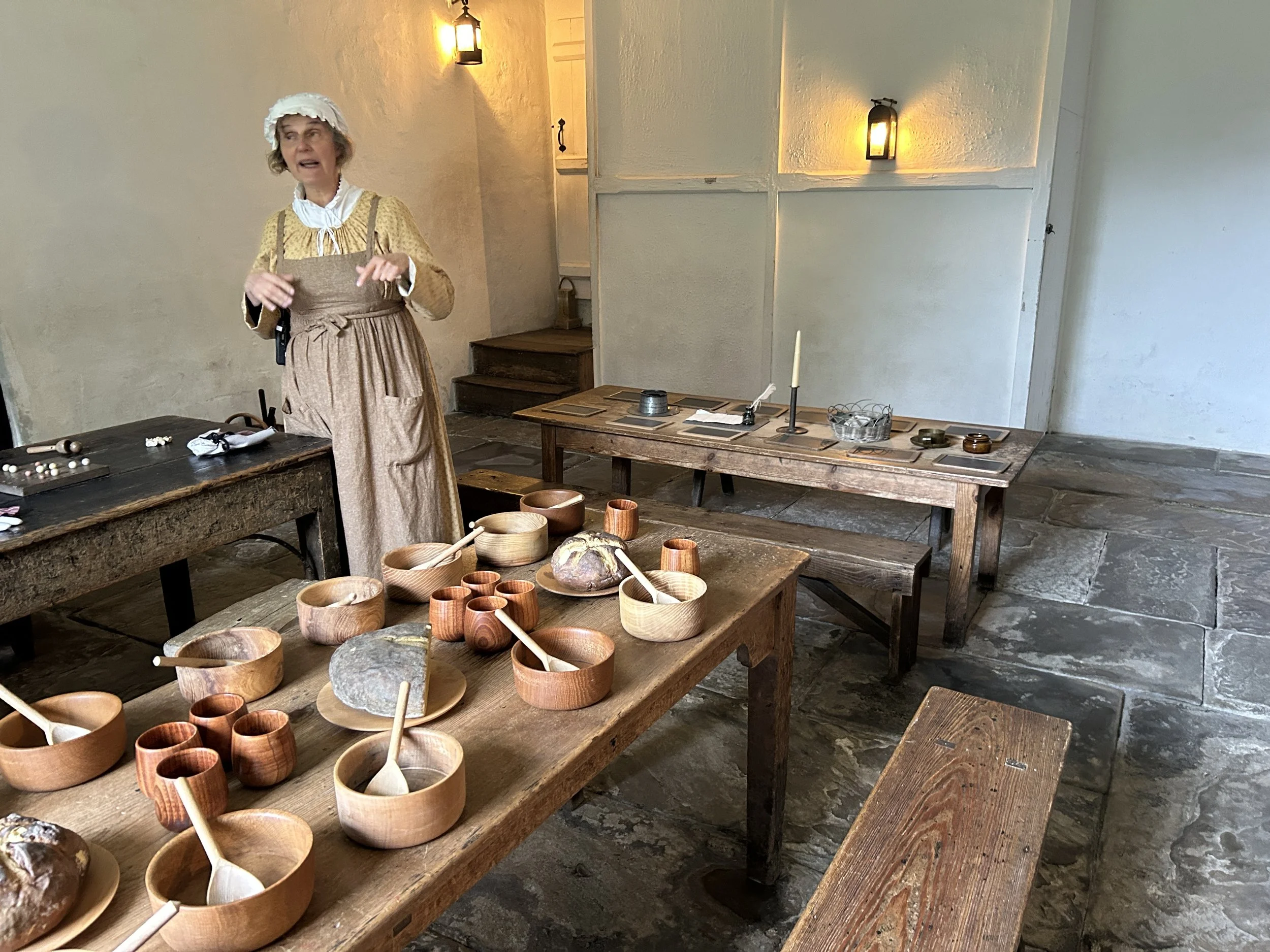
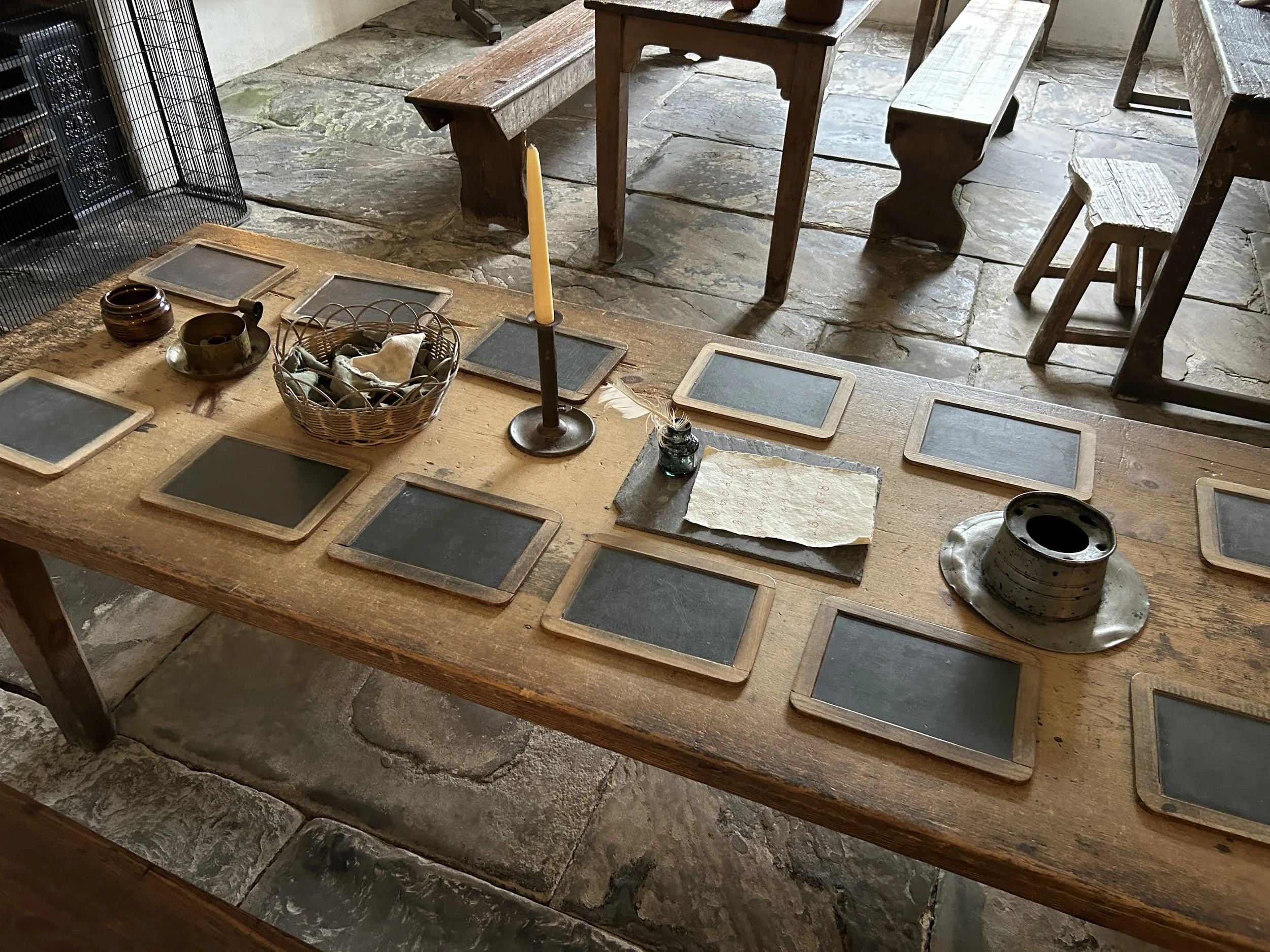
My visit began with a guided tour of the apprentice house, where children, many of them orphans, were housed and given a rudimentary education when they weren’t toiling in the mills. The costumed guide was a wealth of information about the early 19th century, when the apprentice system was most active.
Apprentice House Guide
Schoolroom
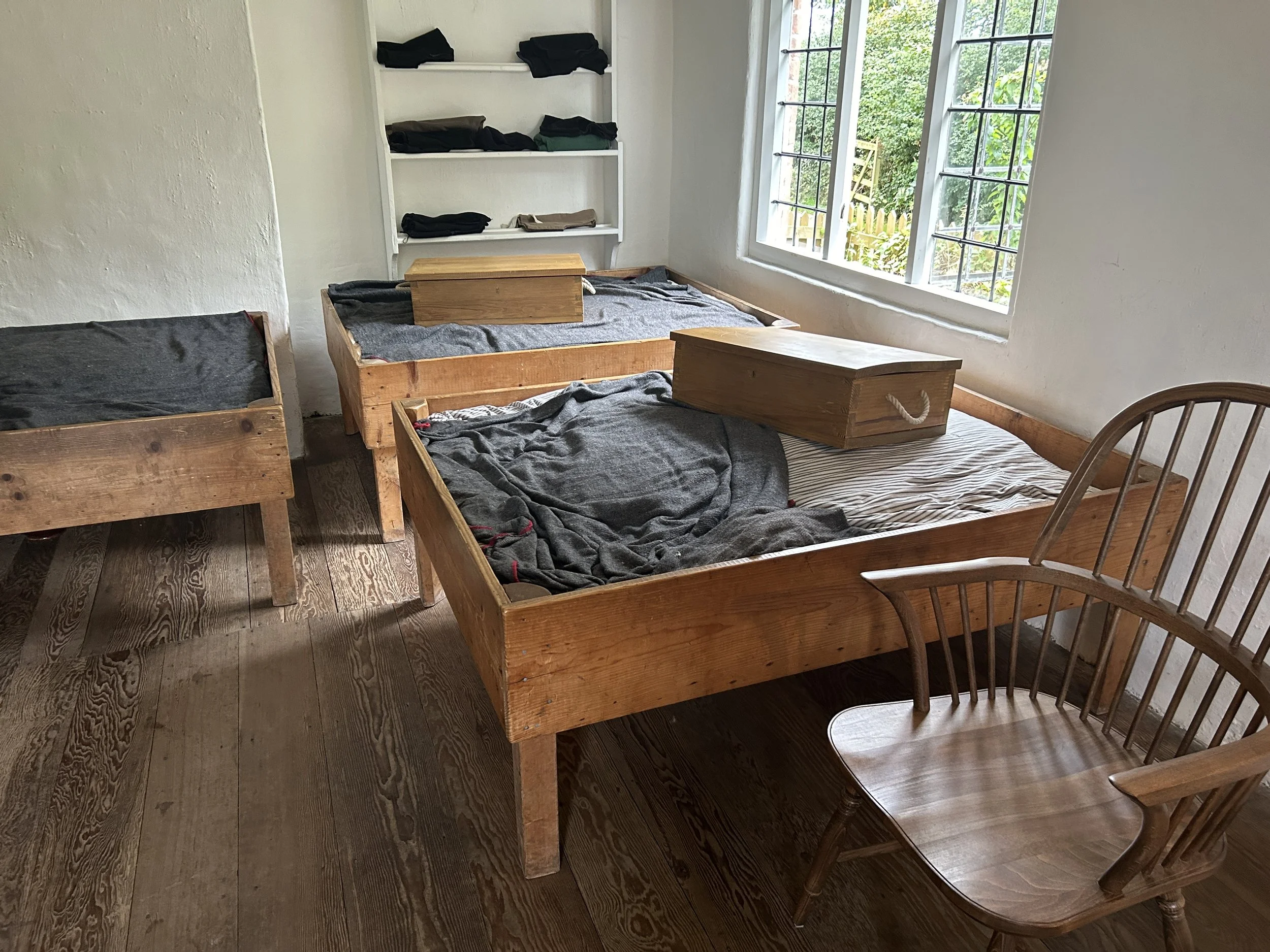
Children’s Beds
My primary interest, however, was the imposing five-story building beside the river, where the workings of a 19th-century cotton mill have been faithfully restored. On the self-guided tour, I had ample time to study the exhibits and chat with the attendants, all of whom were enthusiastic and knowledgeable.
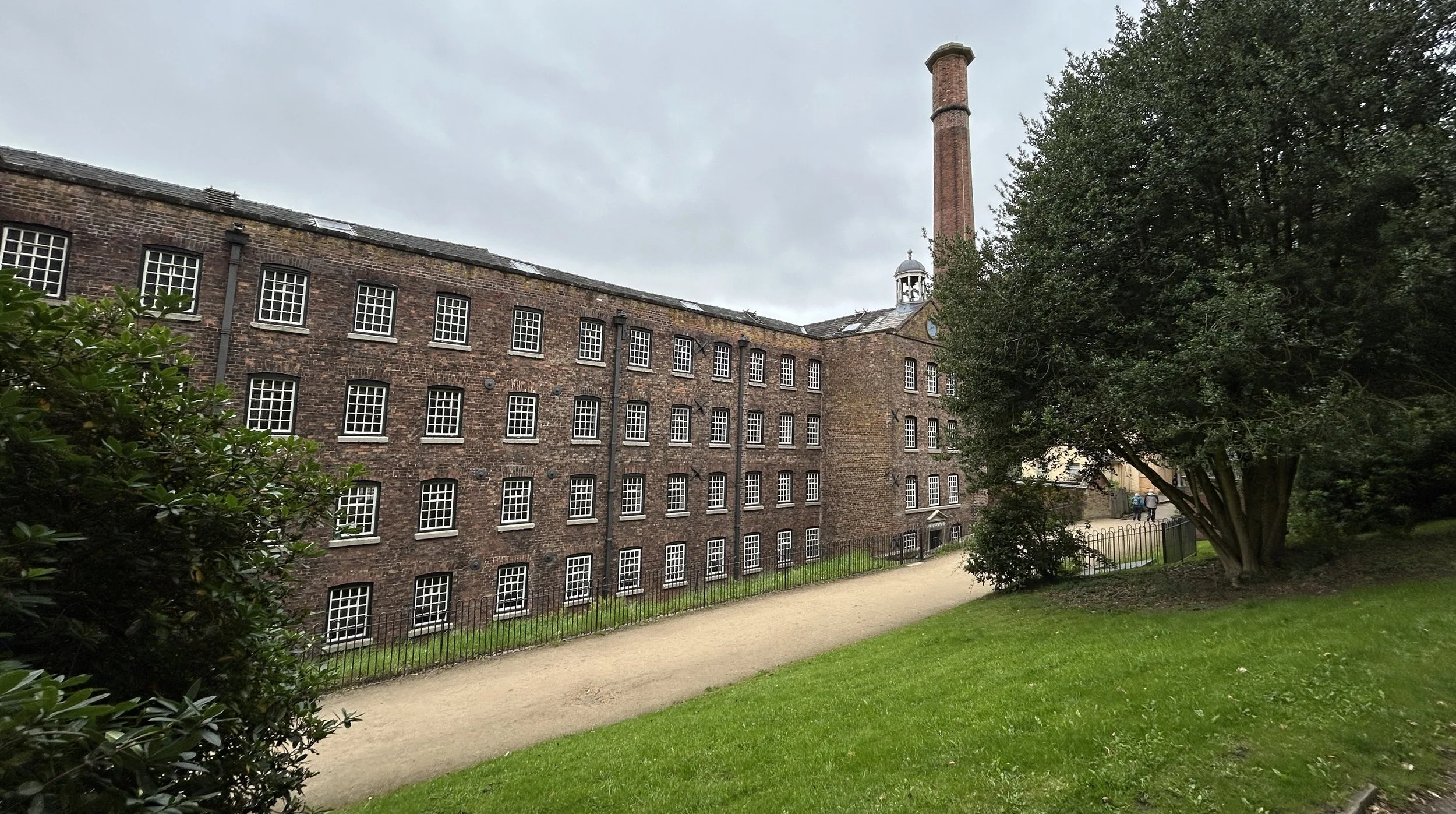
Cotton Mill
A highlight was the live machine demonstration. One of my main reasons for visiting Quarry Bank was to hear the looms in operation. I expected the sound to be overwhelming, but I was unprepared for just how deafening it was. In a room full of looms, the attendant, who wisely wore headphones, turned on some of the machines.
I absorbed the experience, mentally cataloguing words such as clattering, clanging, crashing, and cacophonous. It was sobering to imagine enduring twelve or more hours a day surrounded by such relentless noise.
Even more sobering was the realization that many of my own ancestors worked in mills during the 19th century. My great-grandmother began mill work at age eleven in the mid-1890s. No wonder she eloped at eighteen and then emigrated to Canada in 1911, a few years after my grandmother was born in 1906.
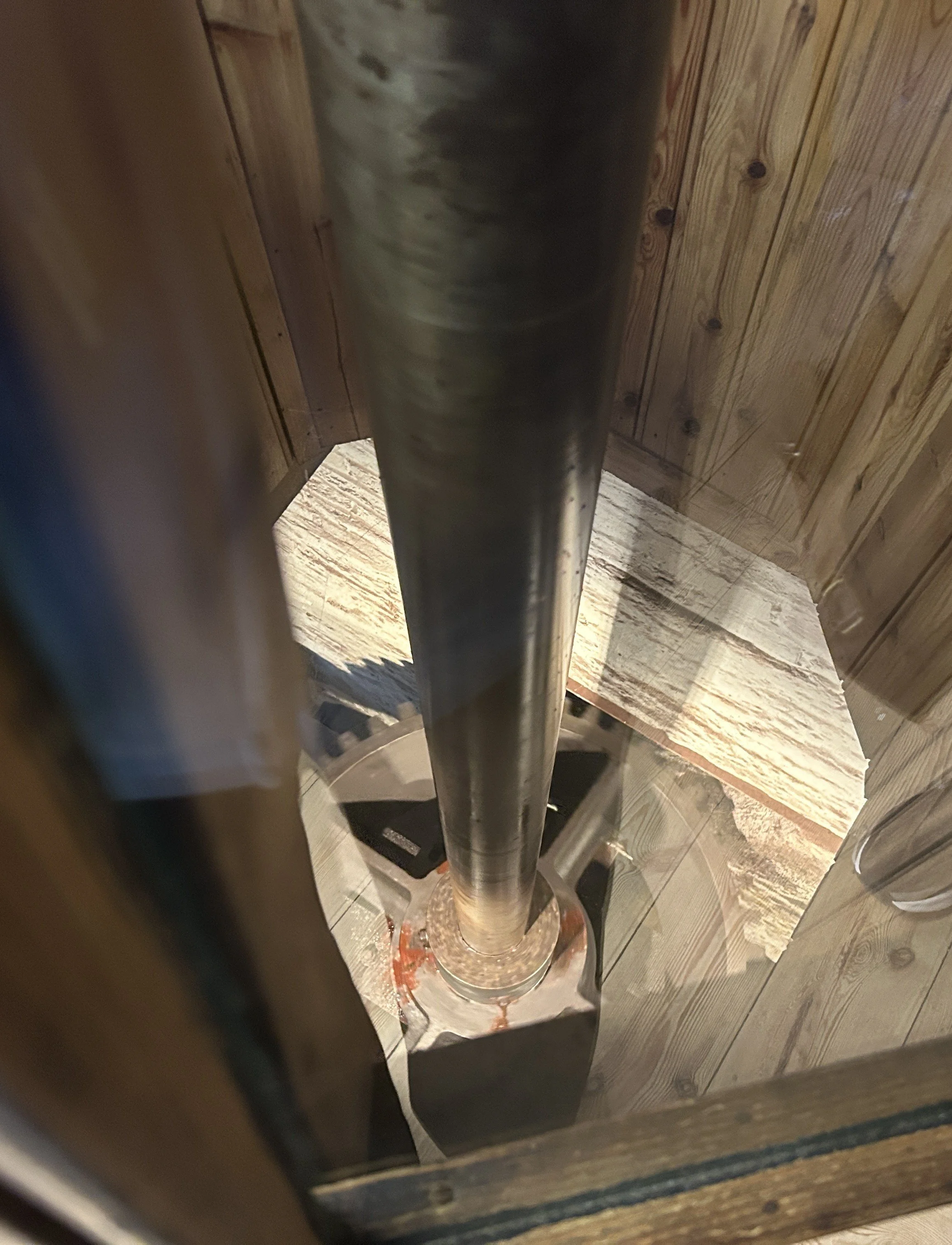
Rotating Shaft from The Choir
Another powerful moment was seeing the rotating shaft that causes two accidents in The Choir. I had previously encountered it only through research, so seeing the shaft in person added a visceral dimension to scenes I had already written.
After touring the upper rooms, I descended to the lower level of the mill to see the massive waterwheel that was used to power Quarry Bank Mill. The attendant informed me about the ghost that still wanders the area.
In the dim light and damp air filled with the roar of rushing water, it didn’t take much imagination to believe a ghost roamed the dark recesses of the massive room.
My final stop was the gift shop, where I purchased books about the mill in addition to a lovely stack of locally woven cotton textiles for making into tea towels.
Other Industrial Sites to Visit
Touring restored mills and industrial museums across northern England offers visitors a chance to step far off the beaten tourist path and encounter living history.
Other industrial sites open to visitors include:
Helmshore Mills Textile Museum in Lancashire
Ironbridge Gorge Museums in Ironbridge on the River Severn in Shropshire
Derwent Valley Mills in Derbyshire
Leeds Industrial Museum at Armley Mills in Leeds
Science and Industry Museum in Manchester
Bradford Industrial Museum in Bradford, Yorkshire
Visitors to these and other industrial museums gain an understanding of the complex machinery and processes behind textile production, encounter massive working waterwheels, and come face to face with the harsh realities of Victorian factory life.
About the Author
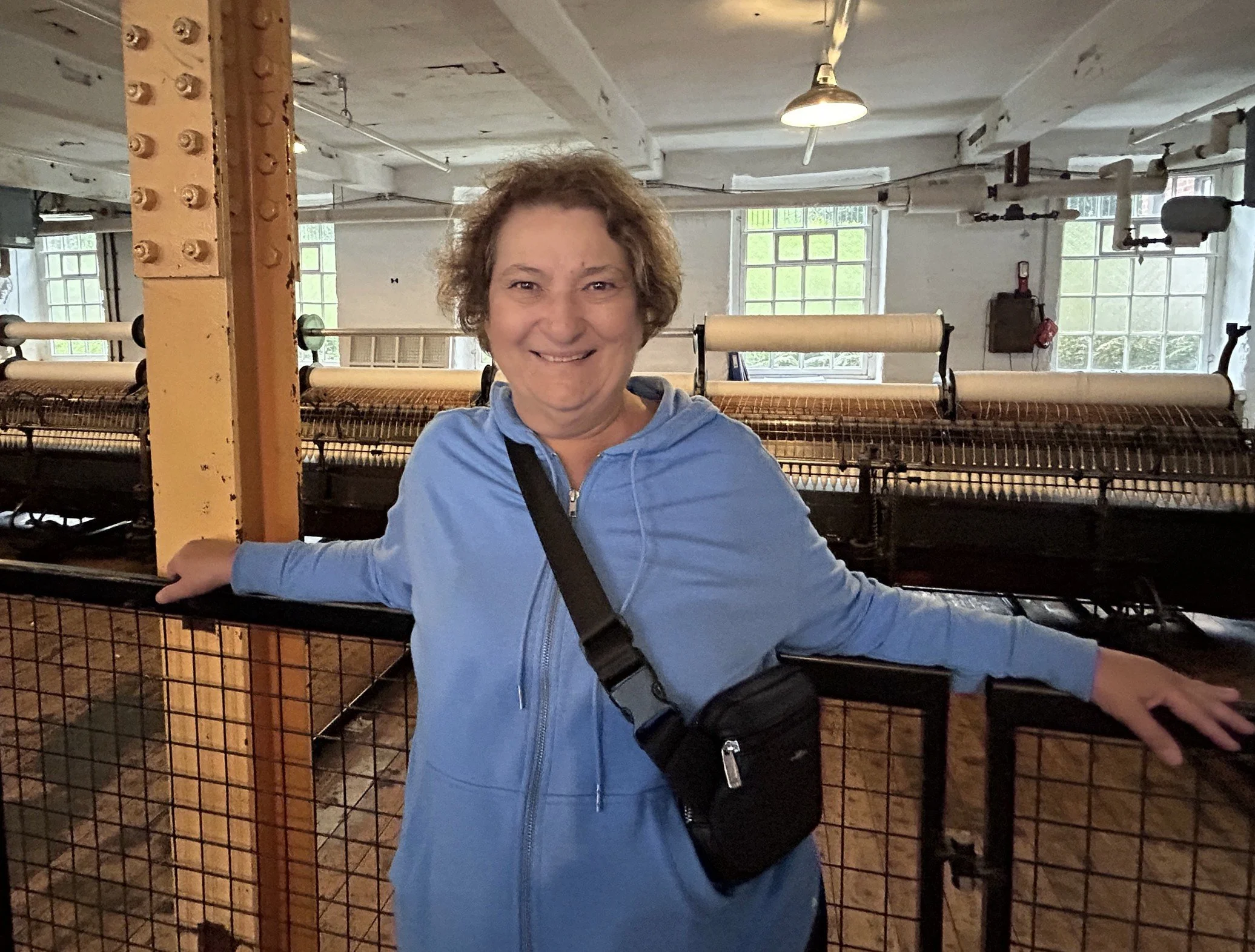
Carol M. Cram is the award-winning author of the Women in the Arts Trilogy, and the contemporary novel Love Among the Recipes. She also hosts the Art In Fiction Podcast, where she interviews authors who write novels inspired by the arts, and writes a travel blog called The Artsy Traveler.
Before becoming a full-time novelist, podcaster, and blogger, Carol authored over sixty bestselling textbooks in computer applications and business communications for Cengage Learning and Houghton Mifflin. She holds an MA in Drama and an MBA, and taught for many years on the faculty at Capilano University.
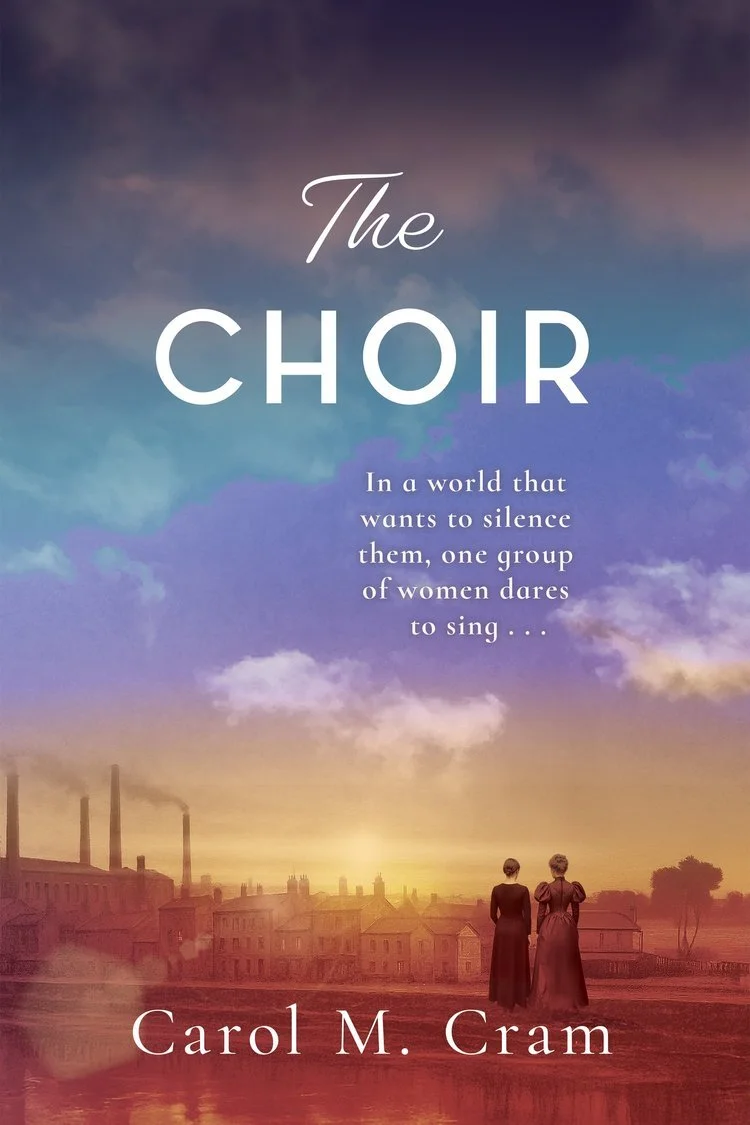
Set in 1890s Yorkshire, The Choir follows Eliza Kingwell, a struggling mother who turns to a local singing competition as a last hope…
After tragedy shatters her plan to escape a loveless marriage, Eliza forms a choir of spirited working-class women, aiming to win life-changing prize money from a singing competition.
Meanwhile, her former friend Ruth Henton, now a disgraced London star, returns to the North as a judge in the same contest. As rehearsals unfold, old wounds resurface, bonds grow, and secrets emerge.