
Life in a “Back-to-Back” House in Northern England

National Trust Back to Backs
Chances are good that anyone who can trace their heritage to working-class people in Northern England had at least a few ancestors who lived in “back-to-back” housing.
These cramped, terraced houses were home to millions of people from the late eighteenth century through the early twentieth century, particularly throughout the North of England and parts of the Midlands.
Several chapters of my fifth novel, The Choir, take place in a back-to-back house shared by my main character, Eliza Kingwell, her husband, and their five daughters. Cheap building materials combined with impossibly confined conditions contributed to the hardships endured by working people, and these houses shaped every aspect of their daily lives.
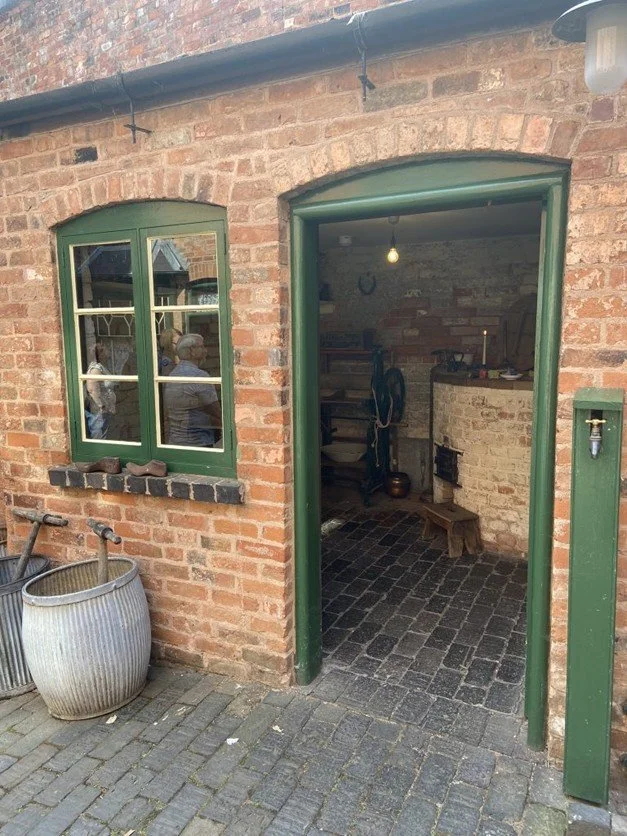
Wash-House
What Were Back-to-Back Houses?
Back-to-backs were terraced houses built to accommodate workers in the rapidly expanding factory towns of Northern England and the Midlands. A back-to-back typically shared walls on two or three of its four sides with neighboring houses.
A collection of back-to-backs was known as a court. Each court had a central yard surrounded by inward-facing houses. Built onto the backs of these were the outward-facing, street-front houses. Access to the yard was through a narrow passageway leading from the street.
Toilets and wash houses were shared among multiple households within the enclosed yards.
Living Conditions and Public Health
Back-to-backs were constructed as cheaply as possible, using substandard methods and materials. Poor ventilation, inadequate sanitation, and extreme overcrowding were common. Disease spread rapidly, and privacy was virtually nonexistent.
Recognizing that such housing posed a serious health threat, the Public Health Act of 1875 banned the construction of new back-to-backs. Over the following decades, most were demolished, although some examples still remain in Leeds and Bradford.
In Birmingham and Liverpool, individual courts or houses have been preserved as historic sites.
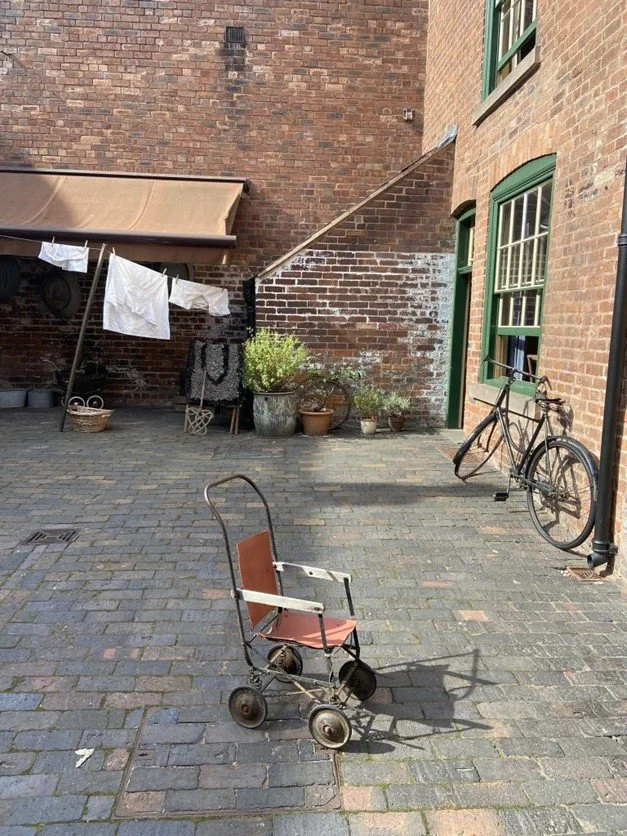
The interior yard at the Birmingham Back-to-Backs
Visiting a Preserved Back-to-Back
As part of my research for The Choir, I visited the Birmingham Back to Backs. Run by the marvelous National Trust, the property offers guided tours covering over 200 years of history, vividly illustrating how working people actually lived.
Most National Trust properties are palaces or stately homes. Yet the reality is that the vast majority of people were far more likely to live in substandard industrial housing, unless they happened to be employed in a grand house as servants.
To its credit, the National Trust purchased one of the last remaining courts in Birmingham to preserve and interpret how most people lived.
Court 15: Two Centuries of Lives
The property is accessible only via guided tour. I booked weeks in advance to join a small group led by a highly knowledgeable guide. She took us through four homes in Court 15, a community of eleven houses that had accommodated more than 500 different families over its 200-year lifespan.
One man on the tour mentioned that his mother had been born in a back-to-back. Both my grandmother and my great-grandmother, on whom the character of Eliza Kingwell is based, lived in similar housing in Yorkshire.
Each of the four houses represented a different time period: 1851, 1860, 1903, and 1977.
Staircases, Space, and Survival
The guide shared stories of the families who had lived in each house as she led us up and down numerous twisting staircases. In the past, no handrails were provided, and more than a few people died on those steep, narrow stairs.
I imagined Eliza climbing to the second floor, carrying a candle and a sleeping child, her long skirts a constant hazard, and with nothing to hold on to.
Even clinging for dear life to the handrails, I barely made it up some of the very steep stairways.
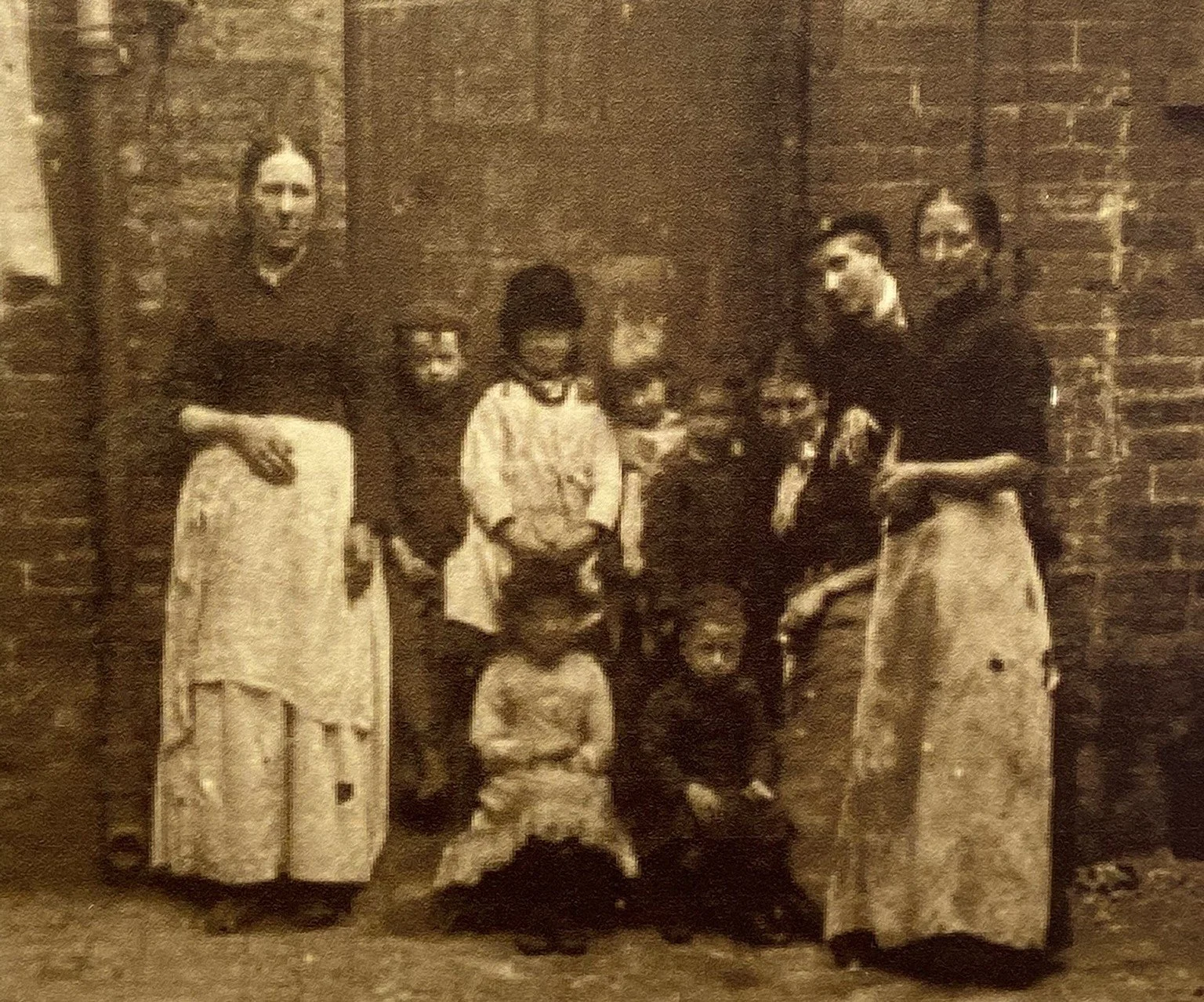
A family that lived at the Back-to-Back Houses
A typical house consisted of three floors. The ground floor served as a combined kitchen and living space. The second floor was a bedroom, and the attic was either another bedroom or a workroom. Each floor was extremely small, yet many people crowded into them.
In The Choir, four of the daughters sleep in one bed in the attic. Eliza and her husband sleep on the middle floor with the youngest child, five-year-old Bessie, in a trundle bed at the foot. In some families, the middle floor was divided by a curtain into two sections, with parents in one double bed and a lodger, or even two, in a single bed.
Writing The Choir
Seeing these houses in person was invaluable. As a novelist, I was fascinated to stand in the spaces where my characters would have lived, loved, worked, and often despaired. While writing The Choir, I could picture the rooms clearly, smell the damp, and imagine the constant noise created by so many people living so closely together.
For a more detailed description of the individual homes at the Birmingham Back-to-Backs, I have written separately about my visit on Artsy Traveler: https://www.artsy-traveler.com/birmingham-city-break/.

About the Author
Carol M. Cram is the award-winning author of the Women in the Arts Trilogy, and the contemporary novel Love Among the Recipes. She also hosts the Art In Fiction Podcast, where she interviews authors who write novels inspired by the arts, and writes a travel blog called The Artsy Traveler.
Before becoming a full-time novelist, podcaster, and blogger, Carol authored over sixty bestselling textbooks in computer applications and business communications for Cengage Learning and Houghton Mifflin. She holds an MA in Drama and an MBA, and taught for many years on the faculty at Capilano University.
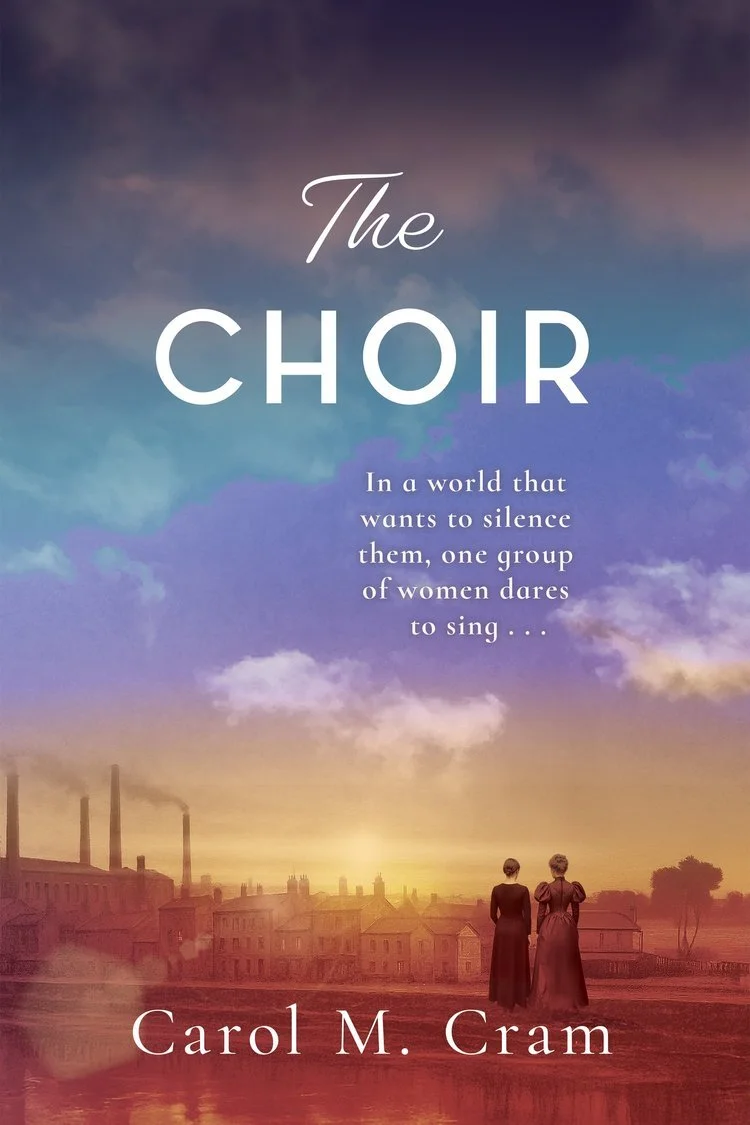
In a world that wants to silence them, one group of women dares to sing.
In 1890s Briarstown, Eliza Kingwell rallies a spirited group of working-class women to form a choir, hoping a local singing competition will offer them a chance at a new life. As her former best friend Ruth Henton returns to town to judge the contest, old wounds and new alliances intertwine, raising the stakes for everyone involved. The Choir is a moving tale of resilience, friendship, and the power of women’s voices to rise above adversity.