
A researcher’s rest journal: Rereading and a cover reveal
Hi there,
Thanks for stopping by! It’s a hot afternoon. I just hung some laundry out in the sun. There’s a distant call to prayer from a mosque nearby. Some birds are conversing loudly in the car porch. I hope wherever you are reading this, the day is relaxing and if it’s not, maybe it can wind its way there in time. Maybe a book or warm drink is in order. Welcome to my researcher’s rest journal.
Last week, I tried to snag a couple of breaks. A couple are unrelated to reading and writing, but whatever, it’s not every day I get to play strategy games for a whole afternoon unchecked, or binge-watch a TV show (Daredevil: Born Again). Hard to let myself indulge because of the time commitment, see?
I did get to reread one of my favorite novels, Ken Follett’s The Evening and the Morning, set in England towards the end of the Dark Ages, which often seems to get a bad rep for being a backwards era.
It’s fair, I guess, most peasants and even some nobility were illiterate, while Christian monks and nuns could read, both in English and Latin. They had their share of superstitions. They didn’t think social roles could be changed or transcended.

Image sourced from Reddit
But turns out the peasantry can also be a business-savvy folk (you had to be to survive in manorialism, that is, a system that combines both your occupation and rental situation, and your boss and landlord—wow!). Maybe some can even become wealthy, with the right amount of saving, and enough networking or butt-kissing with higher social classes. Heard of rich medieval peasants?
Meanwhile, the king might have less political or military power than his lords, and they might have less power than their vassal knights. And the local monasteries might have more power than all of them! It’s a more fun web than people might think.
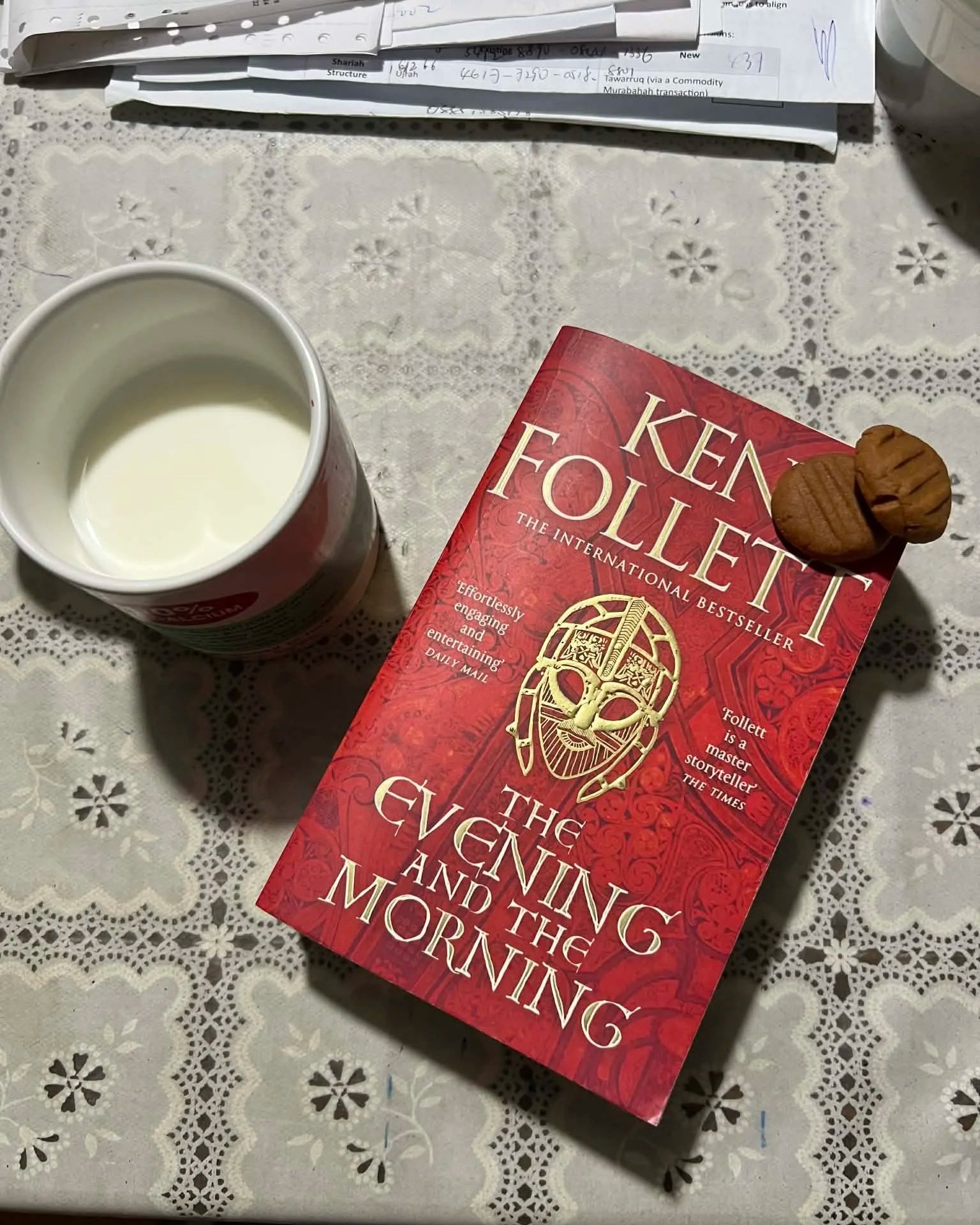
When reading thick historical novels, what do you like to go with it? I got me some milk and cookies!
Anyways, feel free to try The Evening and the Morning.
POVs: A young English carpenter, a French noblewoman from Normandy, a priest who wants to build a center of literature and learning, and a corrupt, cunning bishop.
Strengths: Complex yet comfortingly human interactions and relationships. In-depth depiction of Dark Ages economy, diet (across different classes), social and class dynamics
Weaknesses: Thick, lengthy read, not for those who don’t feel like reading about overly specific details.
Content warnings: Some sexual assault, slavery, battery and assault :/
Something else I got to experience for fun last week was attending the exclusive cover reveal of Jungle of Ashes and Jaguars and Other Game by HTF author Brynn Barineau, who alongside fellow historical fiction author Jillian Forsberg and audiobook narrator Caroline Hewitt, shared about the themes of her book, the historical scaffolding, the processes of collaborating on an audiobook.
SO MUCH NEW INSIGHT I HAD NEVER KNOWN. Nothing was unintentional, and everything took so much intricacy.
One thing Brynn said that stuck with me was this:
She isn’t here to get all the facts right. This is historical fiction. Some things might be off, but she’s ultimately here to tell a story. She’s definitely be more than alright directing people to non-fictional sources afterwards, but she feels comfortable playing with creative licenses.
I love that permission she grants herself. Historical accuracy is something I so often chain myself to, so this feels freeing to hear.
Lots to think about as I write…
Journal question: What principles do you consider as you write?
Also anybody interested in pre-ordering Jungle of Ashes? Coming this May 19!
See you again next week,
Ian Tan, intern
History Through Fiction
