Writing Historical Fiction about Real People
My new novel, Exalted Objects, is historical fiction, but it is also specifically biographical historical fiction. Many of the book’s characters are based on, or were composites of historical figures, but the novel's central characters, George Stark and his younger brother William, were very definitely real. George was a Civil War general, railroad magnate, and ambitious New Hampshire politician. William was a poet, eccentric, zookeeper, and the owner of a team of trained elk. Their great-grandfather was Major General John Stark, the Revolutionary War hero whose name is still attached to towns, streets, schools, and the New Hampshire motto: "Live Free or Die."
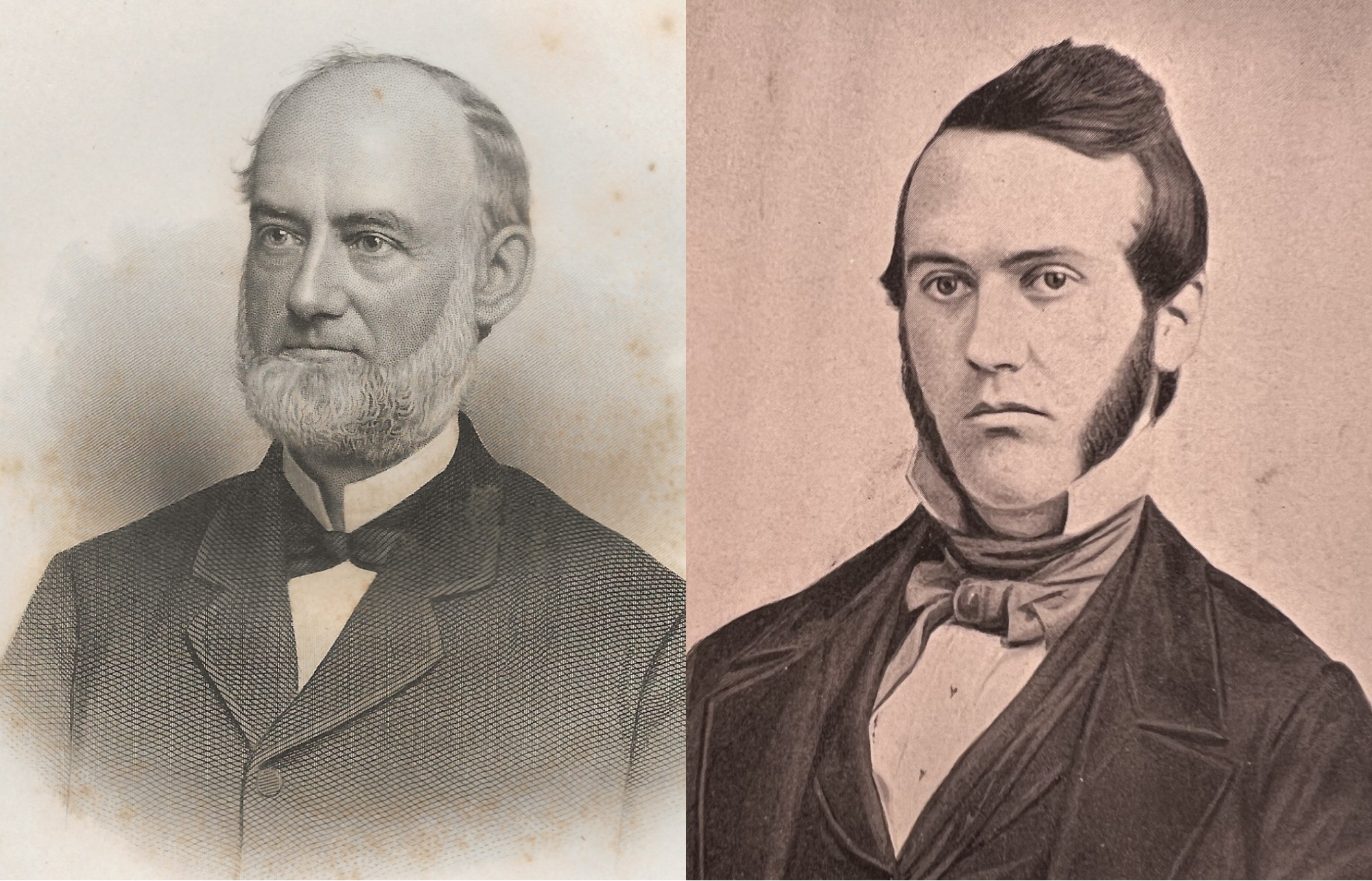
George Stark (left) and William Stark
From “Sketches of Successful New Hampshire Men” by John B. Clarke, Manchester, 1882 and “Pictorial Manchester” The John B. Clarke Co, 1896.
Unlike a biography, a novel about real people has the freedom to imagine what the historical record doesn't tell us. But unlike a novel about entirely fictional characters, the novelist begins with something invaluable: a person who has already lived a life and often someone whose life has been overlooked. That's what makes biographical historical fiction so appealing to me.
A real person can be the main character, a supporting character, or even one making a brief cameo. Jess Walter's The Cold Millions, for example, centers on fictional brothers Gig and Rye Dolan, but they move through a Spokane populated by real people, including labor organizer Elizabeth Gurley Flynn, police chief John Sullivan, and other figures from the city's labor conflicts. Walter researched the historical figures carefully, even incorporating accounts of Flynn's actual speeches.
Graham Moore's The Last Days of Night takes almost the opposite approach. Thomas Edison, George Westinghouse, Nikola Tesla, J. P. Morgan, and opera singer Agnes Huntington all appear as characters, but Moore makes another real person, the young lawyer Paul Cravath, the central figure through whose eyes we experience the famous "War of the Currents."
Both approaches demonstrate one of the pleasures of writing historical fiction about real people: that you don't have to begin with a blank slate. In fact, one of the great realizations of the earliest stages of researching Exalted Objects was that I didn't need to invent characters of sufficient interest or complications to carry a novel. Once I began digging into the lives of both Stark brothers, I found anecdotes and details stranger and sometimes more contradictory than I could have invented. That's one of the wonderful things about real people: they are, as the old adage says, often stranger than fiction.
For readers, that can be part of the appeal. Historical fiction about real people offers many of the pleasures of biography without being bound by academics. You can meet someone you already know—Thomas Edison, Cleopatra, Anne Boleyn, Eleanor Roosevelt—or discover someone you didn't know you wanted to know, like Paul Cravath, an unsung woman like Belle da Costa Greene, or William Stark.
But the freedom to fictionalize real people comes with responsibilities.
The first is to respect their lives and memories. Even when a person has been dead for a century or more, that doesn't mean he or she becomes merely raw material for a novelist. These were people with families, reputations, failures, ambitions, and people who loved them.
The second responsibility is more complicated: respecting their worldview. It is tempting to make historical characters sound and think like us. We want our heroines to be "plucky," our heroes to have contemporary ideas about equality, and our villains to demonstrate our understanding of what is wrong with the world. But that can flatten a historical character into a twenty-first-century person wearing period clothing.
This is particularly tricky when writing women. Women from past centuries could be intelligent, ambitious, rebellious, or deeply frustrated by the restrictions placed upon them without necessarily understanding those restrictions in the terms we use today. The same problem arises when we write about race, class, religion, gender, or politics. Historical people lived within assumptions that may be very different from our own.
That doesn't mean historical fiction should abandon contemporary values. We are, after all, contemporary writers writing for contemporary readers. Our own concerns inevitably shape the questions we ask of the past. The challenge is to let historical characters belong to their own time, even as we use their stories to explore questions that matter to ours.
There are practical cautions, as well. The dead cannot be libeled, but their writings, photographs, letters, and other materials may still be protected by copyright. And something being legally usable doesn't necessarily mean it is ethically wise to use.
So this is where the novelist's imagination becomes essential. Historical records are full of gaps. Letters leave things unsaid. Newspapers contradict one another. Diaries stop or are expunged. People who were present remember events differently. Very often, we know what happened but not why. These gaps are where historical fiction begins. The novelist can ask what if? What conversation might have taken place behind a closed door? What did someone feel when nobody else was looking? Why did a person make a decision that seems inexplicable from the surviving evidence? Taking those liberties isn't a betrayal of history. It is part of the art of historical fiction.
So my advice to anyone writing historical fiction about real people is: start with research, but don't stop with research. Read newspapers, letters, journals, diaries, memoirs, obituaries, court records, and other primary sources. Look for the details that surprise you. Look especially for conflict and contradictions. Then ask the questions every novelist must ask: What does this person want? What stands in the way? What are they afraid of? What might force them to change?
Writing about real people means walking a line between fidelity and imagination. The historical record can tell us what someone did. Fiction gives us a chance to wonder why, and to imagine what might have happened in the spaces the record leaves blank.
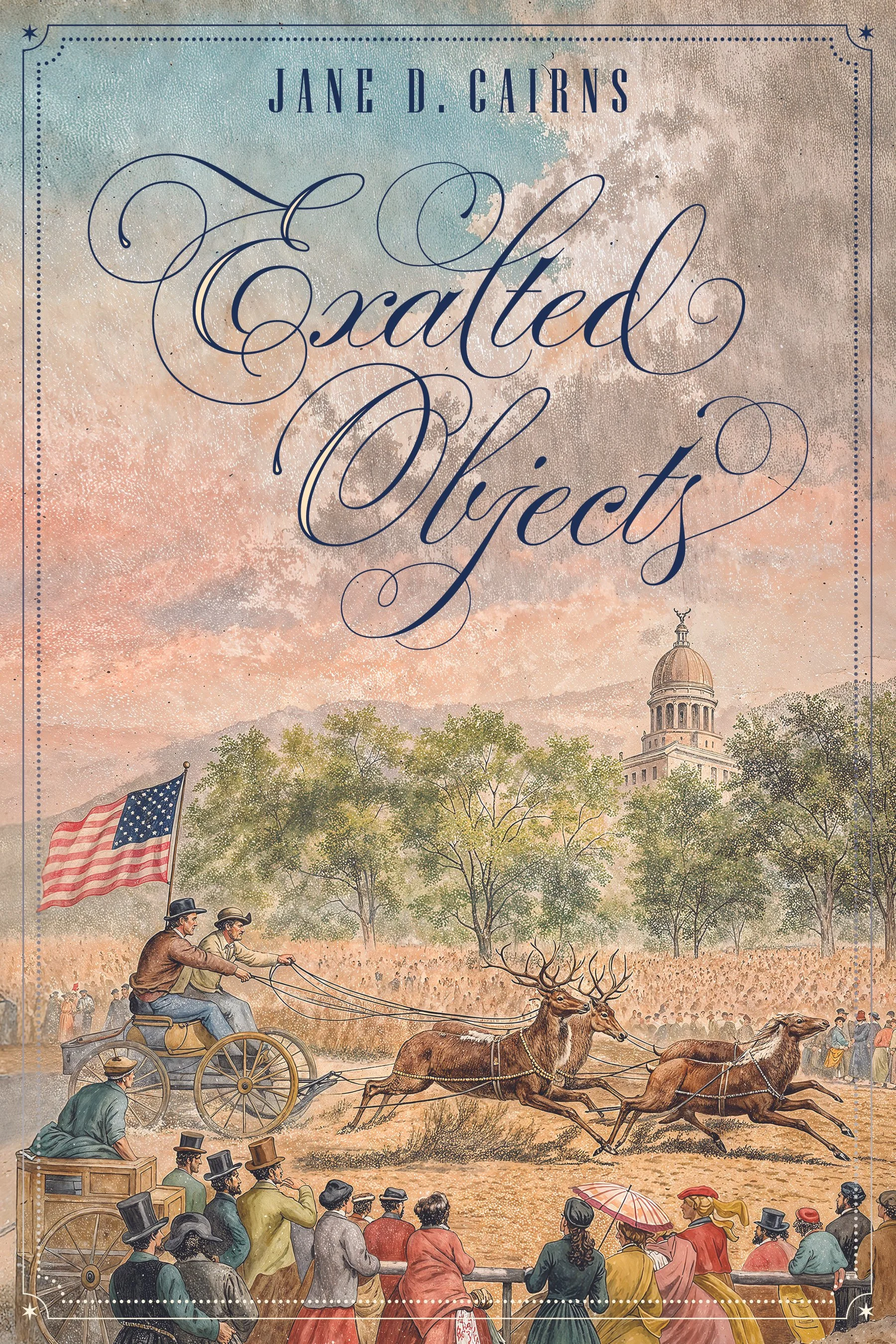
A railroad tycoon must choose between his brother’s freedom and his own ambition—before one wild act shatters both their lives.
In 1870 New Hampshire, railroad magnate George Stark faces a painful choice: commit his eccentric brother Will—a poet and zookeeper whose antics sparked a disastrous train scandal—to an asylum, or ruin his family name.
Rewinding to 1846, this historical novel tracks their diverging lives during the Civil War era—George chasing industrial power, and Will turning their estate into an exotic animal sanctuary. Torn between duty and compassion, George must choose between protecting his career or preserving the freedom of the brother he loves. Perfect for fans of rich family sagas exploring progress and sibling bonds.

About the Author
Jane D. Cairns is a Massachusetts-based writer and grassroots local historian. She is an active member of GrubStreet in Boston and a graduate of its highly selective Novel Incubator program. An alumna of Smith College, she has worked as a columnist and researcher for numerous trade magazines, including Publishers Weekly and Library Journal. Currently, she serves as a board member of the Andover Center for History and Culture, where she speaks and writes on popular topics in social and economic history. When she isn't reading or writing, you can likely find her hiking with her husband on regional trail systems, riding her class-1 e-bike, or chasing critters out of her organic vegetable garden. Exalted Objects is her debut novel.
