Elephants, Actors, and Frisbees
Circus of the Vanishing Elephant is set in 1974, during a time when the traditional American circus was ascendant and the marching of elephants through city streets attracted audiences. Like any writer of historical fiction, I spent countless hours doing research for the novel. I love researching, but I particularly enjoyed learning about elephants.
Did you know that elephants have arguably the best sense of smell of any mammal? They can smell water from miles away. They also talk to each other through clicking and rumbling sounds, and they even communicate by sending seismic waves picked up with their feet. Of course, elephants really aren’t afraid of mice. And they’re vegetarians, mostly eating grasses and tree bark, although in captivity some have been known to chomp down cigarette butts left carelessly near them.
I was fortunate in my life to have done initial research while working around elephants as a clown with Ringling Bros. and Barnum & Bailey Circus in 1978. The circus performed in arenas, and often our clown alley—a dressing room and goofball hangout—sat next to the elephant menagerie. The elephant handlers warned us not to get too close to their charges. They are wild animals after all. But that didn’t stop me from spending time talking to the elephant handlers and being introduced to the elephants through them.
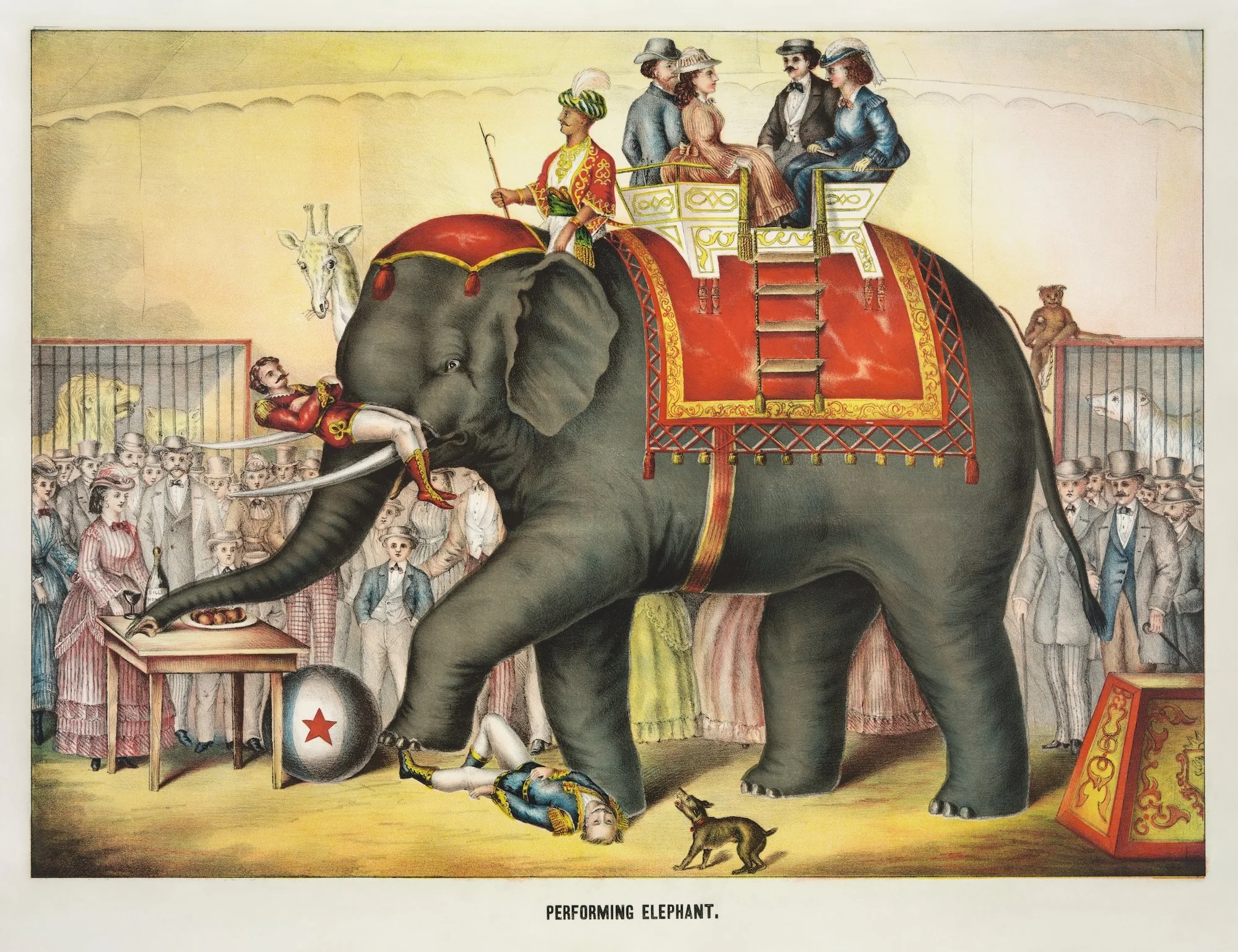
Performing elephant, vintage circus illustration. Original public domain image from the Library of Congress.
One thing I figured out for myself early on was that elephants don’t belong in circuses. I allow the characters in my novel to stake out their own opinions on this topic. I wanted to address the theme indirectly and subtly. But I think most people today share my opinion. The public did not, however, share that opinion in 1978 when I worked for the circus or in 1974 when my novel takes place. Then, the traditional American circus was wildly popular in the US, and audiences came to the circus in large part to see the elephants. Times have changed.
Elephants are matriarchal. In my time working for Ringling Bros. circus, all of the elephants were female and likely related to each other. The boss elephant, Anna May, ruled the roost, keeping her cousins in line. Anna May’s own “boss,” the head elephant trainer, was a calm man named Buckles Woodcock. The only time I saw Buckles get rattled happened backstage in Madison Square Garden when fellow clown Scott Parker and I were tossing a frisbee around. One of our errant throws skipped under Anna May’s belly just as Buckles led her past us. In the beat of an elephant’s eye, Anna May grabbed the frisbee with her trunk and swallowed it whole. She must have chomped on it with one of her giant molars on the way down because when Buckles reached down her throat to retrieve it, it was in two pieces. Buckles let Scott and I know how unhappy he was with us in language that would have made any sailor proud.
Circus of the Vanishing Elephant features Henrietta, a young elephant who is smaller than the other elephants in the herd. In the novel, the main event of every circus performance is an illusion that has Henrietta vanish in front of hundreds of paying customers. Through research, I strived to make Henrietta’s behavior consistent with that of an actual elephant. And from my own experience, I know that elephants have distinct personalities. In my telling, Henrietta loves to play pat-a-cake with her handlers, tossing her trunk for a fist bump. She also forms strong opinions about humans, liking some and disliking others, and she has ways of letting disfavored people know how she feels about them.
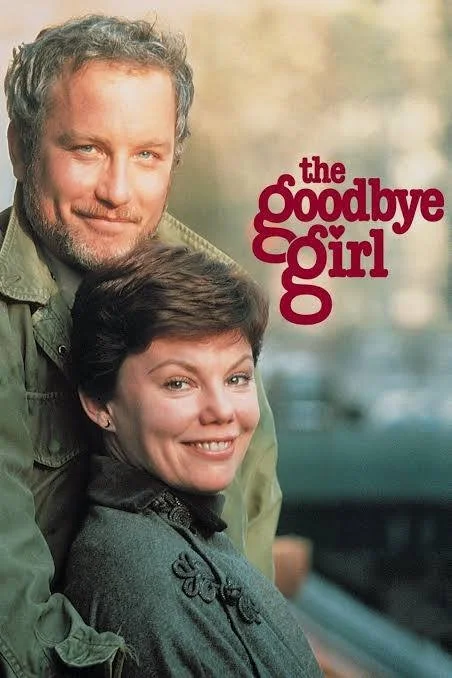
My fondest circus memory involving an elephant happened in Los Angeles. Every year, Ringling Bros. hosted “Circus of the Stars,” a night when movie and television actors showed up to be introduced to the sell-out circus audience and to take a ride around the arena on the backs of elephants. In 1978, the ensemble of actors included, among others, Charlton Heston, Henry Winkler, Ron Howard, and Greg Morris, who hung out with us circus performers in a tent set up in the parking lot of the old LA Forum arena. The youngest actor in the celebrity pool was Quinn Cummings. The year before, Quinn had played the little girl in the movie The Goodbye Girl, with Richard Dreyfuss and Marsha Mason. When I met her, Quinn was at the ripe old age of eleven, and to me she seemed cool and sophisticated, maybe a little jaded even. I was assigned to ride on the back of an elephant with her. When it came time for someone to lift Quinn up to join me on the elephant’s back, Quinn’s cool faded. She gripped my arm and let me know she was frightened. Suddenly, she was a little girl again. And of course I completely understood her reaction. The back of an elephant is nearly ten feet above the ground, and that height alone is intimidating.
In my novel, the circus owner, Christos “King” Minos, warns that the circus will die when the elephants go away. This is indeed what happened to the traditional American circus. Case in point is my former employer, Ringling Bros. As societal views about the treatment of wild animals, and elephants in particular, evolved, and as animal rights activists scored successes in changing the public’s understanding, eventually Ringling Bros. had to take its elephants off the road. Not long after, Ringling Bros., which had entertained audiences for nearly 150 years, closed its doors. Ringling has since started up again, but without animals and focusing on thrill acts.
King Minos gets a chance to express his viewpoint in my novel. But it may be that Henrietta the vanishing elephant gets the final word.
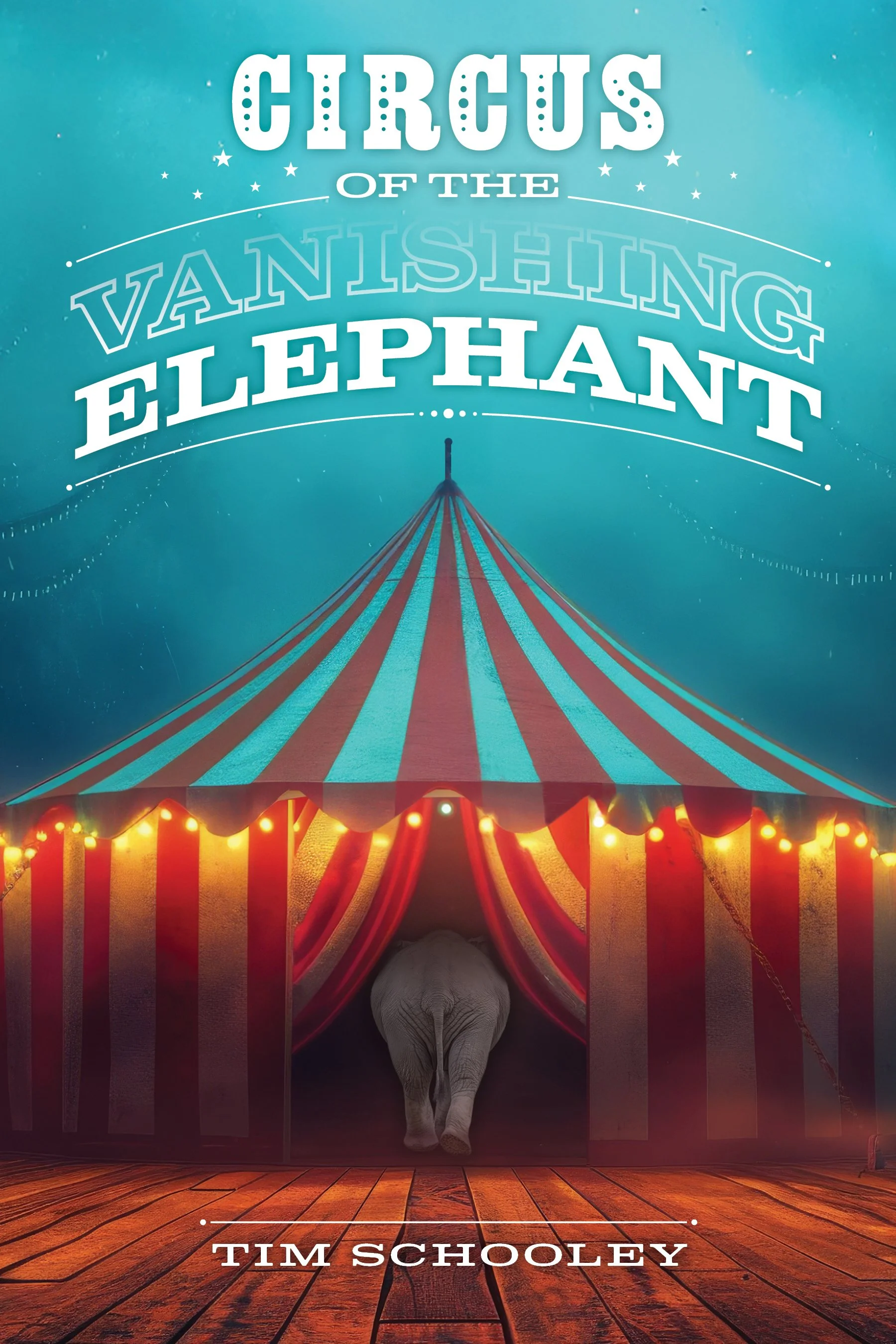
AVAILABLE NOW
Step right up and discover what happens when Henrietta’s illusion becomes real. Set against the fading world of the traditional American circus, Circus of the Vanishing Elephant is a humorous, heartfelt story of fractured families, unexpected bonds, and the meaning of freedom.