What Was on Her Bookshelf? A Civil War-Era Girl's Very Opinionated Reading List
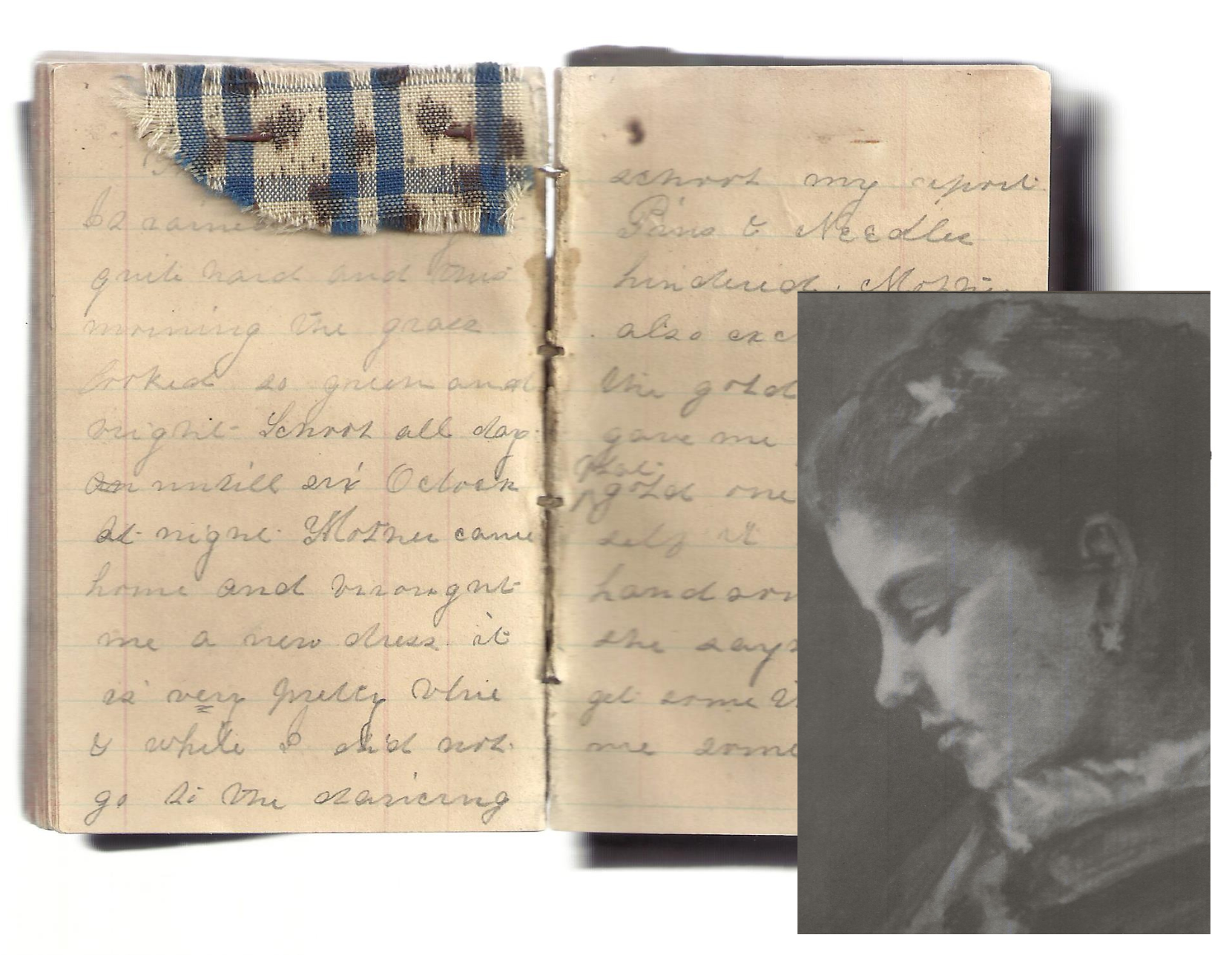
If a fourteen-and-a-half-year-old girl today wanted to keep track of everything she read in a year, she might open up Goodreads or Booktok, rating books with stars, adding reviews, and keeping a running list of what she loved. In 1867, Abby Locke of Andover, Massachusetts had no Goodreads account, but she had a diary. And in it, she recorded the 43 books she read that year: a list that offers a surprisingly intimate glimpse into the tastes, enthusiasms, and curiosities of a real New England girl.
Abby Locke’s Diary
One of our most enduring fictional portraits of New England girlhood during the Civil War era—and of girlhood reading in particular—comes from Louisa May Alcott. Who can forget Jo March, munching on an apple, losing track of time and her chores as she reads in her garret?
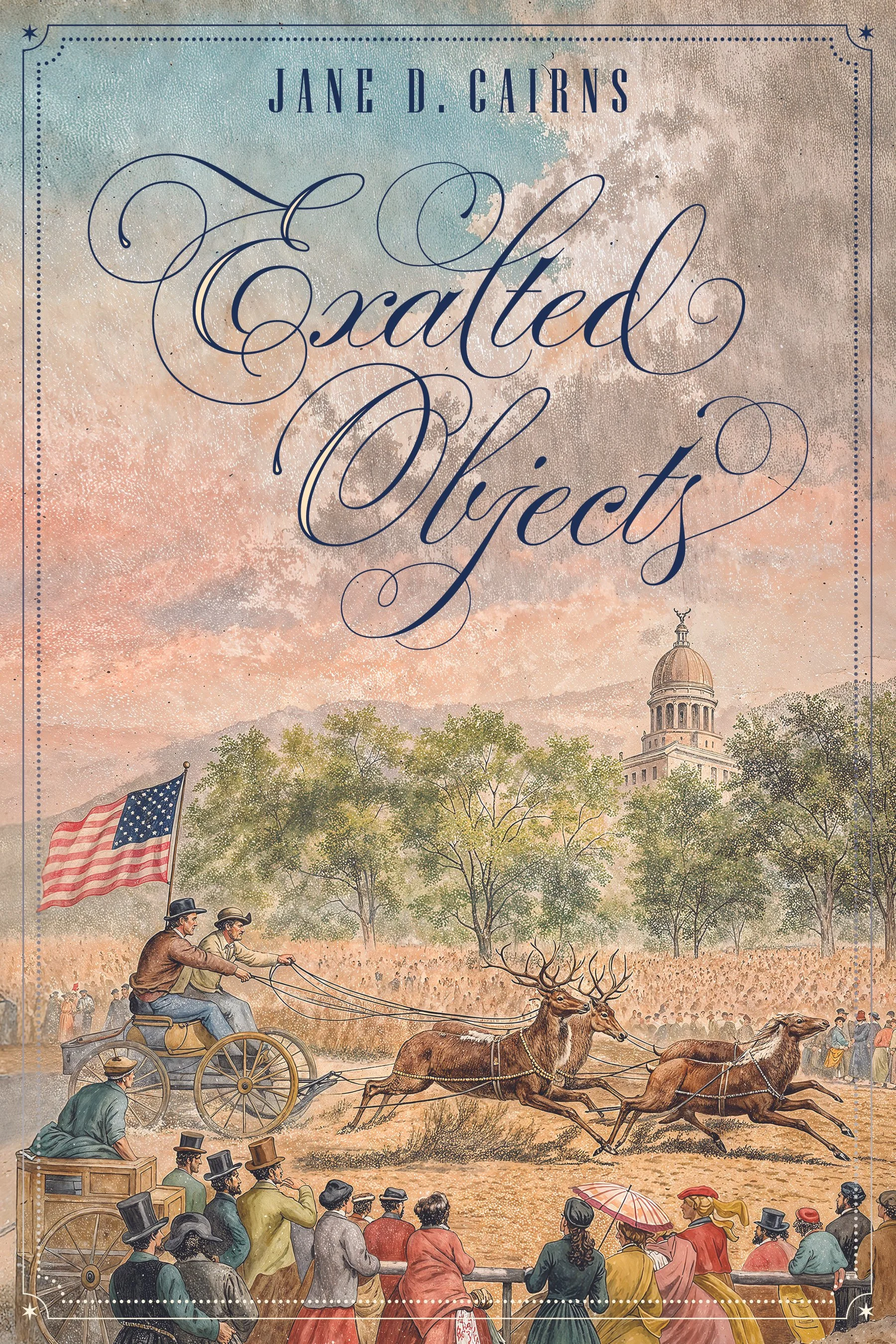
The diary, in the collection of the Andover Center for History and Culture, offers a glimpse into the life of a real girl from the same decade who, like Jo, read at an impressive pace. Abby recorded her daily activities in 1867: school recitations and examinations, household chores, dancing lessons, visits with friends and neighbors, and church attendance. Her account of a visit that year to "Mr. Stark's Zoo" in Manchester, New Hampshire was, in fact, the first spark of the book that became Exalted Objects. Historians of literature and girlhood studies, though, have been especially interested in her list of the 43 books she read that year. It includes poetry and plays, historical fiction, travel writing, moral tales, popular page-turners, and some decidedly racy romantic fiction of which Abby's mother—or Jo's fictional Marmee—might not have approved.
The first book Abby recorded was John Greenleaf Whittier's Snow-Bound, published as a book-length poem only the previous February. The second was Charles Dickens's Dombey and Son, one of six Dickens novels she read that year. On January 22, she noted that she had borrowed The Old Curiosity Shop from a local circulating library. She went on to read Great Expectations, Little Dorrit, Nicholas Nickleby, and Oliver Twist. We think of these today as literary classics, but to Abby and her contemporaries, they were page-turners. Dickens was immensely popular, though not universally considered suitable reading for young people. Harriet Beecher Stowe, writing critically about Dickens in 1843, disapproved of the secular nature of his fiction and particularly his characters' frequent drinking. Yet she admired his realism and the way he treated what she called "our coarse common world." More importantly, she thought Dickens's influence on young women was preferable to that of Lord Byron, whose romantic heroes, she feared, encouraged girls to admire "terribly black whiskers" and a "lofty morose contempt of God and man" in potential husbands.
Abby had no Byron on her list, although she may have appreciated the sentiment. On the final pages of her diary, she copied a line from Byron's friend, the poet Thomas Moore, describing a romantic hero with mustaches that gave him "the dear Corsair's expression, half savage, half soft."
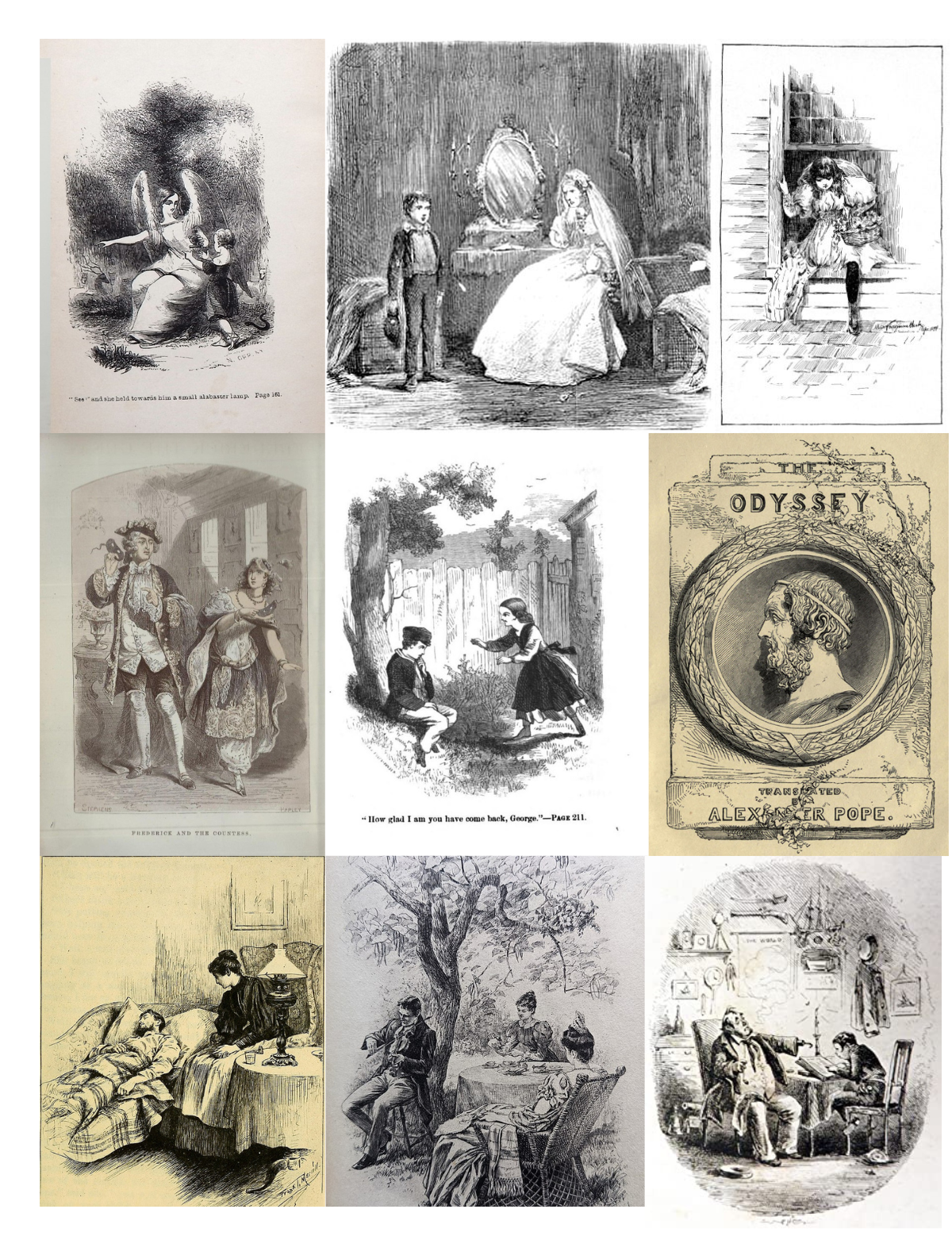
Other classsics on Abby's list are familiar: Nathaniel Hawthorne's The House of the Seven Gables, Charles Lamb's Essays of Elia, and Shakespeare's Romeo and Juliet and Julius Caesar. She also read The Odyssey, probably in the widely used translation by Alexander Pope, as well as Sir Walter Scott's Ivanhoe. "Princess," squeezed onto the same line as Ivanhoe, may refer to Alfred, Lord Tennyson's The Princess, his comic 1847 poem about a woman who establishes a college for women.
But Abby's reading wasn't confined to books that would eventually find their way onto school syllabi. A large portion of her list consists of the moralistic "Sunday School books" that were enormously popular with nineteenth-century children and teenagers. These stories typically placed young people in situations involving temptation, hardship, or moral uncertainty, then rewarded them for choosing the righteous path.
Among them were Helen Morton's Trial and its sequel, Watch and Pray; or, Helen's Confirmation, by Alice B. Neal Haven, who wrote under the name "Cousin Alice." George Morton and His Sister, by Catherine Maria Trowbridge, featured a rough, unschooled city boy who is rescued from delinquency. The Gayworthys: A Story of Threads and Thrums, by Boston writer Adeline Dutton Train Whitney, told the story of a Massachusetts family confronting the challenges of domestic life.
Abby Locke’s Book List
Abby also read several books by English author Charlotte Maria Tucker, who wrote as "A.L.O.E."—"A Lady of England"—including Exiles in Babylon and The Shepherd of Bethlehem. The Dove in the Eagle's Nest was by Charlotte Yonge, another deeply religious English novelist. Yonge is better remembered today for The Heir of Redclyffe, the 1853 novel that Jo March herself reads in Little Women.
One title on the list has a local connection local. Gypsy's Cousin Joy, published in 1866, was the second in a series of four books about the spirited tomboy Gypsy Brenton, written by Elizabeth Stuart Phelps, who was just twenty-two and living in Andover. Phelps later dismissed the Gypsy books as "magazine stories, Sunday-school books, and hack work," written between more serious projects. Yet literary historians have argued that Gypsy helped establish a tradition of engaging tomboy heroines that includes Jo March, Susan Coolidge's Katy, Caddie Woodlawn, and Laura Ingalls.
Abby's reading also ventured into history, travel, and adventure. She read Frederick the Great and His Family by Luise Mühlbach, a romanticized account of Prussian royalty; Roba di Roma, William Wetmore Story's lively account of life in Italy; and Recollections of Seventy Years, the memoir of a Nantucket Quaker woman who spent much of her life in France and England. She read The Last Days of Pompeii, Bulwer-Lytton's sensational Victorian retelling of the destruction of Pompeii, complete with a handsome young hero, beautiful women, a blind slave girl, and an evil priest.
And then there were the romances.
Abby's list includes three books by the English novelist Charles Reade, beginning with Christie Johnstone, a story about a virtuous young woman seduced by a handsome aristocrat. Reade's Love Me Little, Love Me Long and Very Hard Cash mixed romance with sensational stories about private lunatic asylums. She also read Held in Bondage; or, Granville de Vigne by Marie Louise de la Ramée, better known by her pen name Ouida. It featured a handsome British soldier, the Crimean War, the Charge of the Light Brigade, forbidden love, and a glamorous but thoroughly wicked older woman.
Ooh la la.
Abby's list reminds us that nineteenth-century girls did not divide their reading into "good" books and "bad" books, classics and trash. They read across those boundaries, just as modern readers of all ages do. They read for instruction, but also for excitement, romance, adventure, escape, and the pleasure of meeting characters who seemed almost real.
Which brings us back to Louisa May Alcott. In Rose in Bloom (1875), another of Alcott's young heroines, Rose Campbell, is caught by her protective uncle reading a "fascinating" romance. Blushing, she defends herself: "I really don't see any harm in the book so far. It is by a famous author, wonderfully well written as you know, and the characters so life-like that I feel as if I should really meet them somewhere."
"I hope not!" her uncle replies.
Abby Locke might have understood Rose perfectly. Her 1867 diary suggests that, like generations of readers since, she knew the difference between the books she was supposed to read and the books she couldn't put down—and had every intention of reading both.
Editor's Pick — BookLife
“Exalted Objects balances a propulsive plot, exquisitely researched detail, and a cast of characters who jump off the page and fully to life. Jane D. Cairns has written a stunner for historical fiction fans.”
— Annie Hartnett, author of Rabbit Cake, Unlikely Animals, and the national bestseller The Road to Tender Hearts

About the Author
Jane D. Cairns is a Massachusetts-based writer and grassroots local historian. She is an active member of GrubStreet in Boston and a graduate of its highly selective Novel Incubator program. An alumna of Smith College, she has worked as a columnist and researcher for numerous trade magazines, including Publishers Weekly and Library Journal. Currently, she serves as a board member of the Andover Center for History and Culture, where she speaks and writes on popular topics in social and economic history. When she isn't reading or writing, you can likely find her hiking with her husband on regional trail systems, riding her class-1 e-bike, or chasing critters out of her organic vegetable garden. Exalted Objects is her debut novel.