
A Dream Interrupted: Türkiye’s First Coup and Istanbul Dreaming
When I began writing Istanbul Dreaming, I thought I was writing a coming-of-age story and a love story: Ayten, a young woman who flees a forced arranged marriage for Istanbul, where she embarks on a reinvention; Earl, the American airman she never expected to love; Istanbul itself, a city of ferries and minarets and opportunity, suspended between two worlds, two continents. But as I researched Türkiye in the late 1950s and the spring of 1960, the historical events of the time—student protests turned violent, government-imposed curfews, martial law—demanded to be part of the story.
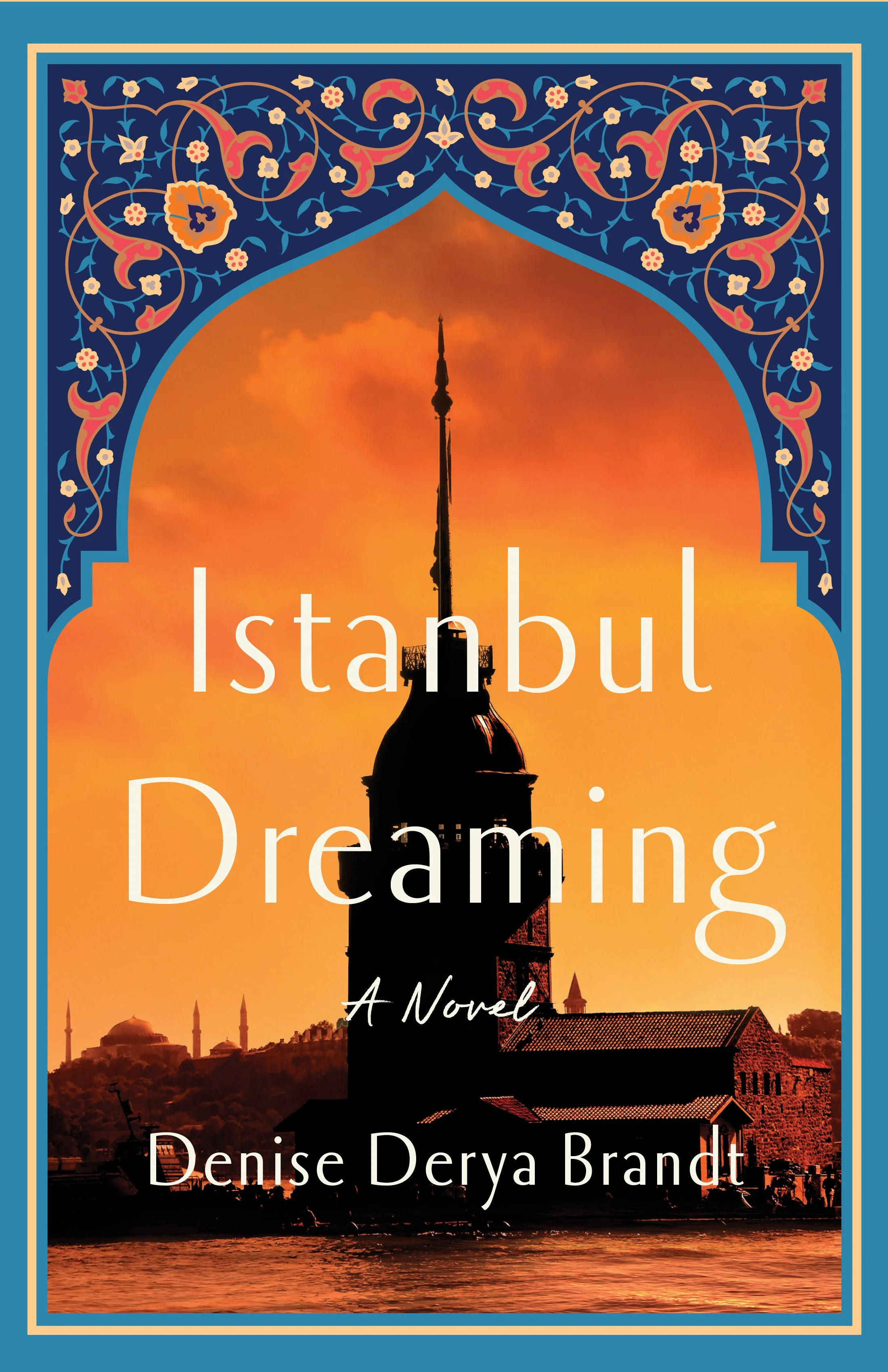
To understand how Türkiye arrived at the morning of May 27, 1960—the date of the republic’s first military coup—we must start a decade earlier, during a time of extraordinary hope.
In 1950, Türkiye voted out the Republican People’s Party (CHP)—the party of Mustafa Kemal Atatürk, who founded the republic in 1923—and handed power to Adnan Menderes’ Democrat Party (DP) in the country’s first genuinely free transfer of power. The DP had promised prosperity, piety, and a loosening of the state’s grip on daily life. For millions of Turks, especially in the countryside, Menderes was a hero. Under DP, roads were paved, new construction projects began, mosques reopened, and the economy boomed, at least for a while. This is the modernizing Türkiye we find Ayten living in: a country where a young woman might dare to dream of an exciting future for herself.
It was also a Türkiye falling in love with America. The country joined NATO in 1952, and with that alliance came American bases and servicemen, American music, American things. The Istanbul Hilton opened in 1955, a place of glamor and possibility and a symbol of a Türkiye turning toward the West. Lifestyle magazines like Hayat showcased Hollywood stars, fashion spreads, and aspirational American consumer goods to young readers across the country, readers like Ayten and her best friend Yasemin, who pore over its pages, dreaming of a bigger world. That infatuation is everywhere in Istanbul Dreaming: in the dance nights at the Hilton where Ayten first locks eyes with Earl, and in one of my favorite details of the novel—an Istanbul landlord who asks for rent, not in liras, but in two large cans of Folgers instant coffee from the new American base.
But by the end of the decade, the economy was suffering from inflation and debt, and the government that had come to power championing democracy grew increasingly undemocratic and intolerant of dissent. Press laws made it a crime to publish material that damaged the “prestige of the state”; opposition newspapers were shuttered and journalists persecuted. Universities also found their independence curtailed. The political rivalry between Menderes’ DP and the opposition CHP, led by the aging independence hero İsmet İnönü, worsened. Crowds harassed İnönü’s motorcades. Each side accused the other of betraying the republic. And in February 1959, when Menderes survived a plane crash outside of London that killed many on board, his supporters hailed his survival as a miracle, deepening the saintly aura around him and dismaying secularists who saw Türkiye drifting from Atatürk’s vision. (That plane crash made its way into my novel.)
The country’s breaking point came in April 1960, when the Menderes government pushed through parliament a special Committee of Inquiry, an extraordinary body empowered to investigate the opposition on charges of inciting rebellion, with sweeping powers that critics claimed amounted to a return to one-party rule. To the students and professors at Istanbul University, it looked like the end of Turkish democracy itself.
On April 28, 1960, students gathered on the university campus to protest, spilling out into Beyazıt Square, in the heart of the old city, chanting against the government. The police moved in, shots were fired, and a nineteen-year-old forestry student was killed. Dozens more were injured, including the university’s rector. In Istanbul Dreaming, one of Ayten’s friends, a fiery secularist graduate student named Kenan, is in the crowd, protesting. He escapes bloodied and shaken, but with his life. By nightfall, the government had declared martial law in Istanbul and Ankara. Universities were closed, tanks appeared, and a curfew fell over Istanbul.
But the protests didn’t stop. The next day, demonstrations erupted at Ankara University. A week later, on May 5th, young people in the capital organized what is often called Türkiye’s first act of mass civil disobedience, spread entirely by word of mouth under the code “555k”—the fifth day of the fifth month, at five o’clock, in Kızılay Square. Thousands participated. Prime Minister Menderes himself waded into the crowd and was grabbed by a student demanding freedom. Menderes is said to have replied that a man with his hands on a prime minister’s throat had all the freedom he could want!
Then, on May 21st, cadets from the military academy marched silently through Ankara to the Victory Monument. No chants or banners, just disciplined marching, telling the government without a single word that it had lost the military. Six days later, in the early hours of May 27, 1960, thirty-eight officers calling themselves the National Unity Committee seized control of the country. Istanbul residents woke to Colonel Alparslan Türkeş’s radio announcement that the armed forces had taken over administration of the nation and that a curfew was in force until further notice. The coup was over almost before it began, virtually bloodless on the day itself. Its aftermath was not: Menderes and his ministers were tried on the Turkish island of Yassıada, and in September 1961, the prime minister who had once embodied Turkish democracy was hanged, along with two members of his cabinet, an action history has condemned.
While I didn’t intend to write a political novel, I knew I could not ignore the political details of this pivotal moment in Turkish history and its impact on ordinary people—and on my characters. Ayten stages a small revolution before the country stages its own: she flees a forced arranged marriage and begins to build a new life in Istanbul, where she falls in love with Earl. The unrest of that spring seeps into her world, and because the novel stays inside Ayten’s head, the coup arrives the way it did for real people like her. Kenan’s injuries during the student protests make the danger personal. Violence and martial law intrude on her friends’ lives. Protestors damage a window at Timur’s boutique, where Ayten works. Since theaters are closed, Yasemin’s dream part in a play is uncertain. Earl warns he may be confined to the American base. And just as her past and present collide in the most devastating way, the coup arrives, threatening to sweep away her planned future. A woman raised to be obedient, quiet, and selfless has to decide—inspired, like so many that spring, by students who refused to stay silent—how hard she is willing to fight for the life she has chosen, the life of her dreams.
That, to me, is where the history and the fiction fuse. The Türkiye of 1960 was a nation caught between competing visions of itself: between tradition and modernity, obedience and self-determination, the comfort of the familiar and the terrifying freedom of the new. Ayten is caught in exactly the same way. Her journey to Istanbul is her personal declaration of independence; the spring of 1960 tests whether she can keep it. The question the novel asks of her is the question that spring asked of an entire country: when the rules become unbearable, what will you dare to do?
The coup of May 27, 1960, opened a long chapter in Turkish history; the military would intervene in politics again and again in the decades that followed. But in the spring of 1960, no one knew that yet. For Ayten and for Türkiye, the future was still unwritten—which is exactly what makes daring to dream an act of courage.
Sources & Further Reading
I recommend Jeremy Seal's A Coup in Turkey: A Tale of Democracy, Despotism and Vengeance in a Divided Land (Chatto & Windus, 2021) for the full story of Menderes's rise and fall — including the 1959 plane crash that opens his book. I also drew on the archives of The New York Times, whose correspondents reported on the student protests, martial law, and the coup as they unfolded in the spring of 1960.

About the Author
Denise Derya Brandt is a debut author whose writing is inspired by her life and the lives of the people she met while working for more than twenty years in international development, leading life-saving women’s health projects in Afghanistan, Liberia, and Myanmar (with shorter stints in other interesting places).
She’s a graduate of The Book Incubator writing program, was a 2024 finalist for the Women's Fiction Writers Association Rising Star Award, and was a 2025 Poets & Writers Get the Word Out publicity incubator fellow. She holds a bachelor's degree in political science from Arizona State University and a master's degree in development management from The London School of Economics.
After graduate school, Denise lived in Istanbul, where she worked as an Associate Publisher for Turkish Business World, an English-language business magazine. As a Turkish-American with moderate Turkish language skills, she claims she can fool tourists but not taxi drivers! Originally from Arizona, Denise now lives in Northern Kentucky with her husband.
Her debut novel, Istanbul Dreaming, is forthcoming from She Writes Press on September 29, 2026 and is currently available for preorder.