
The Hubris of Henry Ford in Jungle of Ashes
Once upon a time there was a man with all the money in the world.
He had done many great things to earn this money. But after many years with all the money, the man forgot he was a man and decided he no longer liked the word no.
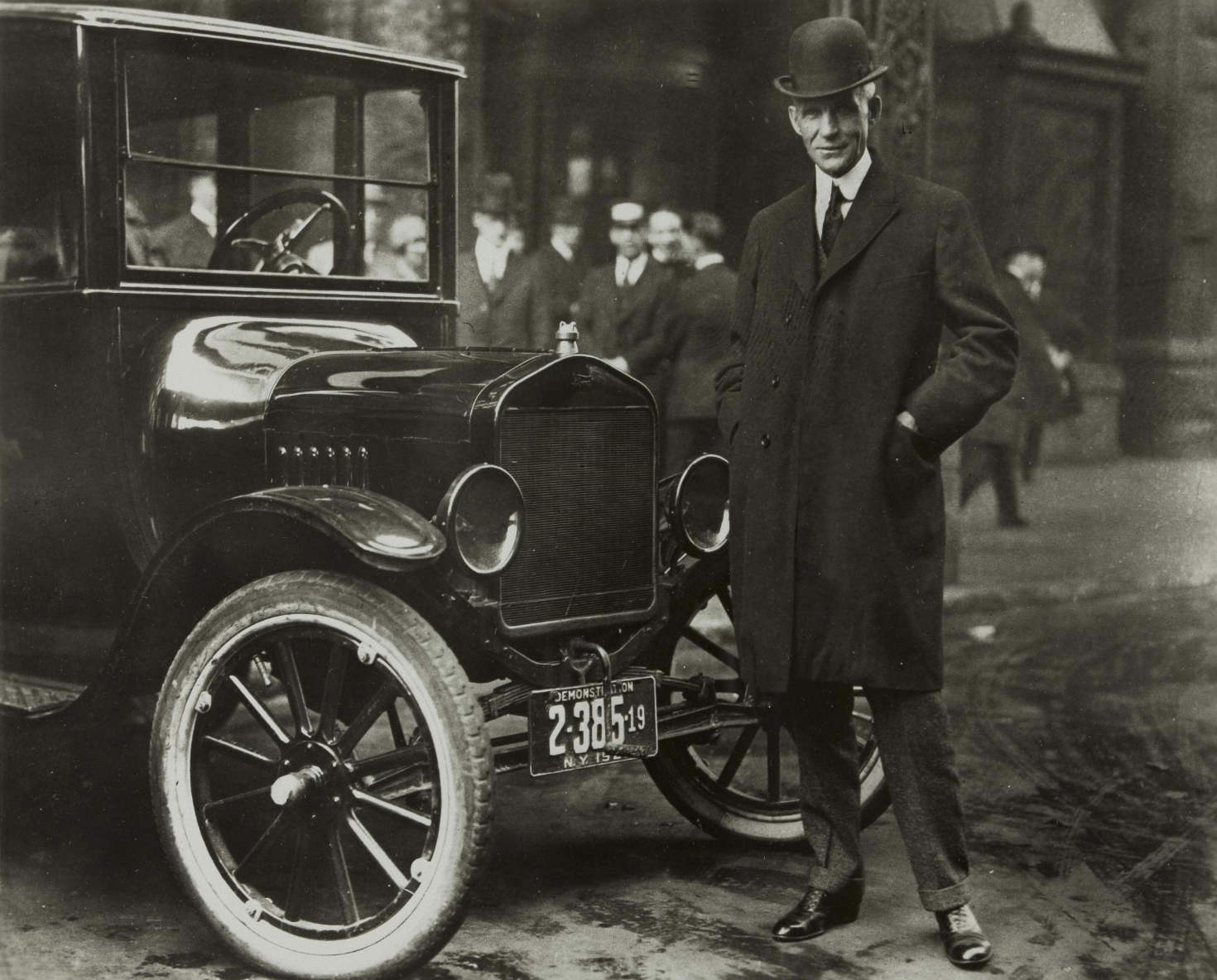
Henry Ford with a Model T in Buffalo, New York, in 1921
I chose to open my author’s note for Jungle of Ashes as if beginning a classic fairytale because if any American figure achieved mythical status, it’s Henry Ford. Born to a farming family of Irish-Belgian immigrants, he went from a one-room schoolhouse to altering human society on a global scale. At sixteen, he left formal education and apprenticed as a machinist. He built his first gasoline-powered vehicle in a shed behind his house at thirty-three, and in 1908 the Ford Motor Company released the world’s first affordable automobile, the Model T. Ford went on to revolutionize manufacturing by introducing the first moving assembly line in automobile production, doubling the minimum wage to $5 a day, and developing the practice of vertical integration at his River Rouge factory. The man became an entire economic philosophy. “Fordism,” which combined his mass production strategies and high labor wages, came to define capitalism in the twentieth century. By the 1920s, Henry Ford was not only one of the richest men in the world but one of the richest in human history.
The stuff of legends indeed, but like so many epic heroes, the legend is tarnished by the hero’s hubris.
At the time Jungle of Ashes begins in 1927, Ford Motor Company was the most important employer, producer, and power player in the state of Michigan and arguably the entire United States, and Henry Ford, as the largest shareholder, controlled the entire enterprise. His empire had evolved far beyond assembly lines bolting together Model Ts and included hospitals, power plants, farms, chemical labs, engineering firms, and a large portion of upstate Michigan, including the hometown of Joanna Rogge, one of my protagonists in Jungle of Ashes.
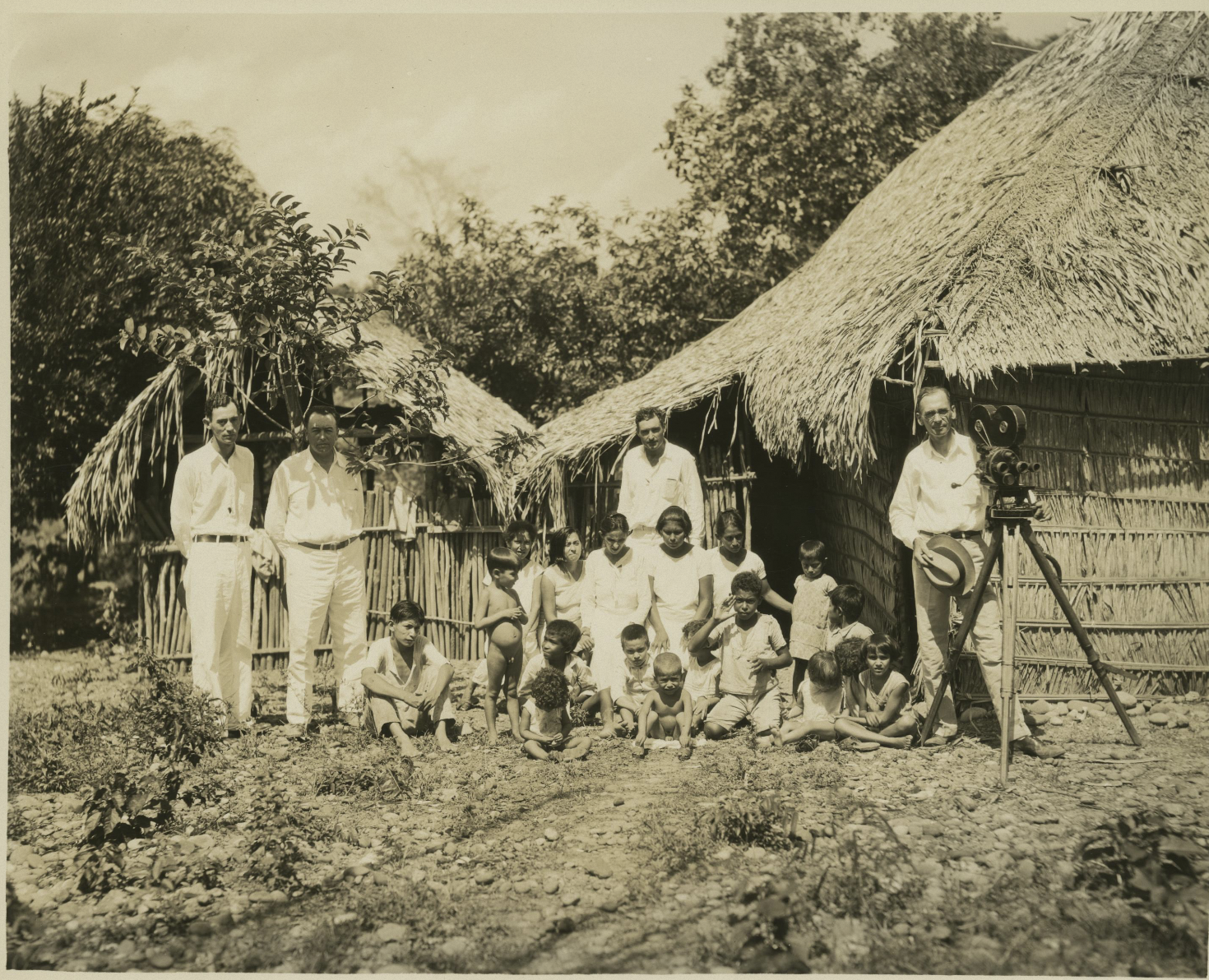
John Rogge and managers with children at Fordlandia, 1931
The state of Michigan allowed Ford to manage all services on his properties from schools to utilities. If Ford owned the property, he controlled everything that happened on it. The place Henry Ford occupied in the minds and lives of the people in Michigan cannot be overstated. They had such faith in Ford that they campaigned to elect him senator despite the fact he never declared himself a candidate and publicly expressed a complete lack of desire to ever work in government.
Ford came in second. Can you imagine being the guy who came in third?
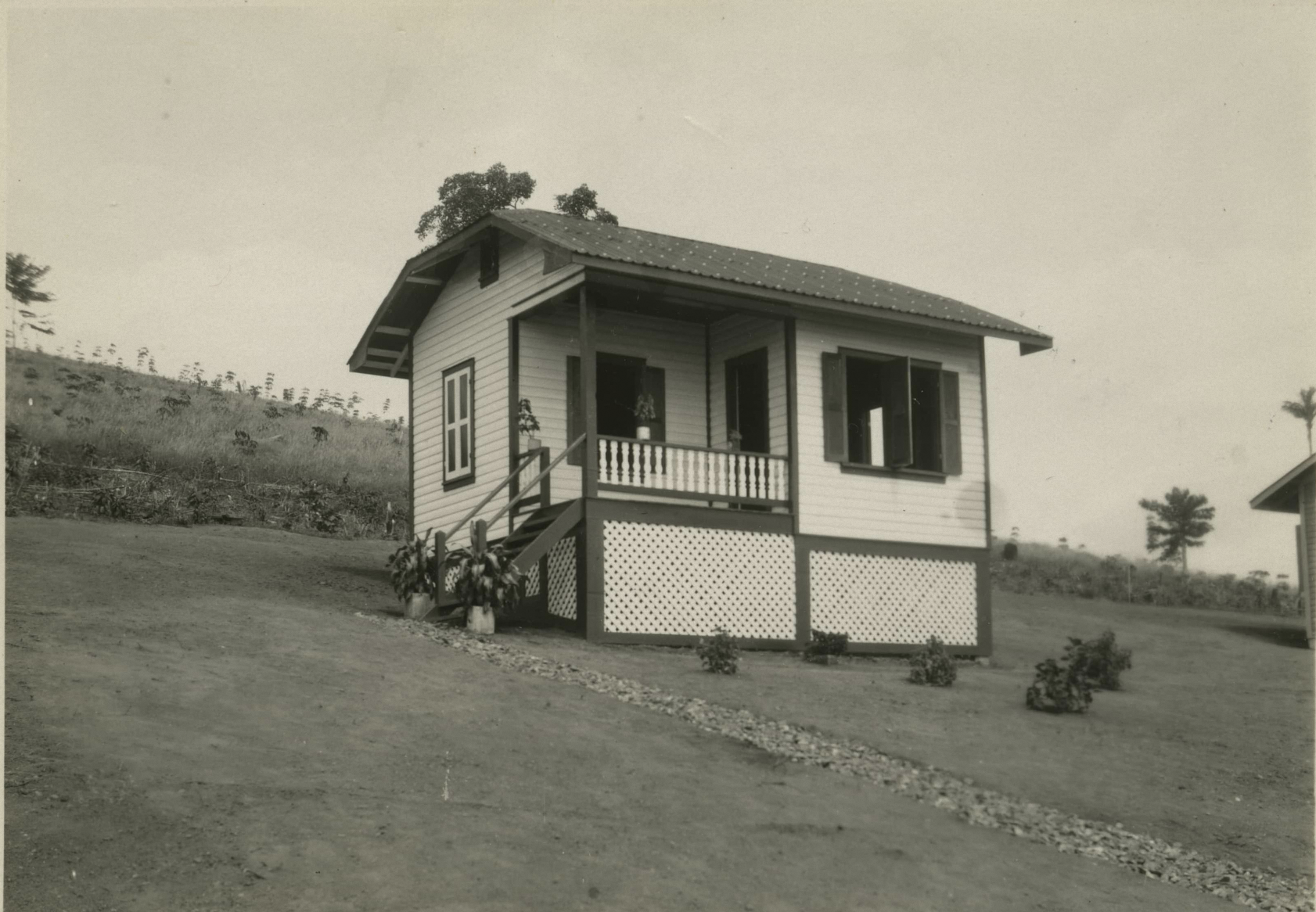
Worker housing at Fordlandia, 1931
This control over every aspect of his employees’ lives and all who lived on his property suited Ford’s desire to create not merely a company but a way of life. Having conquered manufacturing, Ford became obsessed with every aspect of living from nutrition (guests to his home were subjected to a variety of soy products) to hobbies (square dancing and poetry recitals led to good moral character). Prohibition had one of its biggest supporters in Henry Ford, and he enforced it to a man, not only on the job but in their homes as well.
When Ford decided the company would farm its own rubber and established Fordlandia, he exported all of these policies, including the poetry reading, to Brazil. He ordered his managers to enforce prohibition even though alcohol was legal in Brazil, and company officials had to be told by Brazilian authorities they couldn’t compel neighboring towns to comply with Ford’s rules. Single employees were required to eat lunch at the company cafeteria where they served not local food but a menu straight from Dearborn, including canned peaches sent to the Amazon from Michigan. Workers had to punch in and out according to a standard Michigan nine-to-five workday, which put men in the field during the Amazon’s brutal afternoon heat. The one company policy Ford didn’t apply to Fordlandia was the five-dollar workday. Brazilian workers at Fordlandia made less than a dollar a day.
The blanket application of policies designed for Michigan factories, the inflexibility and harsh treatment of any worker unable to comply led inevitably to a clash of cultures. Brazilian workers rioted in December of 1930, the climactic moment of Jungle of Ashes. While the company did learn lessons from the riot and failed first plantings, it never produced a single drop of rubber that went to a Ford car. The company sold all their Amazonian property back to Brazil within six months of Ford being removed as company president after a debilitating stroke in 1945. Ultimately, the Ford Motor Company lost the equivalent of $350 million on the Fordlandia project.
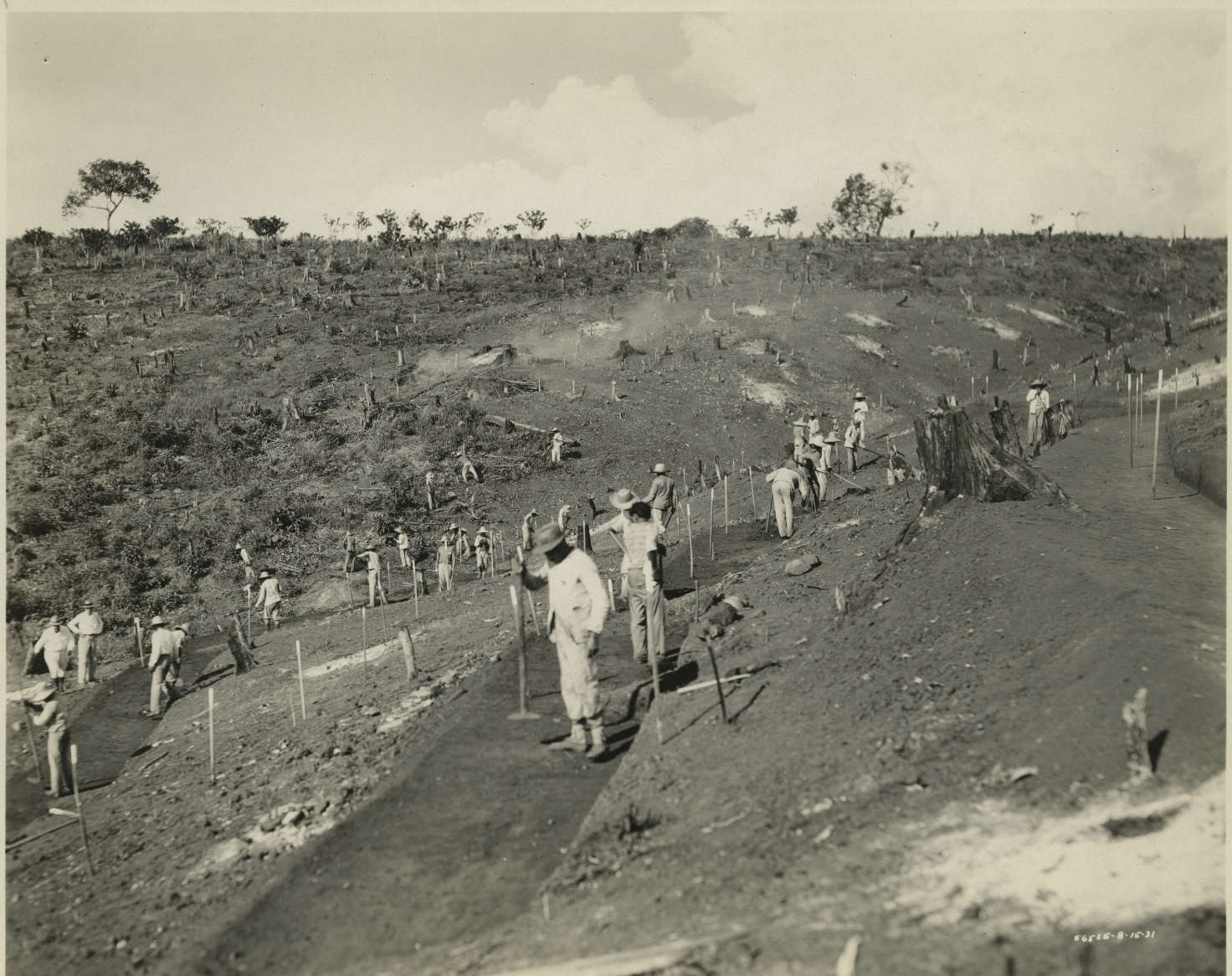
Terracing fields at Fordlandia
Maybe if Ford had hired a botanist or local agrarian experts from the beginning, Fordlandia could have been a success. If he hadn’t made employment contingent on adopting his ideal lifestyle. If he hadn’t tried to control his Brazilian employees in the factories and in their homes. If he’d listened to any expert on the Amazon, Brazilian culture, or climate. But Henry Ford had come to believe that because he had done great things, world-changing things, to manufacturing, then he could only do great things. Scientists have a term when someone brilliant adopts a radically unsound, straight crazy idea because of misplaced confidence in their own omniscience. It’s the Nobel Disease.
Henry Ford never appears in Jungle of Ashes. Telegrams are sent between subordinates, and trusted men arrive in the Amazon with explicit instructions. I wanted Henry Ford to feel like an omnipresent force, more god than man, and the people at Fordlandia were at his mercy. I wondered what Ford would think if he saw the remains of Fordlandia today. I have a feeling he would blame others, the local workers, the managers, the Brazilian government. The epic tale of Fordlandia doesn’t end with a lesson learned and an appeal for mercy from the gods. It becomes one example of a story that plays out among the wealthiest time and again. And that is a tragedy.
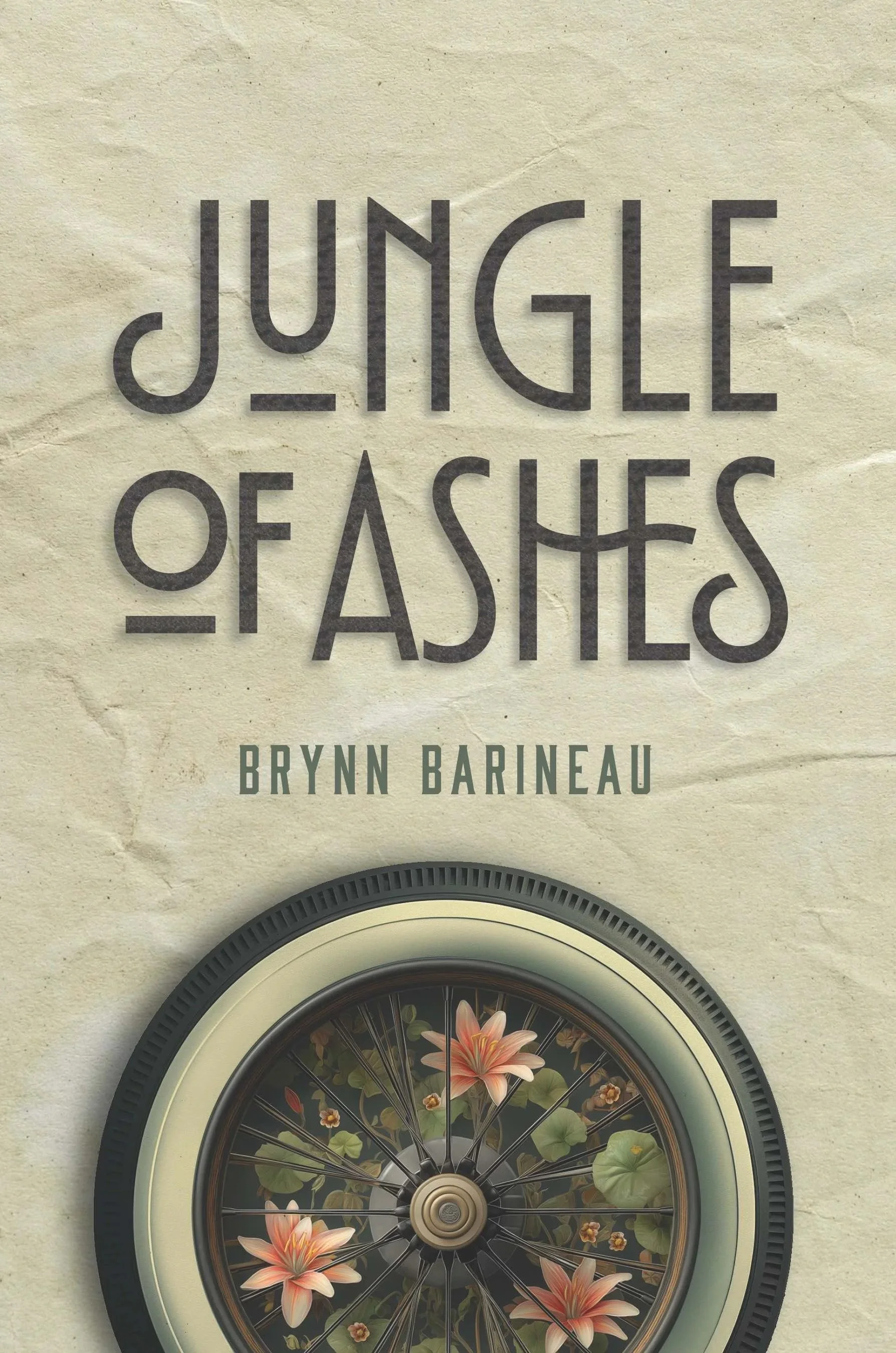
Step Into the Jungle of Fordlandia
What happens when industrial ambition collides with the untamable Amazon rainforest?
In Jungle of Ashes, Brynn Barineau transforms the true story of Henry Ford’s failed rubber empire into a sweeping work of historical fiction filled with danger, resilience, political unrest, and impossible love. Rich with atmosphere and grounded in real history, the novel transports readers deep into Fordlandia—a place where dreams of progress gave way to conflict, disease, exploitation, and survival.
If you enjoyed learning about the real history behind the novel, experience the human story at its heart.