
Book & Author Spotlight: A Candle Snuffed by Diane Green

Title - A Candle Snuffed
Author - Diane Green
Publisher - Independently Published
Release Date - August 15, 2025
Pages - 99
Formats - Paperback
Decription
In Chapter One, Lacey is sharp, ambitious, and unapologetically self-serving. She manipulates a roommate, pushes her way to the top, and views her career as a means of proving herself. Her fascination with history is real, but her motives are primarily rooted in recognition and status. She is clever, but not yet wise; driven, but not compassionate.
As the story unfolds, the supernatural mystery forces Lacey to look beyond herself. She begins to respect Norah, whom she initially mocked. She grows to value Sophie’s steady presence and begins opening her heart to legacy, not just success. The discovery of the truth about Agent 355 awakens something far deeper: empathy, purpose, and the burden of truth-telling.
By the conclusion, Lacey has risked her life, endured betrayal, and survived a terrifying encounter with Jacob Lyman. She does not emerge triumphant in a worldly sense, there is no book deal, no public praise, but she does reclaim a silenced woman’s voice and finds a higher calling: to bear witness.
Where she once pursued history for acclaim, she now tells it for justice.
Five Questions with Diane Green, Author of A Candle Snuffed
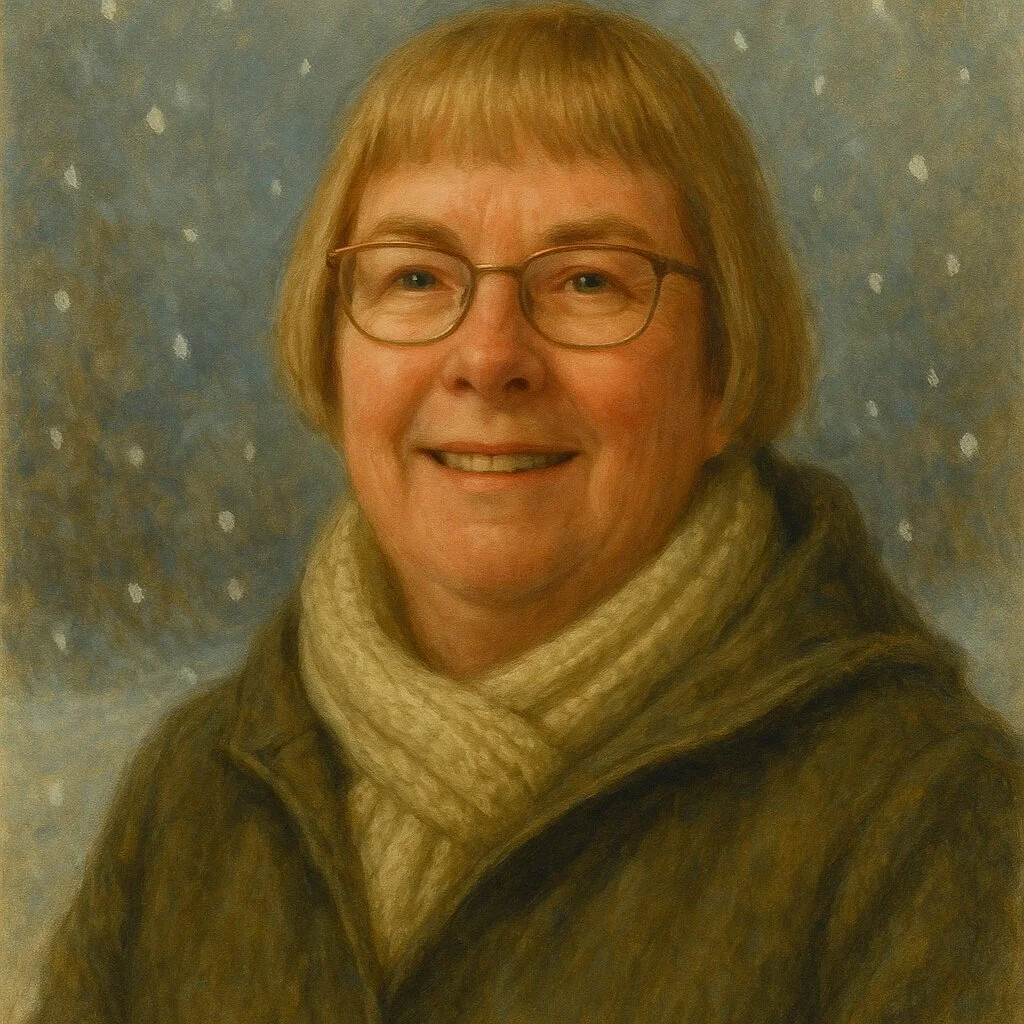
Author Diane Green
1. Your novel A Candle Snuffed blends historical research with supernatural elements. What drew you to combine these two genres, and how did you approach balancing authenticity with imagination?
My interest in blending historical research with the supernatural comes from both scholarship and personal experience. During college, I completed an internship with the Worcester Historical Society, which at the time was still discovering its institutional purpose. I worked in a dingy basement filled with artifacts, documents, and the residue of lives long gone. Though there was a moderate amount of light, I often had the unsettling sense that I was not the only presence in that room. I was determined to be brave about it, but after mentioning my feelings, I was transferred upstairs.
That experience stayed with me. Old buildings, artifacts, and forgotten records often seem to carry an emotional presence beyond what can be cataloged. In A Candle Snuffed, the supernatural elements grew naturally from that feeling — that history itself can feel haunted.
For me, the supernatural is not meant to replace history, but to illuminate the silences within it. I begin with a solid historical foundation and then allow imagination to enter where the record becomes fragmentary, mysterious, or emotionally charged.
2. Lacey Fletcher undergoes a significant transformation over the course of the story—from ambition-driven to purpose-driven. What inspired her character arc, and what did you hope readers would take away from her journey?
Lacey’s emotional and social growth feels somewhat universal to me. Young, intelligent, highly competitive people can often be brusque in their early years, driven by ambition, self-protection, and the desire to prove themselves. I wanted Lacey to begin from that recognizable place.
Over time, wisdom begins to reshape us. Relationships become more important, empathy deepens, and we begin to understand what truly gives life meaning. I wanted Lacey’s journey to reflect that evolution — from sharp ambition to a more generous understanding of truth, loyalty, and human connection.
I hope readers recognize something of themselves in that arc. Growth is rarely instantaneous. It comes through mistakes, grace, and the influence of those who help us become better versions of ourselves.
3. The mystery of the Culper Spy Ring and the elusive Agent 355 plays a central role in the novel. How did your background as a historian shape your interpretation of these real historical elements?
The Culper Spy Ring especially captured my imagination because of my long-standing interest in George Washington and my experience working with the Papers of George Washington. That scholarly background made the Revolutionary-era intelligence network feel both historically grounded and dramatically rich.
What especially interests me is that the Culper Spy Ring, as we understand it today, is a relatively recent historical recovery. Much of what we know about it was not fully unearthed until the 1930s, which means there is still space for interpretation and thoughtful fictional exploration.
While living in Virginia, I also became keenly aware of the cultural echoes of social hierarchy that still persist there. The idea of the First Families of Virginia, the grace, refinement, and quiet tenacity associated with that tradition, influenced my characterization of Susannah Washington Hayley. Beneath outward grace, I wanted her to possess a formidable inner strength, one that ultimately becomes decisive in the final confrontation with Jacob.
That combination of documentary history and lived cultural observation helped shape my interpretation.
4. Atmosphere plays a powerful role in the story, from the eerie mirror to the sensory details of The Paxton Historical Society. How do you craft setting in a way that enhances both the suspense and the emotional journey of your characters?
Atmosphere begins for me with lived sensation. Places must feel inhabited, not only physically but emotionally.
The mirror, in particular, came from several places. Old mirrors often distort and exaggerate what they reflect, creating an unsettling gap between appearance and truth. I was also influenced by the idea expressed in Michael Jackson’s Man in the Mirror — the challenge to truly look at oneself and become better.
In that sense, the mirror in A Candle Snuffed serves both as an instrument of suspense and as a symbol of moral reckoning. It forces characters to confront not only spectral danger, but the truths within themselves.
Settings like The Paxton Historical Society were also shaped by my own archival experiences. Dust, light, old paper, silence, and the sense of unseen history all contribute to the emotional journey.
5. A key theme in the novel is the idea of giving voice to those overlooked by history—particularly women. Why is this theme important to you, and how do you see fiction contributing to broader historical understanding?
This theme has been important to me for most of my life because I grew up surrounded by the stories of women whose strength was real, but whose names would never appear in formal history books.
One of the greatest influences on my thinking was my paternal grandmother. She was an exceptionally intelligent woman who lived in less than affluent circumstances. She lost five siblings to tuberculosis, had to leave school at the age of fourteen to work in a factory, and later, when my grandfather died while she was still in her forties, she was left to feed and raise five children on her own.
She opened their small home to boarders, cooked for the state police barracks across the street, and in her later years worked in sewing and notions in a department store. That kind of life takes enormous grit, resilience, and quiet courage.
Women like her rarely appear in the official record, yet they are often the true backbone of families, communities, and, in many cases, history itself.
That is why fiction feels so valuable to me. It allows us to restore dignity, voice, and emotional truth to those whose lives were lived heroically in ordinary circumstances. In that sense, fiction does not replace history, but broadens our understanding of who truly shaped it.