
The Real Figures Behind the Fiction: Four Memorable Lives in Historical Novels
One of the great pleasures of historical fiction is the moment you realize that a character—or at times even a creature—did not begin entirely in the novelist’s imagination. Behind the plot, behind the emotional arc, behind the carefully built world, there is often a real life waiting to be rediscovered.
That is part of what makes the genre so rewarding. Historical fiction does not simply transport us into another time. At its best, it also reintroduces us to people history has simplified, overlooked, romanticized, or misunderstood. Sometimes those are kings, generals, and revolutionaries. Sometimes they are scientists, poets, or community leaders. And sometimes, unexpectedly, they are an animal whose presence changed how a continent saw the world.
The following novels each draw on a historical figure whose real story adds another layer of meaning to the fiction. For readers of historical fiction, that connection matters. It reminds us that the past was once lived in full color—strange, difficult, hopeful, and human.
Clara the Rhinoceros in The Rhino Keeper by Jillian Forsberg

If historical fiction often asks readers to enter an unfamiliar world, Clara the Rhinoceros is a perfect guide.
In Jillian Forsberg’s The Rhino Keeper, readers encounter a story inspired by the remarkable true history of Clara, an Indian rhinoceros who toured Europe in the eighteenth century. That premise alone is enough to spark curiosity. Before photographs, documentaries, and global travel made distant animals visible to the public, the arrival of a living rhinoceros in Europe was not merely unusual—it was astonishing.
Clara was more than a novelty. She became a sensation. After arriving in Rotterdam in 1741, she traveled through major European cities, drawing crowds that included peasants, nobles, artists, and intellectuals. She was sketched, painted, studied, and talked about. In a world shaped as much by rumor as by observation, Clara challenged inherited myths about exotic animals and helped transform wonder into inquiry.
That is fertile ground for historical fiction. A novelist can use Clara’s journey not only as spectacle, but as a lens on the eighteenth century itself: empire, trade, curiosity, celebrity, and the uneasy line between admiration and exploitation. Forsberg’s novel appears to recognize exactly that. By placing Clara at the center of a story about archives, memory, danger, and devotion, the book turns a surprising historical subject into something emotionally resonant.
For readers, Clara is a reminder that history is not only made by rulers and wars. Sometimes it is shaped by the beings who disrupt expectation. A rhinoceros crossing Europe could alter conversations, inspire art, and reveal what a culture believed about nature, power, and the unknown.
Andreas Vesalius in The King’s Anatomist by Ron Blumenfeld
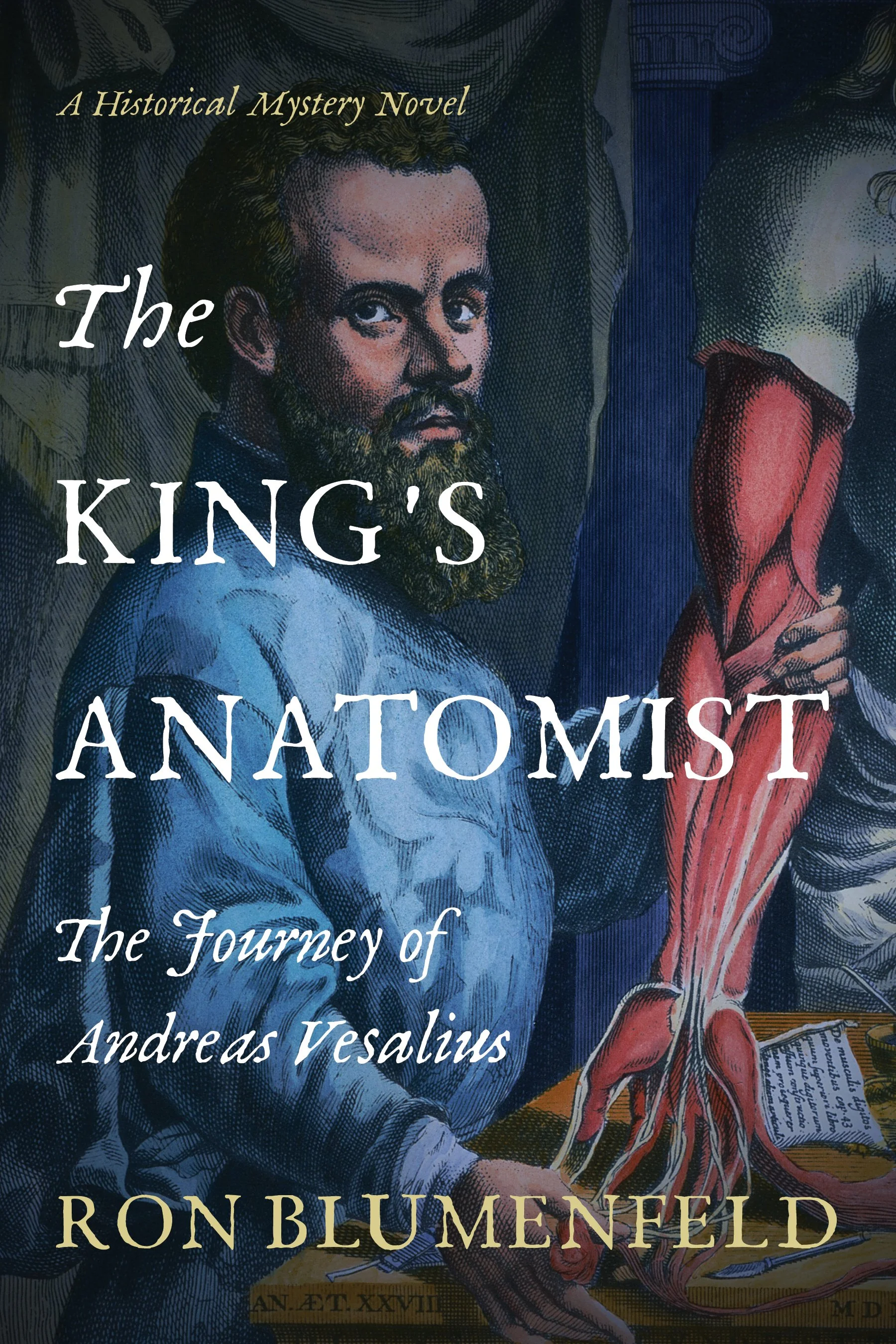
Some historical figures matter because they changed what people knew. Andreas Vesalius is one of them.
Ron Blumenfeld’s The King’s Anatomist draws on the life of the sixteenth-century anatomist whose work helped revolutionize the study of the human body. Vesalius is often called the founder of modern anatomy, and that description is not hyperbole. At a time when old authorities still shaped medical teaching, Vesalius insisted on direct observation. He dissected human bodies, questioned inherited assumptions, and published findings that challenged long-standing errors.
That kind of historical figure offers fiction a rich tension: the collision between knowledge and tradition. Vesalius was not simply a man of science moving neatly toward progress. He lived in a world of courts, religious pressure, professional rivalry, and mortal risk. To challenge accepted ideas in such a setting was not merely intellectual. It was personal, social, and political.
The King’s Anatomist appears to use Vesalius’s death and legacy as the beginning of a mystery rather than merely the end of a biography. That is a compelling choice because it reflects something true about major historical figures: they rarely leave behind a simple story. They leave behind influence, rumor, unfinished arguments, and people who must interpret what they meant.
For historical fiction readers, Vesalius represents the thrill of encountering a mind that changed the world from the inside out. His life reminds us that ideas have histories, and those histories are often dramatic enough to rival any invented plot.
Bagone-giizhig (Hole-in-the-Day) in Reclaiming Mni Sota by Colin Mustful
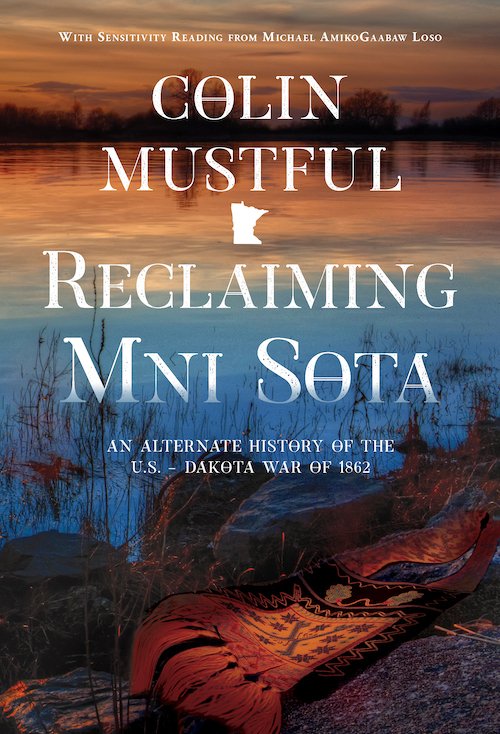
Historical fiction can do something especially powerful when it turns toward contested memory. That seems to be part of what makes Bagone-giizhig such a significant figure in Reclaiming Mni Sota.
Known in English as Hole-in-the-Day, Bagone-giizhig was a prominent Ojibwe leader in nineteenth-century Minnesota. His life unfolded amid immense pressure: negotiation with the United States government, intertribal tensions, settler expansion, corruption, violence, and the repeated threat of dispossession. He was ambitious, influential, and controversial—precisely the kind of historical figure who resists easy summary.
That complexity is what makes him so important for fiction. A lesser novel might flatten such a man into symbol alone: hero, villain, victim, or rebel. But the most meaningful historical fiction allows a figure like Bagone-giizhig to remain fully historical—shaped by grief, power, strategy, competing loyalties, and the brutal realities of his moment.
In the context of Reclaiming Mni Sota, his presence also opens larger questions. What happens when readers are invited to imagine a different outcome to the history of conflict, colonization, and Native resistance in Minnesota? What does that imaginative act reveal about the actual injustices of the past? Those are exactly the kinds of questions historical fiction is uniquely equipped to ask.
For readers, Bagone-giizhig represents more than a character in a dramatic regional story. He stands at the intersection of memory and possibility. His life encourages us to look beyond the simplified versions of frontier history and to confront the human stakes that official narratives often obscure.
Percy Bysshe Shelley in The Aziola’s Cry by Ezra Harker Shaw

Some historical figures arrive in fiction already wrapped in myth. Percy Bysshe Shelley is one of them.
Poet, radical, exile, husband of Mary Shelley, and one of the defining voices of English Romanticism, Percy Shelley has long occupied a space where literary achievement and personal drama seem impossible to separate. That makes him a natural subject for historical fiction—but also a demanding one.
Ezra Harker Shaw’s The Aziola’s Cry appears to embrace the intensity of Shelley’s world: love, scandal, ambition, grief, artistic hunger, and the emotional weather of a life lived in defiance of convention. That is fitting, because Shelley’s life was marked not only by brilliant verse but by instability, conviction, and tragedy. He was a public thinker and a private disruption. He inspired devotion and controversy in equal measure.
For readers of historical fiction, Shelley offers more than literary celebrity. He offers access to a whole emotional and intellectual climate. Through him, fiction can explore the Romantic era’s fascination with freedom, imagination, rebellion, and ruin. Just as importantly, it can recover the lived cost of genius—the strain placed on relationships, the weight of loss, and the difficulty of turning belief into a life.
And because Shelley’s life is so intertwined with Mary Shelley’s, his presence in fiction also invites readers to think about literary partnership, influence, and the stories that survive when one famous name stands too close to another. Historical fiction has a way of reopening those conversations with new urgency.
Why Real Figures Matter So Much in Historical Fiction
What unites Clara the Rhinoceros, Andreas Vesalius, Bagone-giizhig, and Percy Bysshe Shelley is not that they belong to the same world. They clearly do not. One is tied to Enlightenment curiosity, another to scientific revolution, another to the violent pressures of nineteenth-century Minnesota, and another to the Romantic imagination.
What unites them is the way their real lives enlarge the novels that feature them.
Historical fiction readers know that a novel is not a textbook. Its goal is not to recite facts. Its goal is to create meaning through story. But when that story is anchored in a real figure, something special happens. The reader feels both the intimacy of fiction and the gravity of history. The invented scenes carry greater weight because they gesture toward lives that actually left traces in the world.
That is why these figures matter. They remind us that historical fiction is not simply about costume, setting, or period detail. It is about encounter—encounter with the strangeness of the past, with the people who shaped it, and with the questions they still leave us.
If one of these figures catches your imagination, the best next step is simple: read the novel, then follow the history a little further. Look up the paintings of Clara. Read about Vesalius’s anatomical discoveries. Learn more about Bagone-giizhig and the contested history of Minnesota. Return to Shelley’s poems after seeing him in fiction. That movement between story and history is part of the joy of the genre.
Historical fiction gives us the narrative. History gives it echo. Together, they help the past feel not distant, but alive.