
When History Determines the Story: William III and the Limits of Historical Fiction
A Guest Post by Carole Penfield
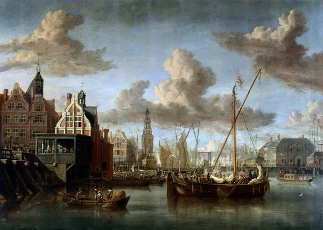
The Port of Amsterdam by Abraham Storck
When writing historical fiction, I am constantly reminded that history does not stand quietly in the background. It determines what is possible—and what is not.
For novelists working in the seventeenth century, few figures loom larger than William of Orange, later King William III of England. His decision to invade England in 1688 reshaped the political and religious landscape of Europe.
William himself was a Protestant prince who spent much of his life opposing the expansion of Louis XIV’s power across Europe. In the spring of 1688, he began carefully preparing an expedition from the Dutch Republic to England, gathering ships, supplies, and troops for what would become known as the Glorious Revolution. News of the birth of a male heir to King James II strengthened his resolve to prevent a Catholic succession in England. William intended to rule jointly with his wife Mary, the Protestant daughter of James. His preparations transformed Dutch ports and drew heavily upon the maritime resources of the Republic.
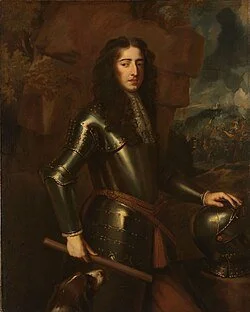
For thousands of displaced Huguenots—French Protestants driven from their homes after the Revocation of the Edict of Nantes in 1685—these events were not distant political maneuverings. They shaped routes of escape, places where refugees could settle, and the fragile hopes of families separated by religious persecution. William’s preparations for invasion changed the course of history in 1688.
While writing the fourth book in my historical series The Midwife Chronicles, I found myself returning again and again to this moment in history.
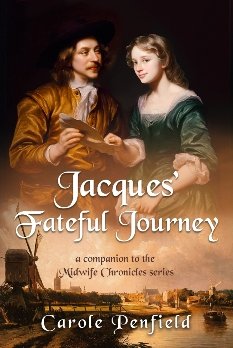
In Jacques’ Fateful Journey, Jacques Dupres is a Huguenot silk designer from Normandy whose family escapes to England in 1685, while he is left behind in chains. With French authorities guarding the Channel coast to hinder Huguenot flight by sea, Jacques has little choice but to travel overland through the Low Countries before attempting a crossing. His long, arduous journey—through prison towers and hidden safe houses—eventually brings him to the Dutch Republic.
There he finds religious freedom. Yet when he hopes to sail to England and reunite with his family, he finds himself stranded. William’s preparations for the 1688 invasion have taken up the fishing boats and private charters that might otherwise have carried him across the Channel.
For Jacques, this moment of history becomes a personal obstacle. The great political forces reshaping Europe have reached all the way down to shape the life of one displaced refugee.
For a writer of historical fiction, moments like these are both a gift and a constraint. They provide the forces that move characters across borders and oceans—but they also set the limits of what those characters can realistically do.
And so I return to the truth that confronts every historical novelist.
History does not stand quietly in the background.
It determines what is possible—and what is not.
About the Author
Carole Penfield is the author of The Midwife Chronicles, a historical fiction series set in seventeenth-century France, England, and the Dutch Republic. She lives in northern Arizona with her husband and two overly friendly cats.