
Travelers in a Psychedelic Universe
He was delivering a pizza to a regular customer—an obese guy who always ordered triple cheese. The guy’s apartment building was on the Huron River, and it was faster to park at the arboretum and walk through the cemetery than drive.
The cemetery gate was always left open, and it was short walk down a gravel driveway to a footpath that ran along the river.
A cat yowled, but then the yowl became less of an “ow” and more like an “ah.” As he listened, the sound morphed into a thin, plaintive, voice—not unlike the voice of a child. But a child wouldn’t have been left alone at night in a graveyard? Unless …
He walked with determination toward the exit, his heart thundering in his chest. Suddenly, his contact with the ground became tenuous. An unknown force was lifting him from behind. There was no Zip-a-Dee-Doo-Dah-I’m-going-for-a-balloon-ride sort of feeling—only a heart-stopping, ice-cold dread.
That was the point, he said, when he remembered the tab of LSD he had taken an hour before. You could be casual—even forgetful, I guess—about having taken a potent hallucinogen in the 1970s.
But let’s focus on my pizza-delivering friend’s encounter with the supernatural. Mystical journeys, either drug-induced or those fueled by fasting or immersion in the natural world, can be terrifying. So why are they also so compelling?
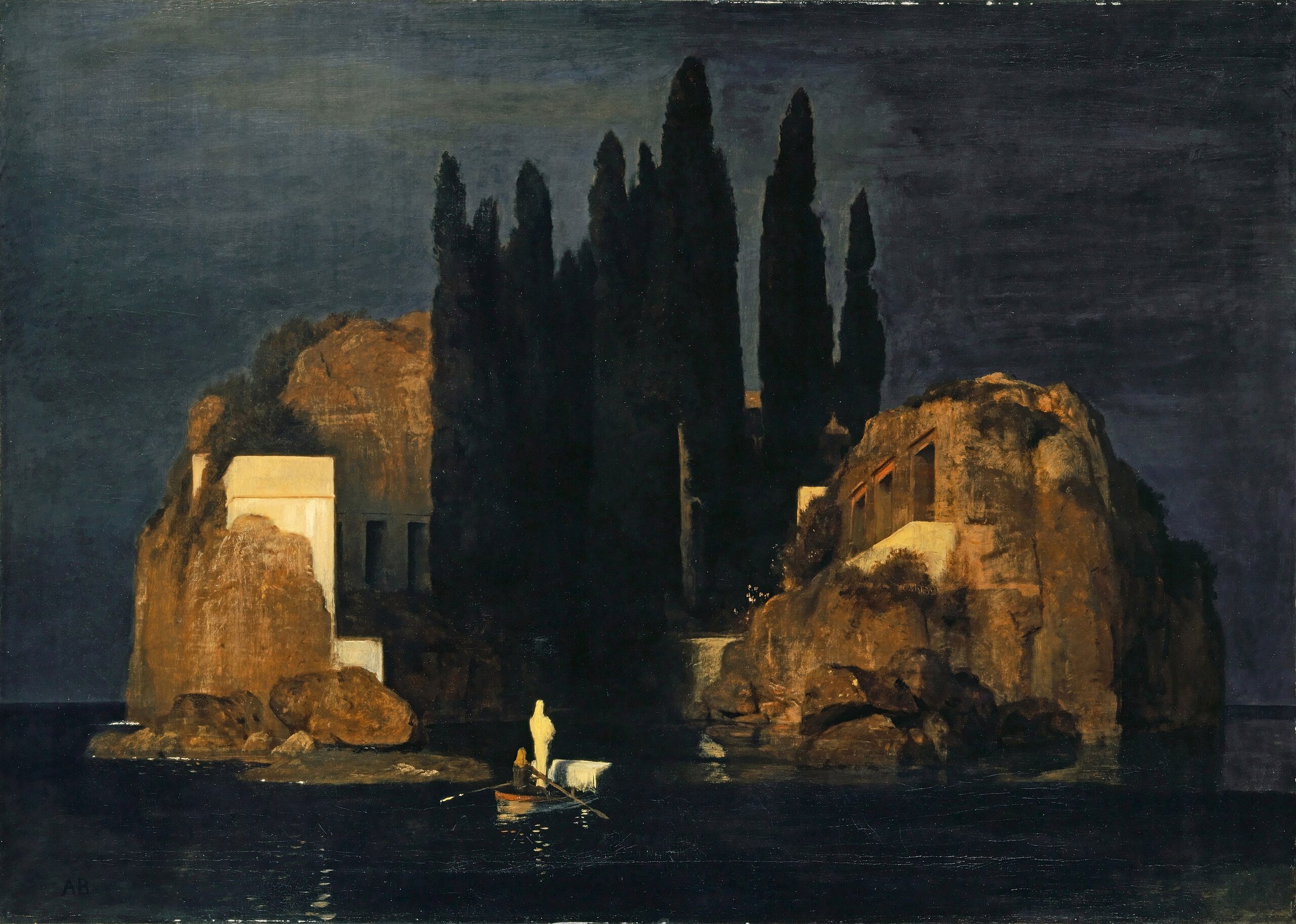
Arnold Böcklin, Isle of the Dead (1880).
Across water and darkness lies transformation—or oblivion. This image echoes the mystical journeys at the heart of The Water Lilies of Mishipeshu.
This is one of the questions I deal with in my historical fiction novel The Water Lilies of Mishipeshu, which narrates the dramas of 300 years of tumultuous Great Lakes history. Native American medicine women, religious zealots, politicians, artists take transformative mystical journeys with a mind-altering substance made from water lilies—a hallucinogen that brings them to the knife-edge of conscious.
For some, these journeys demand passage through existential darkness before they can emerge stronger, wiser, more powerful into the light. Others lose themselves entirely, gone forever in the sanctuary of the dead.
What would you risk for a chance at enlightenment?
An Excerpt from The Water Lilies of Mishipeshu by Karla Cruise
Chapter 10 – Roosevelt’s Winchester
“You’ve seen enough, Colonel,” said Mshkiki, as he stood in the water studying Roosevelt. “Rest now and then go home.”
Roosevelt rubbed his fleshy arms and chest with the water in a way that made it look as though he were anointing someone else’s body. A light mist had settled over the land and water. Mosquitos landed on his back; he did not swat them away. “I think one more session, Mshkiki. You said the Potawatomi have three sessions. I want to do that too.”
Yet, as soon as Roosevelt took up his place again on the sweat lodge floor, he felt that it had been a mistake. The novelty had worn off entirely. He was after all, only sitting on the dirt in a small, overheated hut—there was nothing remotely heroic about it. He sighed and settled in to patiently endure the passage of time.
Mshkiki added charcoal from the outdoor fire pit, and Roosevelt’s eyes were drawn to the glowing embers, which, without his glasses, lost their defined edges, pulsating and shifting their shapes. He watched in a disinterested way as one fiery figure’s head inflated and burst. Two dwarfish demons copulated and incinerated. One demon bent with age snatched another and began to devour it. He hadn’t realized before that all one had to do was watch the embers and a drama unfolded, the actors grew, metamorphosed, and died, usually violent deaths.
Gradually, blackness swallowed up all the red figures. Only that which appeared to be a small, red box remained. The box folded and refolded, getting progressively smaller until it folded itself up entirely and disappeared. Roosevelt was left staring at what was now just an undistinguished point of darkness, yet, gradually, that point receded into a deeper plane, sucking in the less dark spaces after it.
Suddenly, it was light around him, but his eyes were covered. He had somehow returned to the White House attic, where he was once again playing hide-and-seek with the children. He could hear their suppressed laughter, taunting him with light taps on his arms and legs, scurrying away before he could catch them. He scissored his arms before him in a mechanical way to make himself seem more frightening, and the children shrieked delightedly and ran away.
Off to his right, he heard the lid of the cedar chest being carefully lifted by small hands. This was Quentin’s favorite hiding place, and the Colonel moved toward it confidently, despite the blindfold. He found the chest’s edge with his foot, bent down, and lifted the polished lid.
He tore off his blindfold. It was Quentin, not the small boy he had heard laughing, but Quentin the athletic, handsome twenty-one-year-old whom he had last seen in his pilot’s uniform, his cap perched rakishly to one side. He had saluted his father joyfully as he headed out the front door with his army-issued duffle bag.
But this Quentin would never smile again. The Quentin that he saw before him in the cedar chest was lifeless—a gaping, jagged wound across his eye and forehead. Quentin’s childhood hiding place was now his coffin.
He understood, with dazzling clarity, that he had sent his son, his greatest treasure, without which his own life was meaningless, to his death, and that it need not have happened. No patriotic slogan, impassioned speech or brilliant passage of rhetoric would ever justify the loss of a life so precious. He had spent a lifetime glorifying the “ultimate sacrifice” without ever fully understanding what it meant.
He came to himself howling and rocking violently back and forth. Jeremy and Mshkiki were dragging him from the sweat lodge, and he was breathing the staccato breath of a child who had just cried his heart out. They laid him out on the grass under a woolen blanket. He stared up at the stars, their clear, white light was a welcome antidote to the riotous and obscene red embers.
“What the hell happened?” Jeremy asked Mshkiki in an accusatory voice, as they stood at a slight distance to observe the President.
“I told him not to go in a third time. The third time is for vision seekers.” Mshkiki sat down next to the President whose chest was still heaving.
Roosevelt fell into a deep sleep and did not wake even when Mshkiki’s pet bear sniffed and licked his hair.
He woke to the sound of the distant whistle of the 6:05 Erie-Pennsylvania train as it arrived in Kouts Station. He dressed in the cold morning air and walked with Jeremy back to the boat. As they rowed against the gentle current, a great sandhill crane lifted its blood-red head from the brush and spread its great wings in flight. The Colonel instinctively raised his Winchester, aimed, then lowered the rifle.
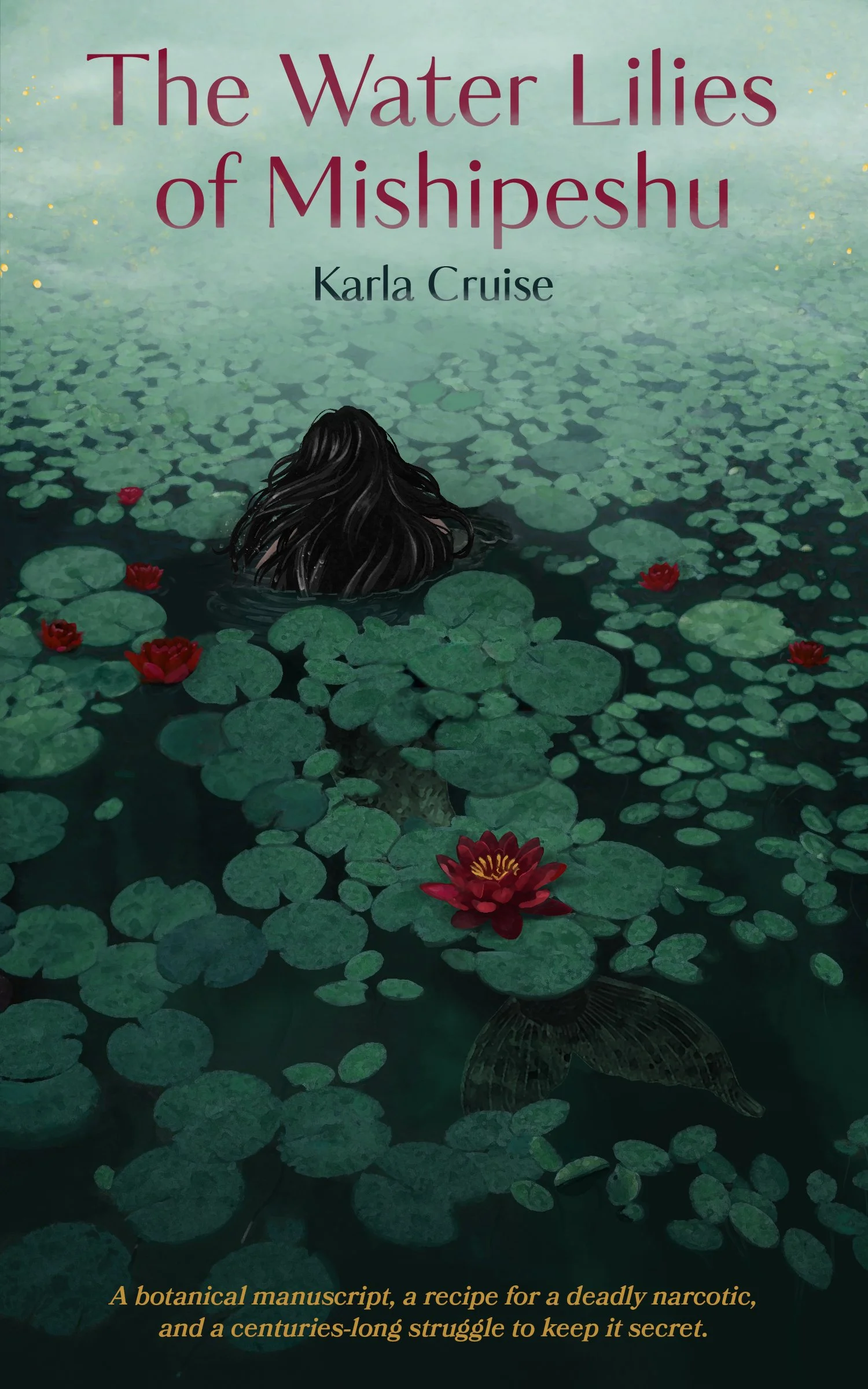
A hidden botanical manuscript sparks a centuries-long battle between profit and preservation, leaving a trail of murder, madness and encounters with the supernatural.
In the midst of war and cultural upheaval, Marguerite, a half-French, half-Native American woman, and her British lieutenant lover create a botanical manuscript at a wilderness outpost. This manuscript holds the secrets of an ancient medicine society, including a dangerous recipe for a hallucinogen that can grant prophetic powers or kill. As foreign invaders sweep across the land, generations work to preserve and conceal this "lost" manuscript.
The story unfolds over centuries, from the burning of a local fort by Native American tribes to the rise of White settlers and industrialists. Despite attempts to erase indigenous culture, the manuscript endures, hidden away until a young graduate student discovers it by chance. Her find sparks a race against time to protect the manuscript from a powerful pharmaceutical company. Join her on a thrilling subterranean adventure with an ecology student as they strive to restore the land and return the manuscript to its rightful owners.
In a tale woven with history, myth, and the enduring power of nature, Mishipeshu, the Algonquin goddess, reappears to foretell the world's destruction and rebirth. Will the manuscript’s secrets bring harmony or chaos? Discover the answer in The Water Lilies of Mishipeshu.