Harriet Beecher Stowe’s Uncle Tom’s Cabin is touted in a Library of Congress exhibition as “one of the books that shaped America.” Published in 1852, it became an immediate bestseller and created a firestorm that many credit with sparking the Civil War. Both loved and hated, the novel’s reputation continues to be mixed today.
It tells the story of Tom, a slave sustained by his Christianity while enduring servitude, cruelty, and violence. The novel also portrays the many horrors of slavery, including families being separated and slaves being hunted and murdered. The first edition sold more than 300,000 copies in the United States and was wildly popular in England, as well. Though it was fiction, Stowe had based the story on extensive research, including testimonials, letters, newspaper articles, classified ads, and other documents.
“It was a radical, innovative book,” wrote Pulitzer Prize-winning Geraldine Brooks in a recent Smithsonian article. “Stowe had diligently gathered shards of factual evidence from multiple sources and painstakingly forged her fictional account from them. What she created was a story that moved people more profoundly than bare fact alone had.”
Abolitionists loved it, though many other people in both the North and South questioned whether the novel accurately and truthfully described the horrors of slavery. The novel was widely decried by Southerners who insisted slavery was both essential and humane. Many called Stowe’s book “wholly false, or at least wildly exaggerated.” In his introduction to the Signet Classic edition many decades later, author Darryl Pinckney called it “the book that launched a thousand editorials, accusations, and rebuttals.”
In response to the accusations, Stowe published A Key to Uncle Tom’s Cabin in 1853, a nonfiction book “presenting the original facts and documents” upon which her novel was based.

Harriet Beecher Stowe’s The Key to Uncle Tom’s Cabin
“Its impact was enormous, galvanizing anti-slavery sentiment in the North, infuriating the South, priming public opinion for the election of an anti-slavery Republican president and widening the divisions that brought about the Civil War, ” Brooks wrote.
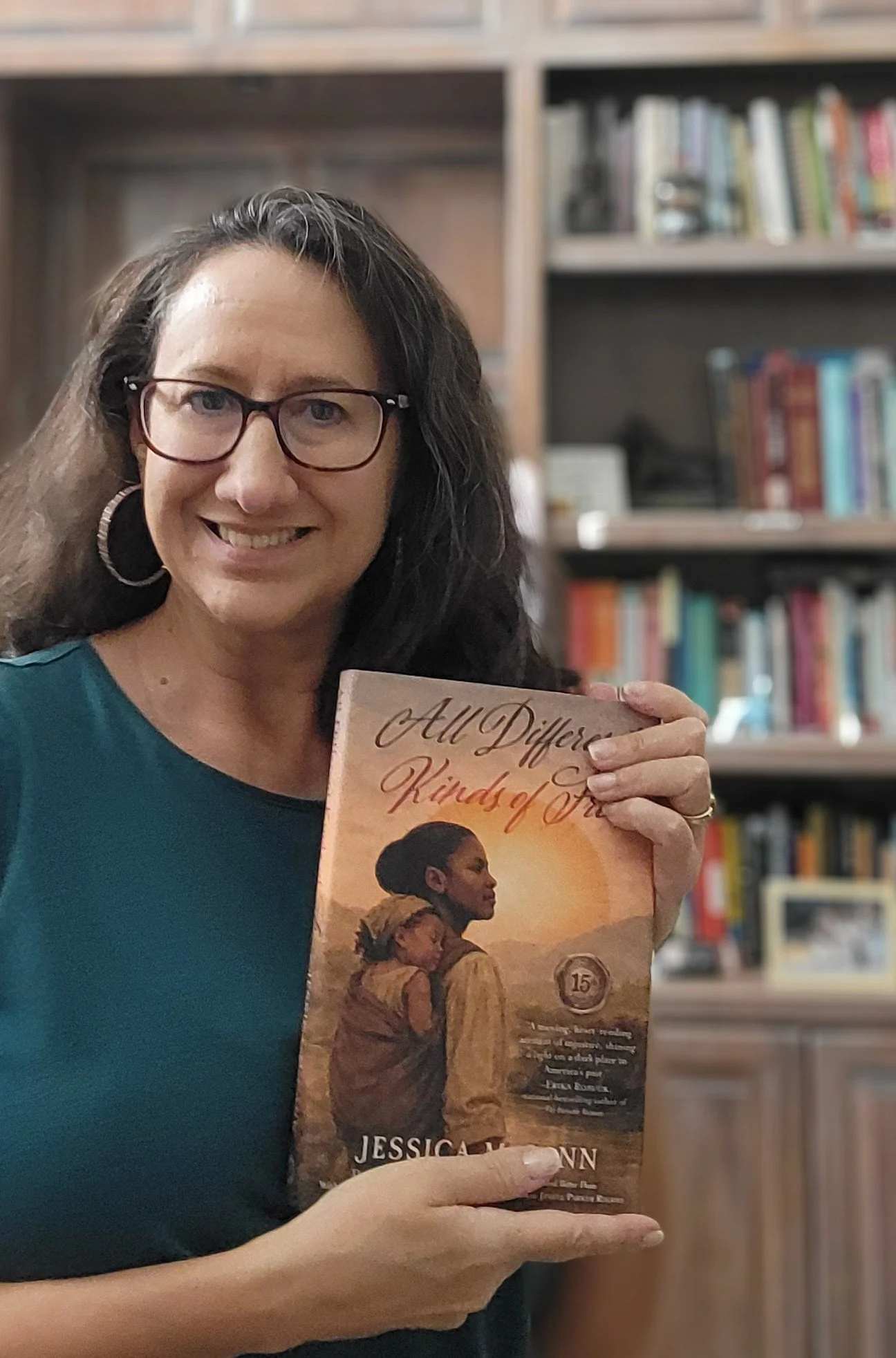
Selfishly, I’m grateful for the uproar that questioned the authenticity of Stowe’s novel. Her resulting Key proved invaluable to me in researching and developing my own novel 150 years later. Stowe’s thoroughness in documenting her sources not only supplied me with helpful information, it also provided validation to my approach in writing All Different Kinds of Free.
Based on a true story, All Different Kinds of Free shines a light on Margaret Morgan, a free woman of color who was kidnapped in 1837 with her free children and sold into slavery. She fought hard to regain her freedom, and she endured tremendous loss and hardship. Her ordeal led to a pivotal Supreme Court case in America’s history, Prigg v. Pennsylvania.
My original intent was to write a biography of Margaret. Unfortunately, several years of research had turned up very little detail about her life, either before or after the kidnapping. I could have, perhaps, written a satisfactory magazine article. But I didn’t have enough to write a book. Discouraged and heartbroken, I set the project aside.
Some time later, during a family trip visiting in-laws, inspiration struck. A cousin had taken us to the Living History Farms in Urbandale, Iowa. We spent the day exploring the interactive outdoor history museum with our children, including a working 1850s farm and the 1876 frontier town of Walnut Hill. While perusing the wares of Greteman Brothers General Store on main street, I discovered A Key to Uncle Tom’s Cabin on a shelf of old books. Learning that Stowe had assembled hundreds of facts and anecdotes about the lives of slaves and slave owners to construct Tom’s fictional story was empowering. It enabled me to envision a different way of sharing Margaret’s story.
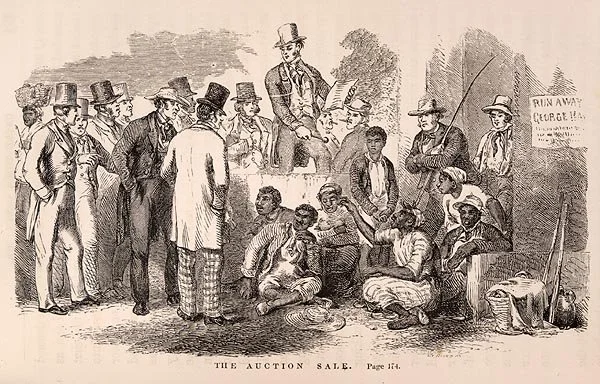
"The Auction Sale", drawn by Hammatt Billings, appears in the first edition Uncle Tom's Cabin
I read and studied Uncle Tom’s Cabin, as well as scholarly and mainstream assessments of it. While Stowe accomplished her primary goal of tugging the heartstrings of readers and sparking outrage about the institution of slavery, the novel also received criticism on multiple fronts. That criticism, in many ways, is just as fervent today.
Though her novel became a rallying cry for the anti-slavery movement, “to many Black people, the characters in Uncle Tom's Cabin were insulting,” wrote Toronto journalist Kat Eschner in Smithsonian Magazine. “Stowe’s vision of a passive, religious slave who, although he wanted freedom, didn’t want to rise above whites, is a good example of some of the assumptions white Northerners had about the meaning of Black freedom.”
The novel’s reputation became especially problematic in the early 20th century. Many Black leaders of the era – including Richard Wright, James Baldwin, Marcus Garvey and George Alexander McGuire – attacked the title character’s subservient nature. Today, the term “Uncle Tom” is considered racist and patronizing, and an insult to a person of color for being what the critic deems complicit with white oppression.
Many scholars have pointed out that Stowe’s portrayal of Uncle Tom was Christ-like in that he sacrificed his wellbeing for others and remained uncorrupted by the cruelty around him. Stowe herself was the daughter of a reverend, wife of a seminary professor, and a devout Christian. Perhaps she infused too much of her own belief system into Uncle Tom, went too far in attempting to craft a perfect hero.
In works of fiction, the protagonist should feel authentic to the reader. Strong of character, though flawed. Likeable, yet damaged. Relatable.
Still, without Uncle Tom, where would America be today? Without the controversy Stowe sparked, how much longer would it have taken our nation to abolish an unjust system and begin to move toward equality? Much more work remains to be done on this front. And I cheer on all the novelists – past, present and future – who write the stories that need to be told and spark the fire of progress.

Coming November 10th…
A free woman of color kidnapped and sold into slavery fights for her family and her freedom, sparking one of the most pivotal Supreme Court cases in American history.
This fully revised 15th Anniversary Edition of Jessica McCann’s award-winning debut novel brings new attention to the astonishing true story of Margaret Morgan—a free woman of color whose life changed forever on a frigid Pennsylvania night in 1837.
Have you registered for the free History Through Fiction Virtual Book Festival?
Join us for a day full of historical fiction, including a Community Read Discussion of McCann’s novel.
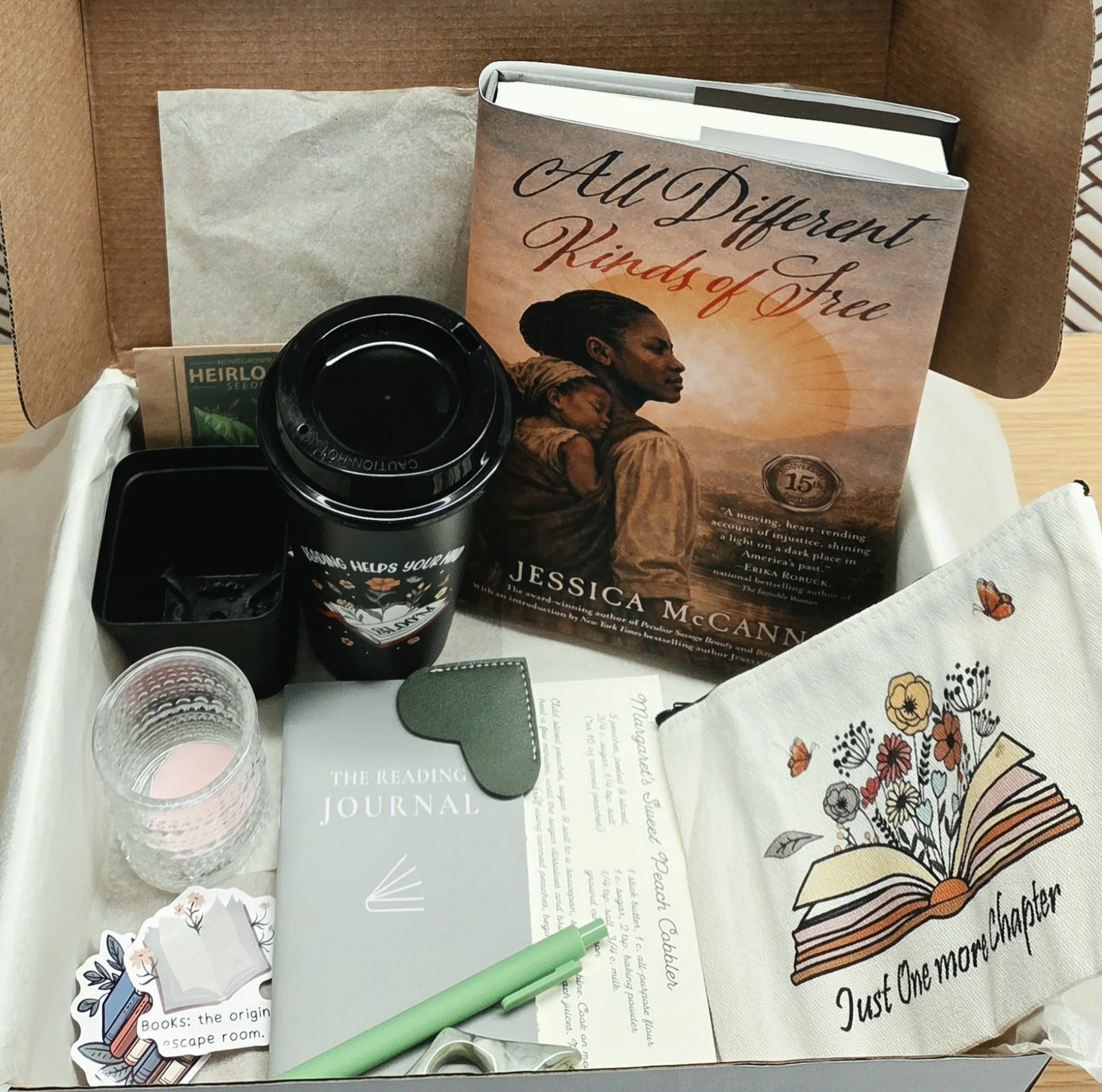
Make your next read an experience with one of our exclusive All Different Kinds of Free Book Boxes! Each box includes a signed copy of the book, along with a collection of bookish and story-inspired items designed to make the Community Read even more special.
About the Author
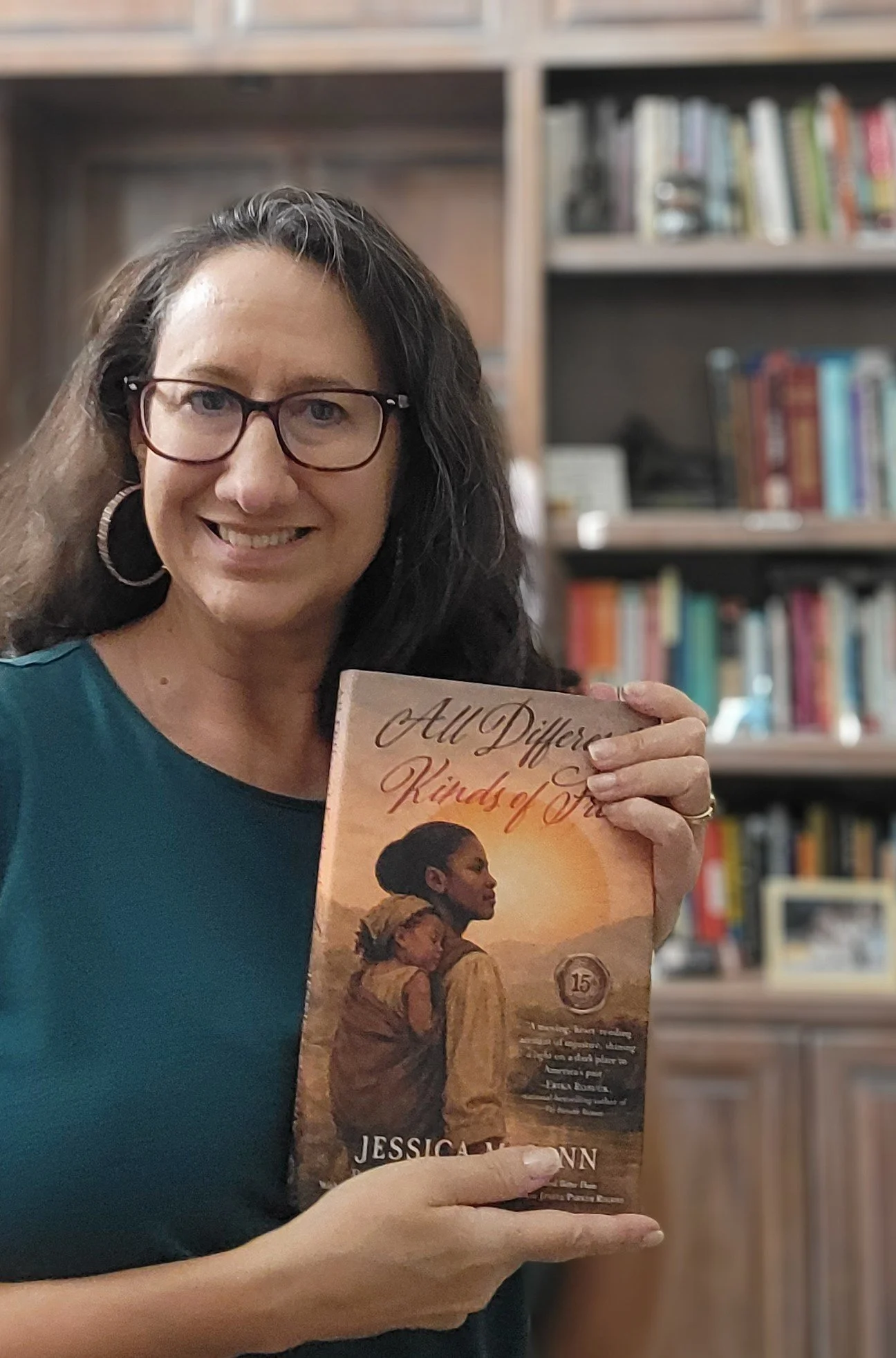
Jessica McCann is an award-winning historical novelist and freelance writer. One of her earliest assignments was covering a breakthrough surgical radiation technique for destroying brain tumors, during which she was permitted to don scrubs and observe inside the operating room. Since then, her reporting and creative nonfiction has appeared in dozens of magazines, including Business Week, The Writer and Phoenix.
McCann’s novels have been called “gripping,” “atmospheric,” and “suspenseful” by Publisher’s Weekly, with “rich historical context” and “insightfully etched characters.” Her writing highlights ordinary people overcoming extraordinary adversity. Themes of nature, forgiveness, community, and perseverance are hallmarks of her work.