Is including famous historical figures in works of fiction nothing more than celebrity name-dropping? Or can it add dimension and perspective to a novel?
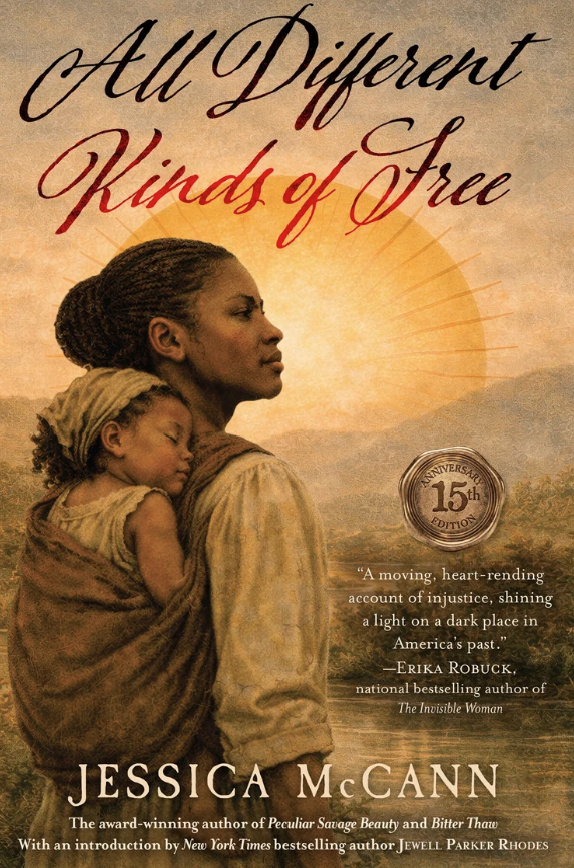
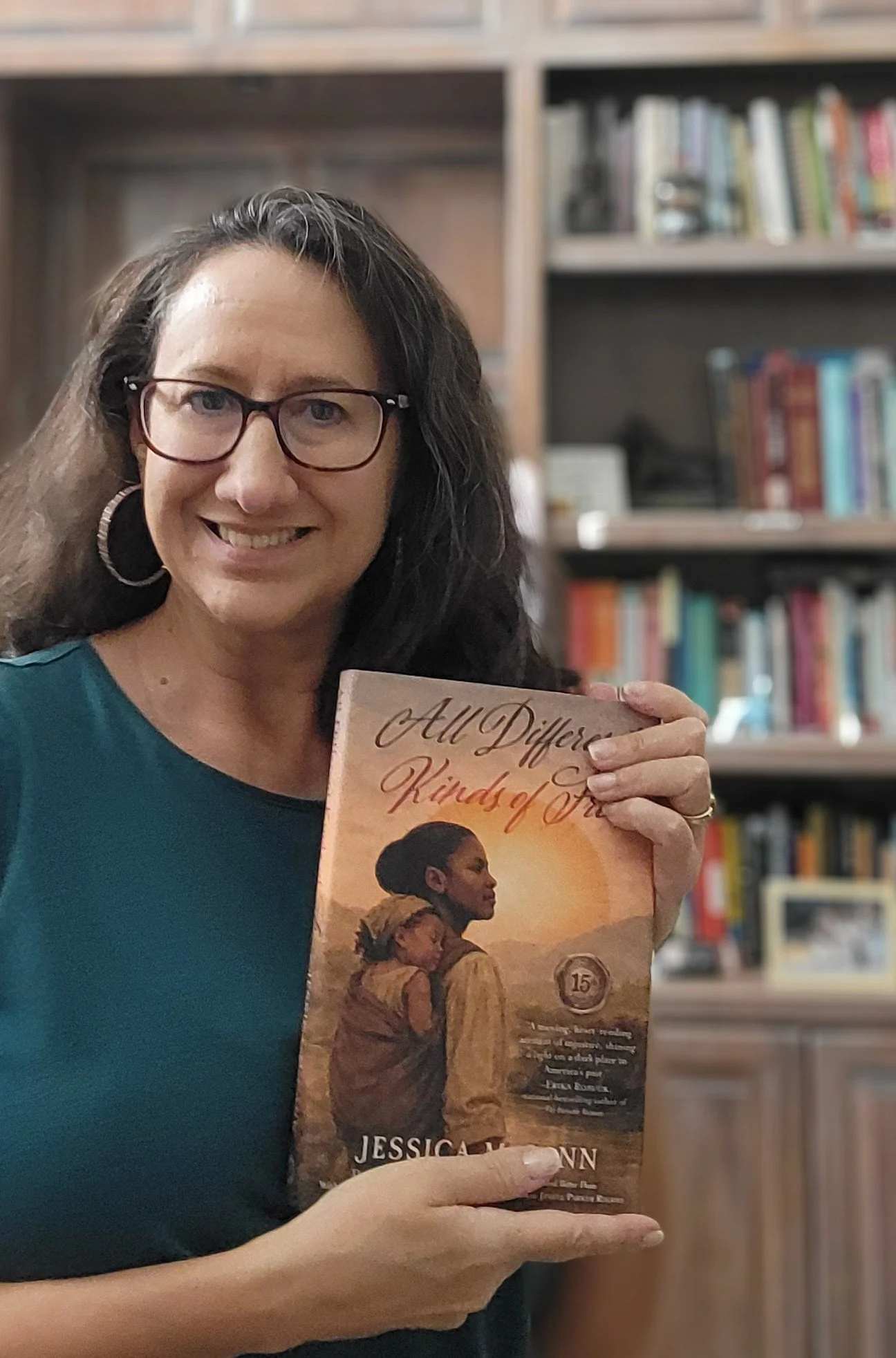
My debut historical novel, All Different Kinds of Free, is set in mid-1800s America. It tells the story of Margaret Morgan, a free woman of color who was kidnapped and sold into slavery. The kidnapping conviction of her bounty hunter was overturned by the U.S. Supreme Court, and the verdict in Prigg v. Pennsylvania fanned the early embers of civil war. The famous English author Charles Dickens has a cameo role in the novel.
A few advance readers of my manuscript suggested I remove the Dickens scenes and references from my book. They said it felt like “name-dropping” (these were all folks in the publishing business in one form or another). Other advance readers loved the Dickens sections and encouraged me to leave them in (these folks were mostly readers and fellow writers).
What to do?
To help me decide, I did a quick review of the first historical novel I ever read (and loved), Ragtime by E.L. Doctorow. I was in high school when I first read it, and at that time I hated “history.” Here’s the back-cover blurb from my well-worn dog-eared paperback copy:
“Ragtime is set in America at the beginning of the century. Its characters: three remarkable families whose lives become entwined with people whose names are Henry Ford, Emma Goldman, Harry Houdini, J.P. Morgan, Evelyn Nesbit, Sigmund Freud, Emiliano Zapata.”
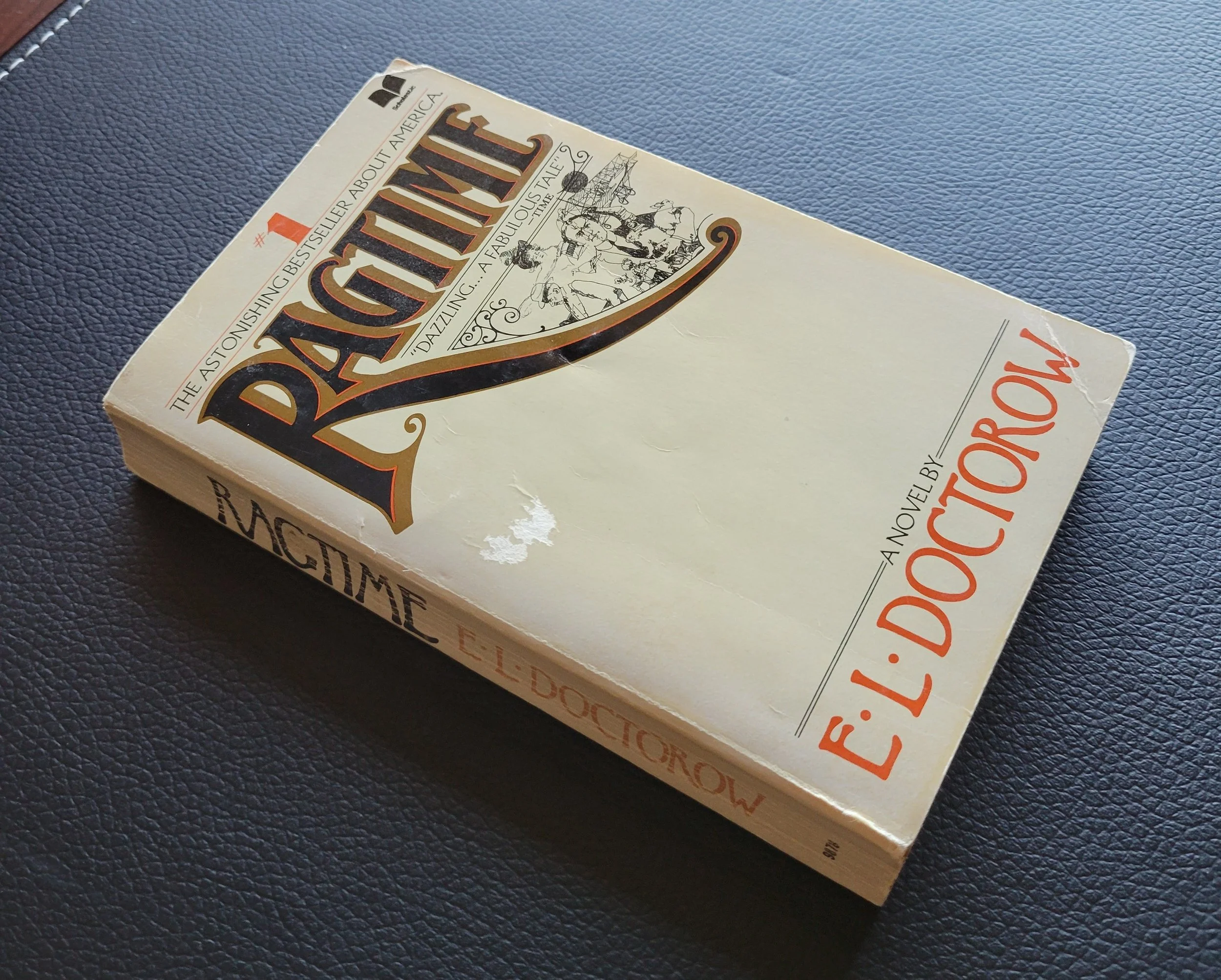
Jessica’s copy of Ragtime by E.L. Doctorow
Hmm…. It sounded suspiciously like “history” to me, not a juicy novel. Boy, was I wrong. Murder, magic, sex, money, racial tension, intrigue, love, betrayal: Ragtime had it all. I especially loved that it included well-known historical figures along with the stories of average people. It was my first lesson, really, in how “history” is an important part of our everyday lives. History is you and me.
So-called name-dropping isn’t limited to celebrities, though, or to historical fiction. Writers of contemporary fiction often include references to celebrities, name brands, pop culture and current events. Such references, as long as they don’t distract from the story, help put the fictional characters’ lives and stories in context for the reader. They add dimension.
I hadn’t specifically set out to include famous people in my fictional rendering of Margaret’s story. During my research, however, I stumbled upon the fact that Dickens and his wife had vacationed in the United States and visited Washington, D.C. the same year that Prigg v. Pennsylvania was argued before the Supreme Court in 1842. Then I learned Dickens wrote a book about his trip. I read his American Notes as part of my research, and Dickens’ thoughts and impressions on slavery ended up being an important plot point in my novel. It added emotional dimension and historical context. It had to stay.
My research also uncovered that Edgar Allan Poe lived in Philadelphia (one of the main settings of my novel) during the same time my main character, Margaret, lived there. In fact, Poe later said the race riots he had witnessed in Philly during that time inspired some of his future macabre works. Wow! Believe me, I worked long and hard to somehow weave in that juicy historical tidbit. I wanted so much (so very much!) for Margaret and Poe to pass one another on Main Street or reach for the same item in the general store. In the end, though, he just didn’t fit. It was fun and intriguing, but Poe’s presence didn’t add value to Margaret’s story. It was a true example of name-dropping, and it had to go.
What are your thoughts? Do you like it when authors include famous people, current events or pop culture references in their novels? Does it add dimension to the story, or does it feel superficial?
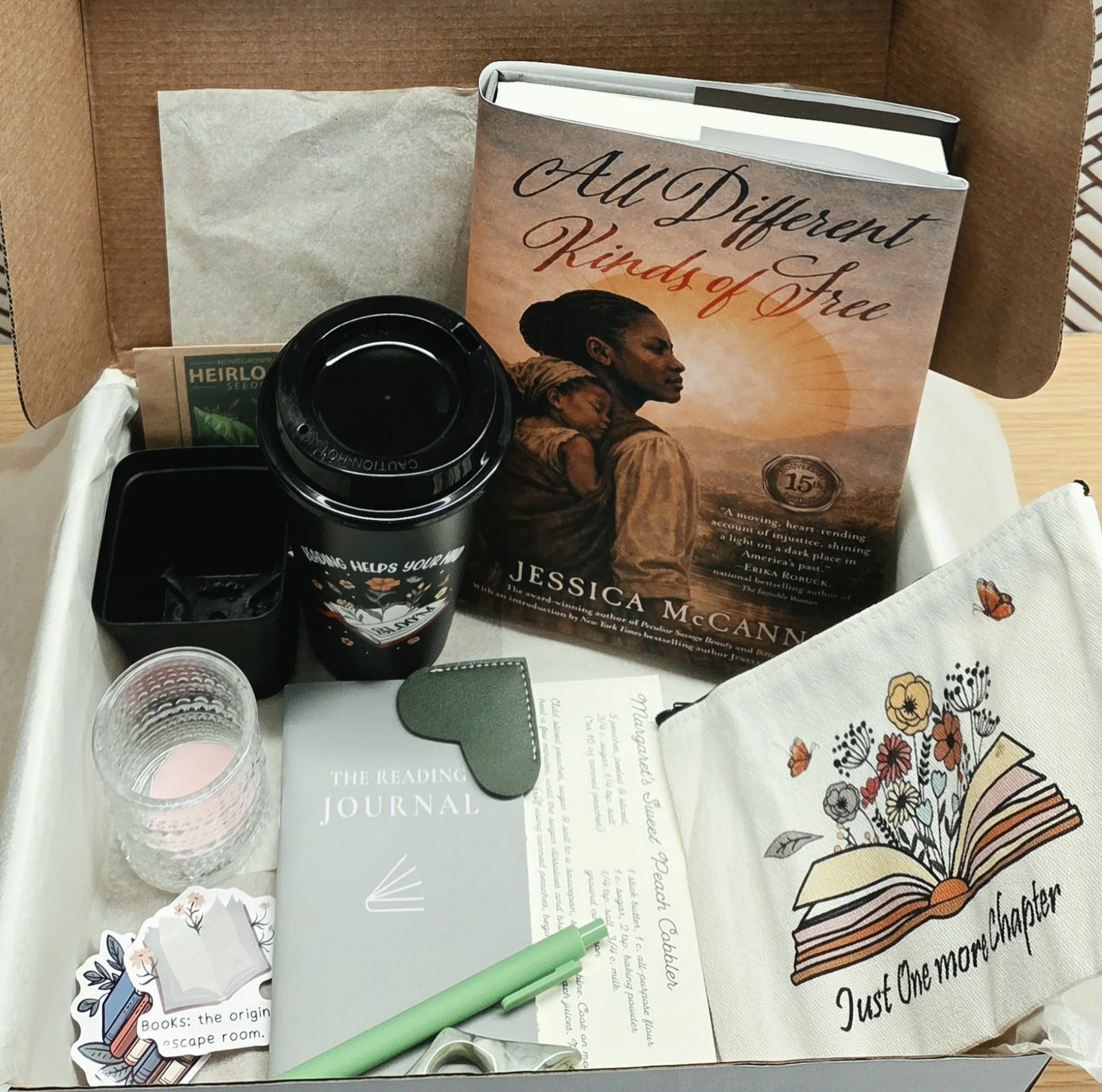
Join us for a day full of historical fiction, including a Community Read Discussion of McCann’s novel. Make it the full experience with one of our All Different Kinds of Free Book Boxes!
Each box includes a signed copy of the book, along with a collection of bookish and story-inspired items designed to make the Community Read even more special.
Only ten hardcover copies of this book exist—and they are exclusive to these boxes!
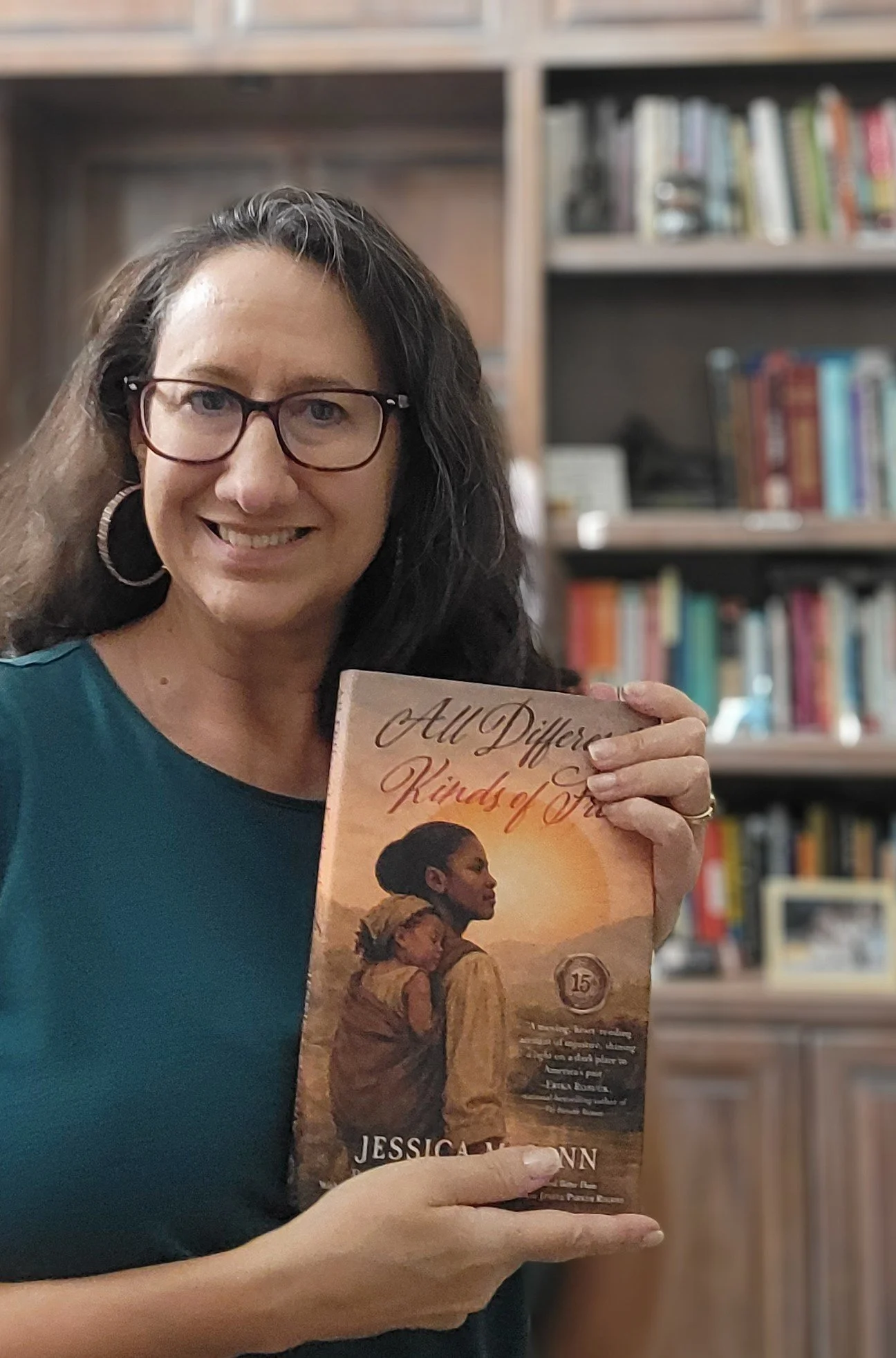
About the Author
Jessica McCann is an award-winning historical novelist and freelance writer. One of her earliest assignments was covering a breakthrough surgical radiation technique for destroying brain tumors, during which she was permitted to don scrubs and observe inside the operating room. Since then, her reporting and creative nonfiction has appeared in dozens of magazines, including Business Week, The Writer and Phoenix.
McCann’s novels have been called “gripping,” “atmospheric,” and “suspenseful” by Publisher’s Weekly, with “rich historical context” and “insightfully etched characters.” Her writing highlights ordinary people overcoming extraordinary adversity. Themes of nature, forgiveness, community, and perseverance are hallmarks of her work.