
Seasonal Labor and Daily Life: How Early Twentieth‑Century German‑Russian Immigrant Families Worked Nebraska’s Beet Fields
A Guest Blog Post by Marilee Aufdenkamp
Families of Germans from Russia began arriving in Nebraska in the late nineteenth and early twentieth centuries, all of them ethnic Germans whose ancestors had lived for generations in colonies in the Russian Empire. Those who settled in Hastings were primarily from the Volga River region. The colonies were founded in the 1760s after Catherine the Great issued a manifesto inviting poor German farmers to settle in Russia with promises of land, religious freedom, and exemption from military service. The early years were harsh—supplies failed to arrive, government agents cheated the settlers, and the colonists faced attacks, wolves, and an unforgiving landscape. Out of that experience came habits that shaped community life for generations: strict frugality, shared labor, and multigenerational households where authority flowed upward to the eldest members.
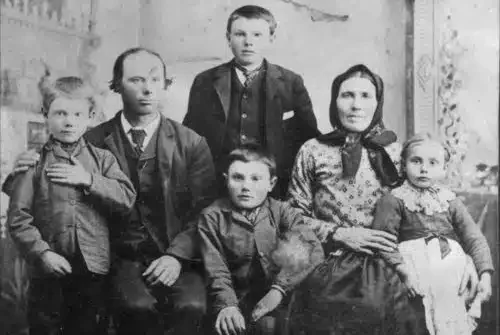
Volga German family, Ellis, Kansas - Kansas Historical Society - https://www.kansasmemory.gov/item/215002
By the late 1800s, the guarantees that had attracted their ancestors to Russia had been withdrawn. Russification restricted German schools and revoked military exemptions, and after the failed 1905 Revolution, pressure intensified. Most of the families who built the Hastings community of Germans from Russia arrived in the early twentieth century, and by the time this group settled in Nebraska, the sugar beet industry was already established in the Platte Valley and the Panhandle. They brought with them the patterns formed in the colonies: endurance under hardship, conservative religious life, and a disciplined household economy. Those habits shaped how they built their neighborhoods in Hastings and how they approached the seasonal labor that sustained them.
Sugar beet work drew people west each year, and for many households it became the most reliable source of income they had. Contracting began in late winter, when a fieldman from the Great Western Sugar Company visited German Russian neighborhoods in towns like Hastings with a notebook listing the growers who needed labor and the acreage each had committed to plant. Families looked at how many dependable workers they had and agreed to an acreage that matched their strength. An adult working alone could manage only a limited amount, but a household with older children could take on far more, adjusting their commitments to the number of hands available. Children as young as seven added capacity because they could thin and later hoe. Families relied on their experience from previous seasons when deciding what they could manage, knowing that falling behind meant risking future work.
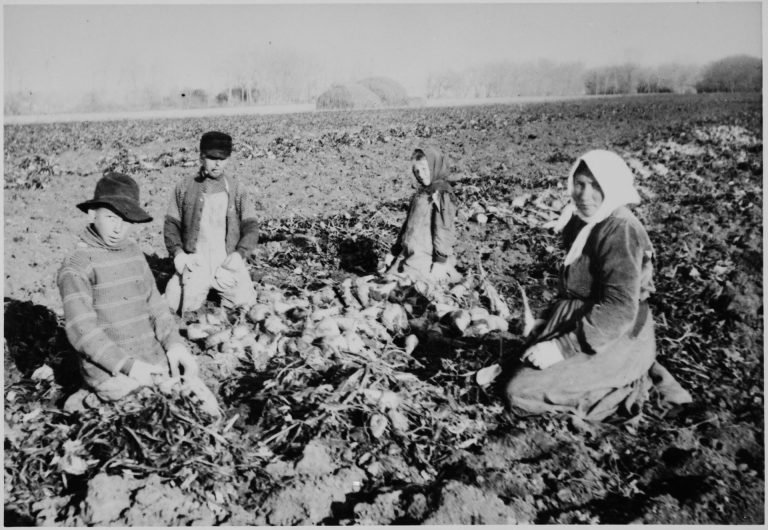
German Russian children pull sugar beets in the early 1900s. Image courtesy of Archives and Special Collections, Colorado State University.
Contracts spelled out the type of work that was required: blocking, thinning, hoeing, and harvest. Payment was by the acre, not the hour. A portion was paid during the season, but the largest share was withheld until the harvest was complete. This hold‑back kept families in the fields through the end of the work and ensured that rows were finished to the grower’s standards. If illness or injury reduced the number of workers, the remaining family members absorbed the extra labor. Contracts did not adjust for hardship. A family’s reputation for steady work and clean rows determined whether they were invited back the next year. Great Western managed the labor system, recruiting workers, arranging transportation, and coordinating with growers across the region.
Once a contract was secured, preparations began. Families packed for the months they were to be away from home, and the work of getting ready was substantial. Meat was fried down and packed in lard. There was no refrigeration in the shacks, so food had to keep without it. Jars of canned beef, dried fruit, flour, yeast, sugar, and salt were packed into trunks. Bedding was gathered along with clothing and the household items needed for cooking and repair work. Pots, pans, and simple crockery were included, along with sewing supplies, garden seeds, and the family Bible. Clothing was mended and patched, and some women reinforced the knees of their children’s pants in preparation for the work of thinning.
In late April or early May, families gathered at the train platform with neighbors who had come to see them off. The train cars were crowded with trunks, bedding rolls, food, and tools. The trip west was long and uncomfortable. Many families made the journey every year, planning to be away for about six months. The train stopped at points in the beet‑growing region, where growers met the workers with wagons. Belongings were loaded, and the families were taken directly to the farms where they would live and work. The train ride marked the beginning of the season. Houses in Hastings were locked and left behind, and neighbors checked on them occasionally.
Work began almost immediately. Blocking came first. Workers used short‑handled hoes to cut out sections of young plants, leaving small bunches spaced along the row. The rows were long, and the sun was often hot even in early June. Thinning began when the plants reached a few inches in height. Workers crawled on their hands and knees down the rows, removing all but the strongest seedling in each bunch. The work was slow and physically demanding and children were expected to contribute. After thinning came hoeing. Fields were hoed two or three times during the summer to control weeds. This work was repetitive and required long hours in the heat. The pace was determined by the contract. Families worked as fast as necessary to stay on schedule. Expectations were strict. A family that fell behind risked losing future work.
A woman’s workday extended far beyond her time in the fields, and she balanced field labor with mothering. Infants and toddlers were often kept at the ends of the rows under umbrellas or makeshift coverings, where their mothers or slightly older siblings could keep an eye on them while the work continued. Women also cooked meals, baked bread, washed and mended clothing, and tended to other family needs. Some did domestic work for the grower’s family as well. The demands of the season left little time for rest.
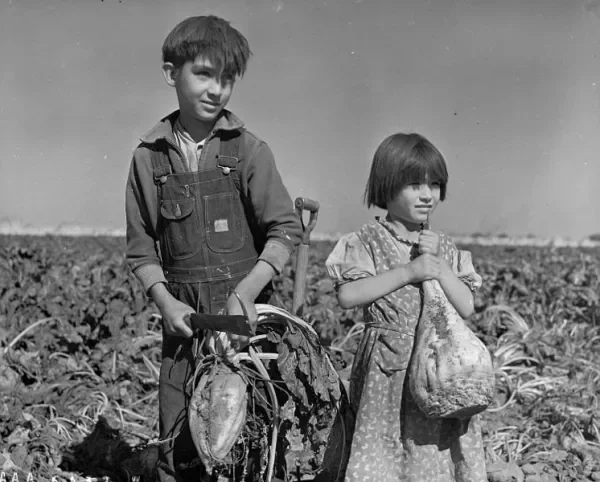
Children working in Nebraska fields, 1940
Children were central to the labor system. Families counted on their labor to meet acreage commitments. Children as young as five or six helped with thinning. By seven or eight, they were expected to keep pace. Older children hoed and helped with harvest. This work and lifestyle meant schooling was interrupted. Children left school in early May and did not return until late October or November. Many children from the community of Germans from Russia entered school speaking little English, and the shortened school terms added to the challenge. Attendance records from the period show children leaving school before the spring term was over and returning well after the fall term was underway, often behind their classmates.
Housing for the workers was provided by the grower. Most families lived in small wooden shacks near the fields they were responsible for. These structures were usually one or two rooms with a stove, a table, and space for bedding. Some were covered in tar paper, and some had cracks that let in dust and wind. Water for drinking, cooking, and washing came from a pump or well the grower was required to provide. Furniture was minimal; crates often served as shelves or seating.
The shacks were scattered across the countryside, sometimes miles apart, and families were isolated. Evenings that weren’t spent in the fields were spent cooking, washing clothes, mending, and preparing for the next day’s work. Children helped with chores, and any playtime during most of the season was brief. Families planted small gardens beside their housing, raising cucumbers, cabbage, beans, tomatoes, and other fresh vegetables to sustain them. Social life was limited.
Sundays were reserved for worship. Many families walked miles into town for services. Church was nearly the only time families saw neighbors and friends during the summer months. Women exchanged news. Men discussed the fields. Children played with others their age. Afterwards, families returned to their shacks and prepared for another week of work.
In late September or early October, the harvest began. Early-season tasks like thinning and blocking were grueling, and harvest was even more demanding. A lifter loosened the soil around the beets, then workers pulled the beets from the ground, shook off the dirt, and piled them in rows. Others followed with long knives to remove the tops. Mornings were cold, and the work required strength and a steady pace. The harvest had to be completed quickly to prevent loss of sugar content. Families worked long days in the fields until the work was finished. When the harvest was complete, families were paid the remainder of their contract. The money carried them through the winter. Some families returned to the same growers year after year. Others moved to different farms depending on the availability of work.
Usually in November, after the harvest was complete, families packed their trunks and emptied the shacks that had served as their temporary lodging. Tools, bedding, clothing, food, and cooking supplies were readied for the trip home. Growers settled accounts, and the season’s final pay was used to clear any credit taken on at nearby stores. Families then waited for the trains that would take them back to Hastings. The return trip was crowded and slow, much like the trip west in the spring. Once home, families reopened their houses, tended to needed repairs, and shifted into winter routines. Children reentered school after months away, and everyday life resumed.
Learn more by reading “Children in the Sugar Beet Fields of the North Platte Valley of Nebraska, 1923,” from the Nebraska State Historical Society.
About the Author
Marilee Aufdenkamp is a retired nurse turned historical fiction writer from Hastings, Nebraska. Her debut novel, Sparrow’s Song, releasing in fall 2026, features a protagonist inspired by the community of Germans from Russia who settled in Hastings early in the twentieth century. She also shares a weekly “Four Fast Facts” series on Instagram highlighting the history behind the novel. More at www.marileeaufdenkamp.com. Instagram: @marileeaufdenkampwriting
