Learning to Stay with the Work: A Writer’s Journey Through Revision
Over the last two years, I have learned much about writing historical fiction, and I am still learning. My education began with attending a workshop led by Colin Mustful, founder of History Through Fiction, who also critiqued a piece of writing I had produced years earlier. My writing was truly terrible. But it gave me a place to begin.
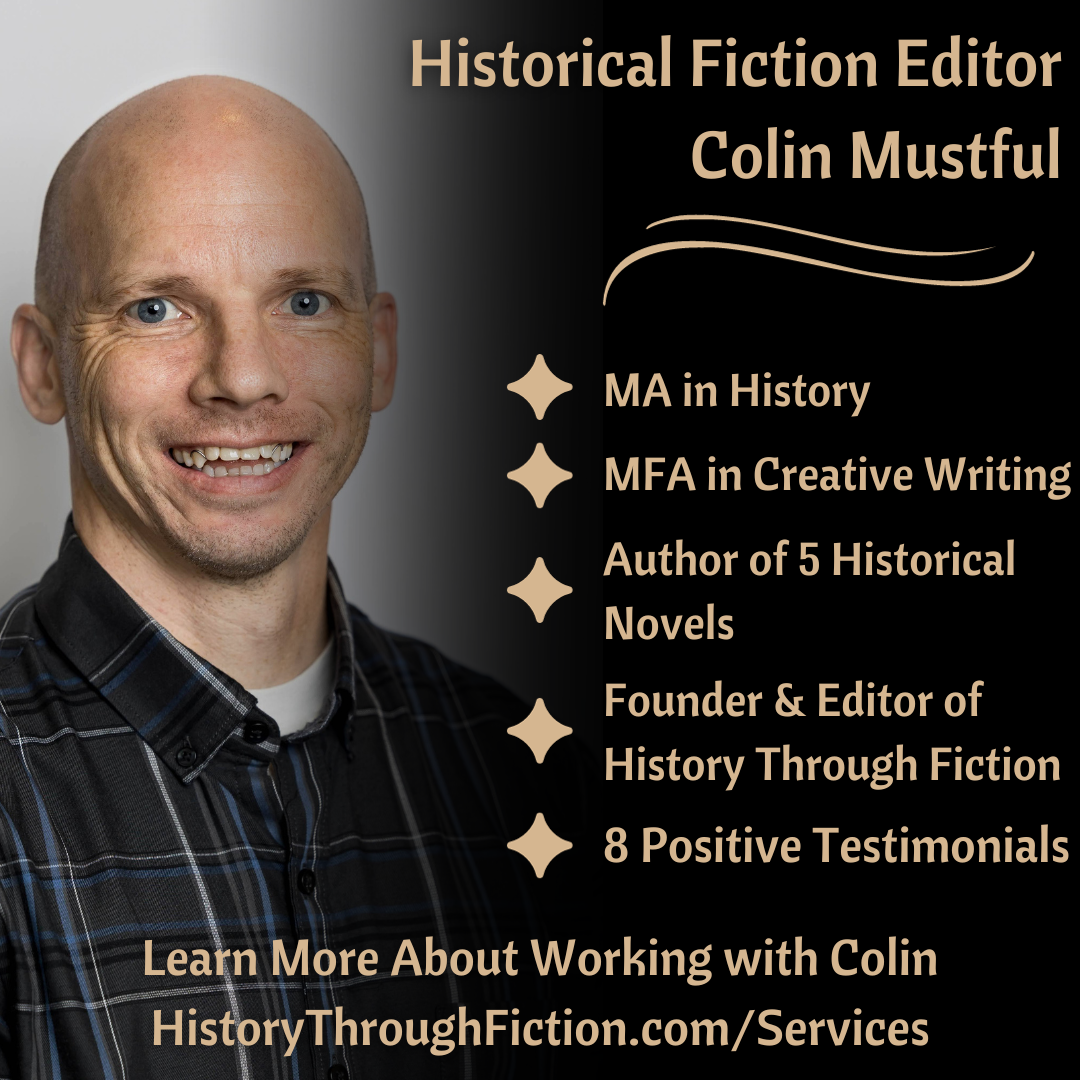
Colin Mustful - History Through Fiction Founder
I wrote my first full draft over the next year and a half coached by Colin. That process taught me discipline as much as craft, I wrote almost every day, and I welcomed the coaching and criticism rather than feared it. With each round of feedback, my work improved slowly. Only later did I understand that drafting was in many ways the easy part; learning how to revise was more difficult. I’m hoping it’s like child birth in so much as enjoying the journey, forgetting the pain, and being eager to do it again.
A few months ago, I turned in my first draft to the editor. She spent weeks with the manuscript—preparing a thoughtful critique letter, marking up the pages, and creating a detailed book map. Her letter was kind; her comments were direct. I fixated on the negative and skimmed past the positive comments. I wanted to cry. I felt like a failure, flooded with thoughts about not being good enough. What made me think I could become a writer? I was a genealogist, trained in facts and documentation, attempting to step into creativity. It felt as though I was working against my detailed oriented fact-finding brain. The words that stuck with me were info dumping, too many details that don’t move the story forward, needs development, and conflict, tension, and stakes largely missing.
The last one was poignant. The editor figured me out without knowing me. I am and always have been conflict adverse, ask anyone who knows me. My Seitz family had plenty of conflict and tension, but I didn’t show it in my writing. I let a character off the hook without holding him accountable. How was I going write about real life conflict, and tension, when I avoided conflict, if possible, in my own life?
I didn’t know where to start. I was attached to my story, to my ancestors and the factual historical details of their lives. Colin talked me off the ledge. He said I didn’t have to make all the changes suggested by the editor but if I wanted readers… well, you can guess. Being emotionally attached to my manuscript wouldn’t serve me.
Besides being extremely detailed oriented, and conflict adverse I’m a rule follower. I spent several days rereading everything the editor sent me. I wrote detailed questions to ask her. When we spoke, I found she was incredibly kind and supportive. Afterward I thought, just maybe I could do this after all. She sent me detailed notes of our call and I got to work.
I determined I needed to edit, move around and possibly rewrite 2.2 chapters a week to meet the deadline. I printed out a calendar, wrote in chapter numbers and notes for each week to stay on task. The holidays slowed me down a bit, but I have managed to stay mostly on track. Life gets in the way, and some days are harder than others. My manuscript has expanded by adding a chapter and scenes and has contracted by cutting and merging scenes—over and over again, like a crack in a wall widening and narrowing with the seasons.
Now more than halfway through the revision, I had an aha moment about my antagonist. I had delayed revealing who she truly was, making her look angry much of the time. Revisiting four earlier chapters allowed me to develop her character on a deeper level, so her personality is established long before her marriage, pregnancy, and the 1839 expectation that she wear a maternity corset in public—one she resisted as a more modern woman than her much older sister.
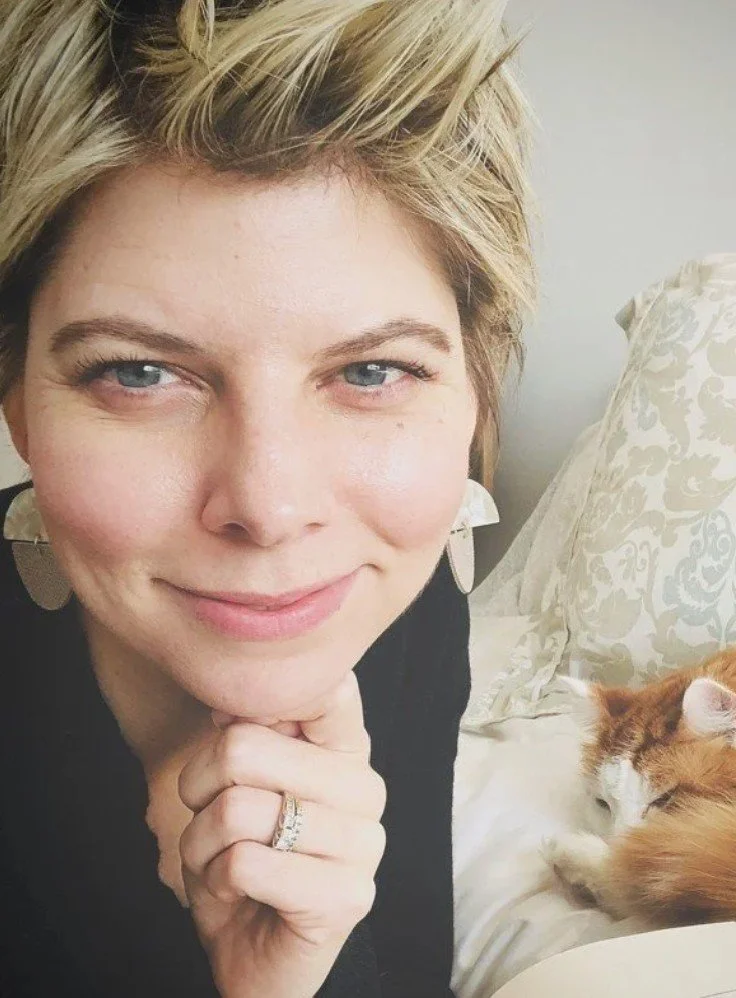
Melissa Makarewicz - The Literary Assistant
There are days when self-doubt creeps in, telling me I’m not good enough. In those moments, I turn to Melissa, a creative and insightful member of the History Through Fiction team. We talk through where I’m stuck. Having someone to exchange ideas with and receive feedback from, along with taking a break has made all the difference.
I have eight chapters still to revise, and I wouldn’t trade this experience for anything. I’m supported by the History Through Fiction team, who believe in me and my writing. They are a community of individuals who I have come to care about as friends. I am deeply grateful to each of them. They cheer me on—showing up consistently, reminding me that my writing matters.

About the Author
Lisa E. Oakley is a genealogist-turned-historical fiction writer who brings forgotten family stories to life. With 30+ years of research experience, a certificate in Genealogical Research from Boston University, and leadership roles with the Daughters of the American Revolution, she blends accuracy with heart to capture the spirit of everyday lives from the 1700s through the 1900s. Her debut novel is forthcoming from HTF Publishing.

Resources for Authors
Whether you're just beginning your manuscript or preparing for publication, History Through Fiction offers professional editing services, book coaching, and more— all tailored to meet your needs. Every services includes a live video consultation and ongoing support during revisions.