
The Hidden Details That Make Historical Fiction Feel Authentic
A Guest Blog Post by Ali Mujtuba Zaidi
Most historical fiction gets the costumes right.
It gets the operating system wrong.
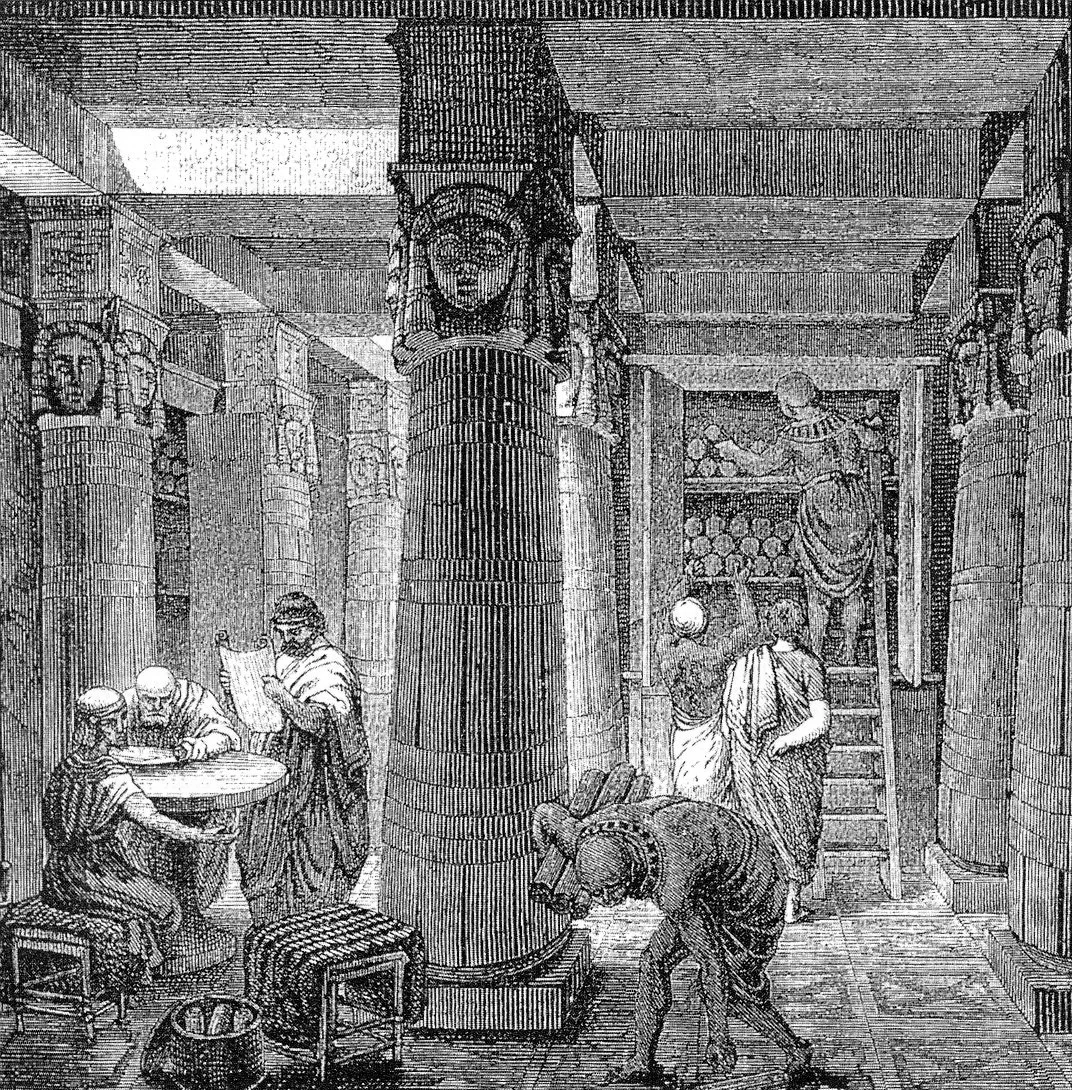
The Library of Alexandria, 19th-century artistic rendering by German artist O. Von Corven, based partially on the archaeological evidence available at that time. Whether perfectly accurate or not, it reminds us that libraries were living systems of scholarship, storage, and organization, not simply rooms filled with scrolls. Image sourced from Wikimedia Commons.
A king can wear the correct crown. If the city around him cannot actually function, readers feel it immediately. Writers often spend months researching the exact fabric of a Tudor gown or the precise hilt of a broadsword. They focus on kings, battles, and dialogue. They treat history like a play of pageantry. We praise lavish ballrooms and embroidered doublets. Yet a scene is not real until its invisible foundation runs correctly.
Beneath every era lies what I call Infrastructure Inertia.
It is the unglamorous physical reality of daily life. Think of it as society’s unseen Operating System. If you ignore it, your historical world crashes. We need a forensic audit of that hidden code. But once we recognize it is there, we do not need to read it like a textbook. We just need to look at how people actually lived. What were they breathing, drinking, and walking on? How far was the next town, and did your hero even have the footwear to make the trip?
I did not expect local time to matter this much until I started reading nineteenth-century railway schedules.
It sounds like a minor detail. Then you realize two neighboring towns could disagree about the time by several minutes, sometimes more. Suddenly an entire chapter of a novel changes. A merchant arrives before sunset and discovers the city gate is already shut. Not because the guard dislikes him, but because the local church dial says it is later than the clock in the town he left that morning. Every village had its own high noon.
Before railways, this was a physical reality.
When steam locomotives arrived, cross-country travel shrank from weeks to hours. Train schedules became a chaotic web of conflicting local times. A single station might have to display five different clocks just to track the incoming trains. It caused literal wrecks on the tracks. The railroad companies did not wait for a government decree to fix it. In November 1883, they divided the North American continent into four distinct time zones. Time itself was standardized to stop the collision of heavy machinery. If your hero is rushing between cities, a two-minute clock error is a physical limitation, not a character flaw.
Concrete does not lie.
Rome’s ports were built for efficiency and durability. I always knew Roman engineering was advanced, but I was surprised to learn the secret was a specific chemical reaction. By 199 BC, the Romans built the Puteoli harbor in Campania with a unique hydraulic cement. It was the first waterside concrete strong enough to survive the violent Mediterranean swell. Vitruvius recorded the recipe of lime and volcanic ash. Modern studies show these exact docks still stand today because the material heals its own fractures over time.
That physical harbor dictated global trade.
Grain arrived, taxes were collected, and massive cities grew. If your novel features an epic ancient port, ask yourself what is under its feet. No concrete means no port. No port means no grain from Egypt. You can write a thrilling plot about Cleopatra, but if you forget to write about the water supply, the immersion breaks. Behind the scenes, the city’s physical foundation decided which economies flourished. Next time your hero docks at Ostia, consider the weight of that hidden, sea-resistant sidewalk.
I kept coming back to this idea when looking at Rome’s roads through Egypt.
At first, I assumed they laid pristine stone highways across the sand. When the Romans conquered Egypt in 30 BC, they did not lay Venetian marble to Alexandria. The reality was much harsher. The desert did not get new highways. It used old camel trails. The Roman road in the desert was just a wide lane with a few milestones and fortified way stations. These forts allowed travelers to replenish supplies, exchange camels, or take shelter from a sandstorm.
The desert's infrastructure dictated the schedule.
Your caravan’s daily survival depended on water supplies and camel exchanges, not chatter in the imperial court. Stories set in that world must account for the sandstorms and the brutal logistics of camel swapping. If your protagonist is trudging across the Sahara, you must mention those forts and wells. Otherwise, readers instinctively feel the glitch.
Sometimes water systems speak louder than spoken law.
By the imperial era, Rome’s aqueduct network was in full throttle. Water supplied public baths, latrines, fountains, and private households. It supported mining operations, milling, farms, and gardens. That single reality reads like a utility bill for an empire. A siege narrative without checking the aqueduct valves will always ring hollow. If you are writing a medieval city scene, ask exactly who turned the faucet on. In Venice, did they have gondolas on city canals or dirty wells? Such details are the technical substrate of your fiction.

Penry Williams (1802-1885) - Roman Aqueduct in the Campagna - CCM.1044.992 - Cyfarthfa Castle Museum ^ Art Gallery - Image sourced from Wikimedia Commons
To implement these details, you have to map the physical reality of your chosen era.
Instead of building a rigid checklist, look at the constraints of the environment. Draw the roads, rivers, and walls of your city. If there is a port or an aqueduct, figure out who paid for it and who maintained it. Calculate travel times using the actual terrain, not just the distance on a flat map. Look up old diaries or gazetteers to see how long a journey really took on horseback versus walking. Investigate the basic social contract. Who runs the water mills? Who buys the bread? Who patrols the streets at night? Tax rolls, ship cargo lists, and merchant diaries reveal the daily constraints of a civilization far better than poetry or political speeches. Use those unglamorous records as your primary inspiration.
The goal is total immersion.
By auditing the invisible systems, your characters will move naturally through their environment. A knight might pause at an abandoned well. A merchant will curse a washed-out bridge. A queen will note the grain shortage after a sudden flood.
The next time you are planning a scene, do not begin with the king. Begin with the road he walked in on. Ask who built it, who repaired it, who measured it, and who depended on it. Those are the details readers rarely notice directly, but they are often the reason a fictional world feels believable.

About the Author
Ali Mujtuba Zaidi is an independent history researcher, publisher, and civil engineering student. He writes as a forensic auditor of the past, exploring how ancient engineering decisions act as the invisible firmware for modern technology. He is the founder of The Historical Insights, a publication dedicated to decoding the legacy infrastructure of human civilization. Read more of his technical historical audits at The Historical Insights.