Book & Author Spotlight: Beyond the Heavenly Kingdom by Dr. Steven Leibo
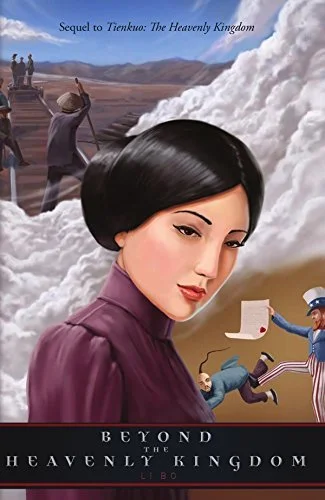
Title - Beyond the Heavenly Kingdom
Author - Dr. Steven Leibo
Publisher - Independently Published
Release Date - April 24, 2017
Pages - 706
Formats - Paperback, Ebook, and Audiobook
Decription
Beyond the Heavenly Kingdom is the second book in a series set in the mid-nineteenth century and follows Tienkuo: The Heavenly Kingdom, which traced the lives of Jason Brandt; his wife, Black Jade; and his scholar friend Wu Sek-chong during the Chinese Civil War. In this second novel, Brandt and Black Jade travel from Shanghai to Boston in the years following the American Civil War. Americans of that era, increasingly anxious about competition from lower wage Chinese immigrants, demanded an end to all immigration from China, which culminated in the Chinese Exclusion Act of 1882.
In this novel inspired by Mark Twain’s travel memoir Innocents Abroad, Brandt, a Shanghai-based American journalist, imagines writing a book that chronicles his own travels. He and Black Jade journey to Boston, where his father, a Christian missionary, lives. On the journey, Brandt and Black Jade learn of the Troy Female Seminary, a pioneering girls’ school in Upstate New York, and dream of opening a similar school in China. Along the way, they encounter actual historical figures—including President Grant, Mark Twain, and Senator Charles Sumner—as well as literary characters such as Phileas Fogg.
Travel with them as they come to grips with a changing world that shares many parallels with our own.
Three Questions with Dr. Steven Leibo, Author of Beyond the Heavenly Kingdom
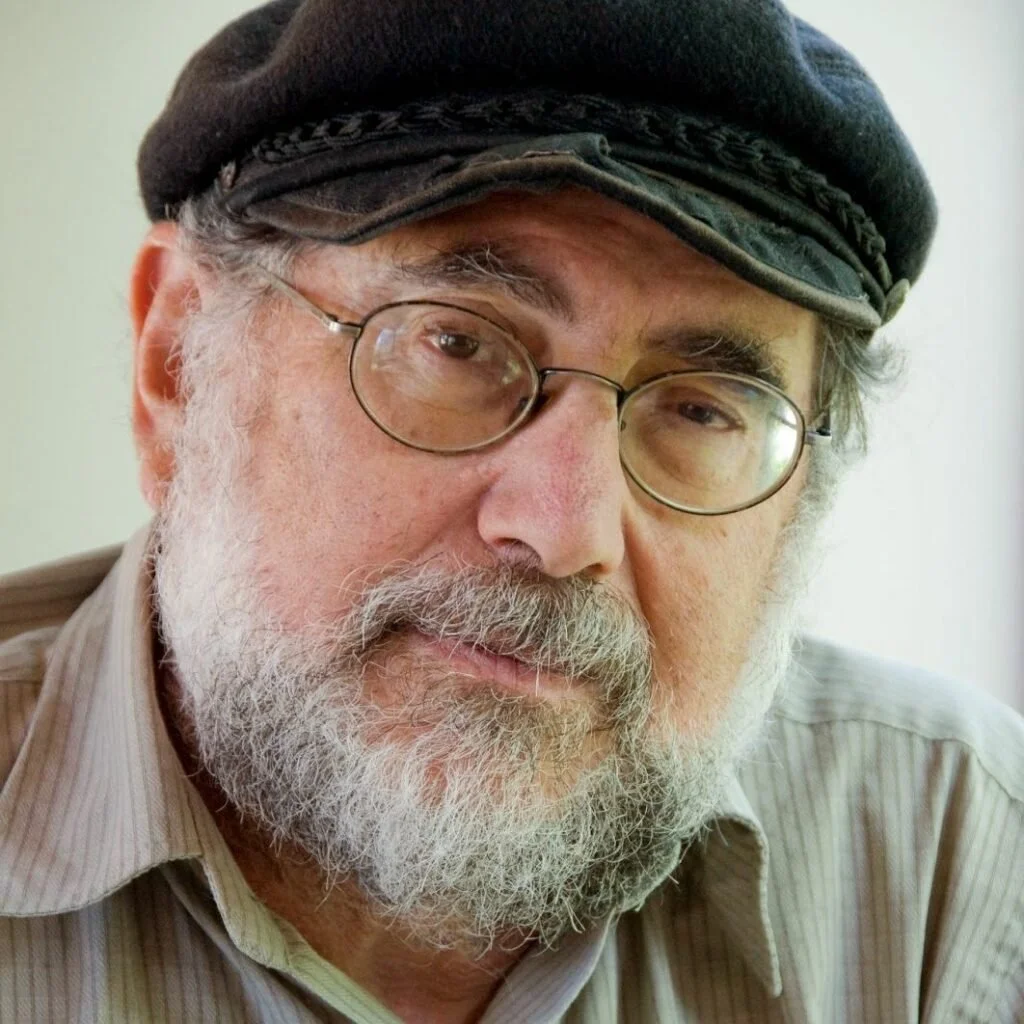
Author Dr. Steven Leibo
In Beyond the Heavenly Kingdom, you move your characters from post-Taiping China into post-Civil War America. What drew you to explore these two societies side by side, and what parallels between them felt most important for you to highlight?
The core theme of the Sino-American Tales is, of course following a family saga of people who live in a world neither Chinese nor American and yet both. Indeed, one of the most important elements of the series is conflicting identities in a world where so many people, especially on China’s east coast and America’s west coast have links to both communities. In fact, that theme that runs through all three currently available books in the Series with Tienkuo the Heavenly Kingdom set in China, while Beyond the Heavenly Kingdom largely takes place in the United States while Under Heaven’s Watch, and Heaven Objects which I am currently writing takes place in both. On a more personal level, as we all know, writers are usually said to and often encouraged to write about what they “know.” As a third generation San Francisco raised in a multi-ethnic family with very strong links to China both my focus as a professional historian specializing on Asian Western Relations and my career as a writer of historical fiction have followed that advice and frankly the world I “know” is precisely that, the world of multi-ethnic Asian Western families.
This novel engages directly with anti-Chinese prejudice in the United States during the decades leading up to the Chinese Exclusion Act. How did you approach writing about xenophobia and racial tension in a way that felt historically honest while still serving the emotional arc of the story?
One of the central elements of the Sino-American Tales is that they highlight to an extent both anti-Western prejudices among the Chinese, highlighted by the drama of the Tianjin Massacre, and anti-Chinese prejudice in the United States. But prejudice against the Chinese in the American states was far more profound, and though it lessened after 1898’s famous Wong Kim Ark’s case, which guaranteed birthright citizenship for the Chinese. But ironically, in our own time, indeed this very month we have seen the same anti-immigration cases again presented to the United States Supreme Court in arguments directly related to the battles of the 19th century.
Jason Brandt and Black Jade continue to develop in this second installment of the Sino-American Tales. How did their experiences in Tienkuo: The Heavenly Kingdom shape who they become in Beyond the Heavenly Kingdom—especially as they navigate marriage, family, and belonging across cultures?
What distinguishes Jason and Black Jade in Beyond the Heavenly Kingdom and Under Heaven’s Watch is their evolution from relatively young adults to not only full developed professionals but also the parents of children even more caught between the two worlds of China and the United States.
I should add that unlike authors like Michael Connally who’s wonderful Bosch series, or John Grisham’s extraordinary court dramas, my work more closely parallels the family sagas of Julian Fellow famous works from Downton Abbey to the Gilded Age. And perhaps not surprisingly so, since I spent most of my professional career teaching modern world history in the very city and at the very college, Troy, NY and Russell Sage College where the Gilded Age is currently being filmed.
But of course, while Downton Abbey and The Gilded Age hint at worlds beyond England or America respectively the Sino-American Tales puts those cultural exchanges at the core of the series’ heart.
One of the most intriguing aspects of the novel is your blending of real historical figures—such as Mark Twain, Ulysses S. Grant, and Charles Sumner—with fictional characters and even literary figures like Phileas Fogg. What challenges and opportunities came with weaving together history, fiction, and literary homage in the same narrative?
Frankly, given that I am a professional historian with half a century’s experience in the classroom it is not surprising that my work might be seen perhaps as “fly on the wall” version of history wherein I regularly introduce real people and real events into which I integrate fictional characters, most obviously perhaps in the fashion Ken Follett has done in his modern history Century Trilogy. Indeed, the sort of readers I attract tend to be the sort who also read non-fiction works of narrative history.