
The Symbionese Liberation Army and Me
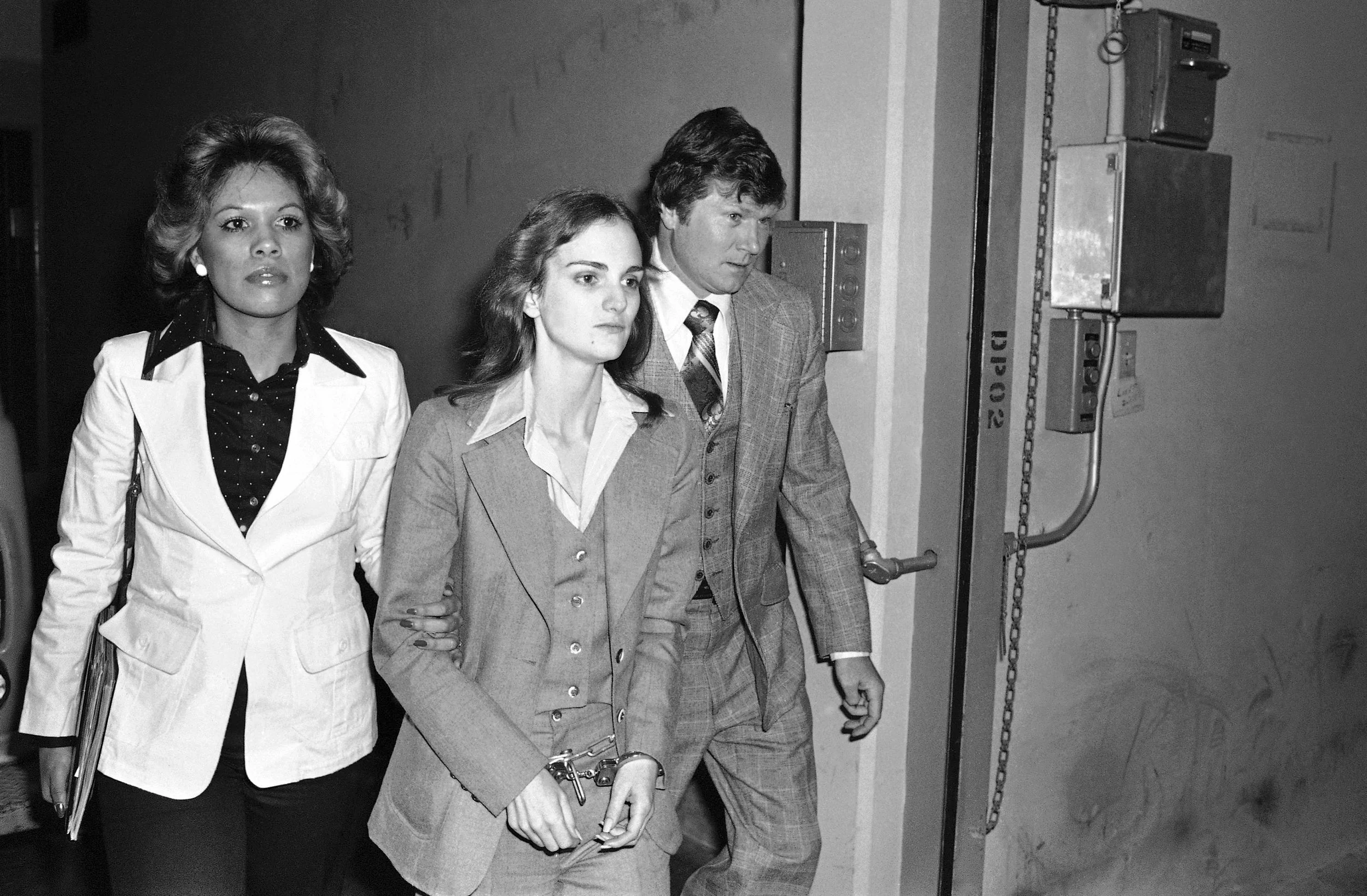
Patty Hearst escorted by marshals, 1976
The Symbionese Liberation Army. The SLA. For those old enough to remember, that name can raise the hair on the back of the neck. The SLA were home-grown terrorists in the early 1970s, a band of misfits who traumatized the social fabric by the assassination of a school superintendent, the kidnapping of the daughter of a newspaper tycoon, and the violent robbery of banks resulting in the shooting murder of a bank customer and the injury of others. Most of the members of the group met their end in a fiery shootout with the LA police. The SLA was a symptom of its time, joining other 1970s Civil Rights Era radical movements like the Weather Underground and the Black Panthers, and the lesser-known New World Liberation Front.
My novel, Circus of the Vanishing Elephant, is set in 1974, a time that saw numerous bombings and other acts of violence across the country carried out by such groups. It is a sign of our collective amnesia that many of us have forgotten that strange legacy. And it is one role of historical fiction to help us remember. The past forgotten is more readily and unfortunately resurrected.
In my novel, a band of animal rights activists kidnap Henrietta, the circus’s small elephant who is also the star of a dazzling illusion which has her vanish in the center ring before hundreds of paying guests. The animal rights group calls itself the Elephant Liberation Army. Its goal is to hold Henrietta ransom until the circus owner agrees to stop using elephants in his circus. The group has some resemblance to the Animal Liberation Front which still exists and uses vandalism as a means of freeing lab animals and bringing attention to their plight.
I was a young teenager when the SLA burst into public awareness. I remember being fascinated while reading accounts of the violent group in the San Francisco Chronicle, a daily newspaper delivered each morning to our doorstep. I would spread the newspaper out on our living room carpet and fight my cat, Bobby, for reading space—my cat demonstrated his jealousy for my attention by lying down on the section of the paper I was trying to read. After the SLA kidnapped Patty Hearst, the daughter of the Chronicle’s owner, the newspaper’s coverage of the SLA’s exploits reached an understandable fever pitch.
Violence committed by domestic terrorist groups in the 1960s and 1970s was often perpetrated by groups on the far left of the political spectrum. Today, acts of domestic terrorism are more often committed by groups on the far right, and particularly by white supremacist groups. Another case in point is the Proud Boys and Oath Keepers and their participation in attacks on the U.S. Congress on January 6, 2021. Unlike in the ‘70s, when the political establishment united in opposition to such groups, Donald Trump exhorted the Proud Boys to “stand back and stand by” during a September 2020 presidential debate. Trump later pardoned the January 6 rioters, despite their apparent attempt to overturn a U.S. election and despite the actions of many of the rioters that injured 140 police officers and resulted in the deaths of five of the officers.
It seems clear that more than ever, our country needs to remember the revulsion that people felt toward violent extremist groups in the 1970s. That might help people direct their revulsion toward today’s extremist groups.
Historical fiction can help us remember. And, sometimes, memory can help us avoid the mistakes of the past.

About the Author
Tim Schooley’s first job out of high school was as a circus clown with Ringling Bros. & Barnum & Bailey Circus. He later attended UC Santa Barbara and then UC Berkeley Law School. He worked as an appellate lawyer, taught at UC Davis Law School, and served as the managing attorney of the California Court of Appeal, Third Appellate District, in Sacramento.
All along, Tim wrote fiction, but he waited until his retirement to publish his debut novel, The Wool Translator. His forthcoming novel is Circus of the Vanishing Elephant.
Tim is active in the Sacramento literary community, serving as Co-Chair of the Sacramento Book Festival and on the board of directors of the Sacramento branch of the California Writers Club.
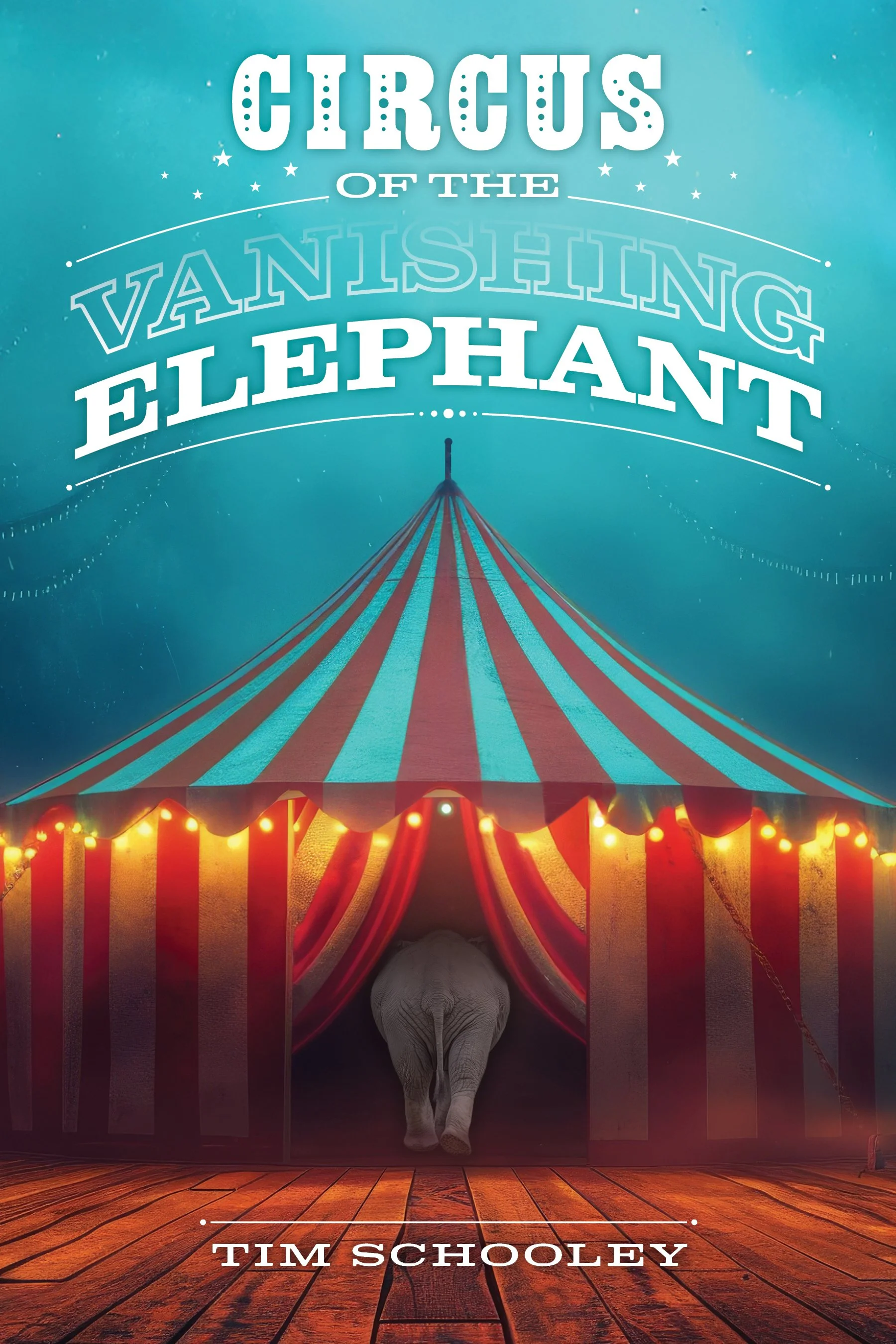
In 1974, the King Minos Circus is struggling to survive-until Christos "King" Minos unveils a dazzling new illusion: a vanishing elephant act starring Henrietta, the animal he loves more fiercely than he can admit.
“The book’s scenes are atmospheric and deliberate…empathy and sharp humor are used to contrast the hardships of life on the road with the inherent absurdities of the arena.”
-Foreword Reviews