
How on Earth Did I Find Myself Writing Searching for Wouter?
In 2006, whilst visiting the WA Shipwrecks Museum in Fremantle, Western Australia, I inadvertently placed my hands upon the ancient timbers of the hull of the Dutch retourship, The Batavia. This is arguably one of the most notorious of all the Dutch shipwrecks along the coast of Australia. Shipwrecked on the reef, an hour’s sail from Geraldton, The Batavia struck reef in the winter of 1629. In the ensuing three months, while waiting for a rescue ship, mutineers raped and murdered 150 people, including children.
My hotel was a short walk from the museum, situated right on the boat harbour, and my window opened out onto the vast Indian Ocean, the place of many shipwrecks just like The Batavia. The moon was full, and it cast its silvery pathway along the ocean into my window. That night I had a nightmare. I dreamed there was an evil force, hidden, trying to remain secret, behind a large wooden door, behind which untold atrocities were happening. I awoke in a sweat and went into the bathroom. It was then I saw what others later jokingly described as a stigmata on my left forehead, just over the eyebrow. A browny-red mark, the shape of a crucifix, had appeared. My initial remark, ‘What the hell?’ In the morning it was more pronounced, and earned its fanciful name from my wife.
I am not prone to nightmares. And I am definitely not prone to religious phenomena.
I didn’t realise until later that I had connected with a recorded memory, embedded in those ancient timbers of The Batavia. Today, I realise that memory can be recorded in many ways. Just as we record photos on film, or sounds and images on our silicon chips, so can memory be recorded in many places. In walls of a house, for example. We glimpse or feel something. This memory is recorded in places where strong emotional events have occurred. In the walls of houses (thus the “haunted house”) and within the timbers of old ships.
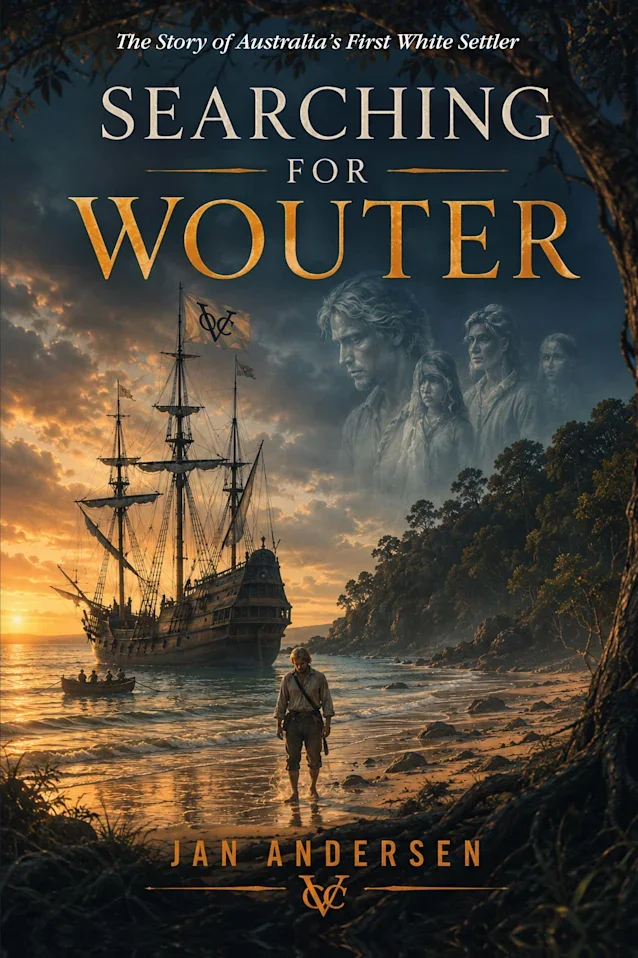
The story of The Batavia would not leave me alone. I had never heard of it before that chance encounter in 2006. I slowly began sourcing every available book and article on the subject, some of them privately printed. The story had hold of me. For it was here I learned that a 24-year-old soldier, Wouter Loos, was set ashore at Hutt River, thereby becoming Australia’s first white settler.
Years later, in 2017, I started writing. As soon as I began, I remembered something long forgotten. I forgot that I wrote a novella at the age of 13. It was a vampire story. Then at age 16 I won a short story competition. Then I stopped writing. I decided to be sensible. I went to university to study Arts/Law. In 2017 I finally picked up my pen once more.....(continued in the blog section)
An Interview with the Author
You wrote your first novella at thirteen, then built a career in editing and complementary medicine before returning to fiction. How have those different experiences shaped your approach to storytelling?
I developed a forensic approach to things I did not yet understand. In my editing days: what is the writer trying to say, is he achieving that, is there something that’s missed? Later when I entered complementary medicine, I scratched my head in wonder at homeopathy. How can homeopathy work when the medicine contains no chemistry? And yet, I saw it work on myself. And on our farm animals. OK, I thought, the lens I use to view this world has to be adaptable. Just because I can’t conceptualise something does not mean it doesn’t exist. I took this forensic approach into complementary medicine. I saw a lot of the really sick people, with chronic fatigue and other disorders, all of whose labs looked fine. Here is where I sharpened my forensic approach, looking for clues in the patient timeline, adding in a dash of intuition, trusting my gut feeling rather than looking for the answers on paper. I came to understand that thinking is tied to how we have been taught to perceive the world. When I came to write Searching for Wouter, I used the same forensic approach. I sourced every available book or article. I became intimately acquainted with all the facts. When you focus on something with all your attention, having put what you know behind you, that’s when you pick up the nuance. That’s when the intuition starts to flow.
You describe your encounter with the Batavia’s timbers as the beginning of this novel. What drew you to Wouter Loos in particular, and how did your visit to the Hutt River region change the story you wanted to tell?
In all my life I never really thought of the idea of memory transmission. One day in 2006 I was at the Shipwrecks Museum in Fremantle (Western Australia). Suspended from the roof is the remaining part of the hull of the most infamous Dutch shipwreck, The Batavia (1629). I placed my hands upon those ancient timbers. That night I had a nightmare and in the morning a red mark had appeared above my eyebrow. My wife joked: ‘that’s a stigmata!’ Years later I began to understand it. Memory is recorded in physical substance. Think about that tiny silicon chip in a mobile phone. It holds memory in the form of sound and image. Just as memory is recorded in silicon, so other materials of the earth hold information, including timbers of ships. After all, what else is a haunted house other than a physical receptacle for strongly charged emotional events which once occurred there. The Batavia ship was witness to the murder of over a hundred people. To this day, bodies are still being excavated from the Houtman’s Abrolhos islands, off the coast of present-day Geraldton. But of all the people murdered, or executed, or of those who survived, two men remain unaccounted for. One of these was Wouter, the subject of my novel. History paints him as one of the mutineers, complicit in the murders. But that’s not the message I kept receiving. Wouter wouldn’t leave me alone. And more than that, in 1839 a British explorer discovered a European-style village at Hutt River, the place where Wouter was marooned. By 1850 the village had disappeared without an apparent trace. So my forensic nose smelt an untold story. Maybe a cover-up. When I visited Hutt River in 2019, even though guided by what I had researched, I already sensed where this village had been, and the location of Wouter’s remains. There is the knowledge I acquired from my research - let’s call that my left brain. Then there is the knowing outside of that - let’s call that intuition.
The historical record leaves Wouter’s fate unresolved. In Searching for Wouter, how did you decide where to follow documented evidence and where to let imagination carry his story forward?
I don’t really believe in coincidences. I see synchronicities. Having studied the evidentiary trail very thoroughly over many years, as soon as I arrived at the physical location where the story takes place, the invisible parts of the story began to reveal themselves. I think every writer has this experience at some time. You have a knowing. Your characters stand behind you and chatter in your ear as you write. You look at the ten pages you have just written in an uninterrupted frenzy and think, where did that all come from? I think they now call this the Mozart Effect. Some call it channelling. The undisputed happenings in my novel are carefully described. But there is a problem with history books: while facts may be objective, their interpretation is not. Usually, whoever wins the war writes their version of events. We have this in our nation-building story. Our nation day focusses on the year 1788, when the first British fleet arrived in present-day Sydney with white settlers. That narrative needs revising. The Dutch began settling Australia’s west coast 150 years earlier. I have brought some of them to life, including the main character, Wouter, in my novel.
Your novel imagines Wouter living among an Indigenous community and traces the lives of his descendants. How did you approach researching and portraying that community, particularly where the surviving records reflect European perspectives?
There are a number of problems with describing an Indigenous community as a non-Indigenous writer. First, this is 200 years before Europeans started recording their observations about Indigenous people. Second, those observations were made through a colonial lens. The colonial lens carries an implicit perspective of superiority. Third, as a non-Indigenous writer, I did not want to do what has been done to the Indigenous community for the last two centuries: appropriate what is not mine to take. For this reason the entire novel is focalised through the agency of European eyes. There are deliberately no Indigenous perspectives. Indigenous characters in the novel are fictitious. Cultural practices are left out. I trust I have handled this decision with respect and ethical awareness.
Searching for Wouter connects seventeenth-century events with later generations and a modern search for his remains. What did that structure allow you to explore about memory, belonging, and the stories Australians tell about their past?
In this novel I have used a structure that most historic novelists would avoid. This is a composite novel. Each chapter is a self-contained entity, yet united through thematic links. There are seven different narrators. The whole story is in first-person narrative. I wanted the intimacy that first person offers, but I also wanted an omniscient perspective. This is why I made the brave decision to imbue two of the sunken ships with conscious narration. They carry the spiritual omniscience into the story I was searching for. The five human and two ship narrators span four centuries. It sounds bizarre. I experimented with the usual historical fiction structures but was always dissatisfied. The structure created a sense of freedom for me. Now I could present all the perspectives in era-specific language and worldviews. The wider themes could then be drawn out: the way history repeats itself and the effect of the past on the actions and perspectives of those in the present. I think everyone has to know where they came from. That includes the dark events which we don’t want to think about, but which nonetheless affect us. Telling these untold stories lets the sunlight into the dark cupboard. We, as the beneficiaries of colonialism, must also recognise our abundance as a product of human suffering.
About The Author
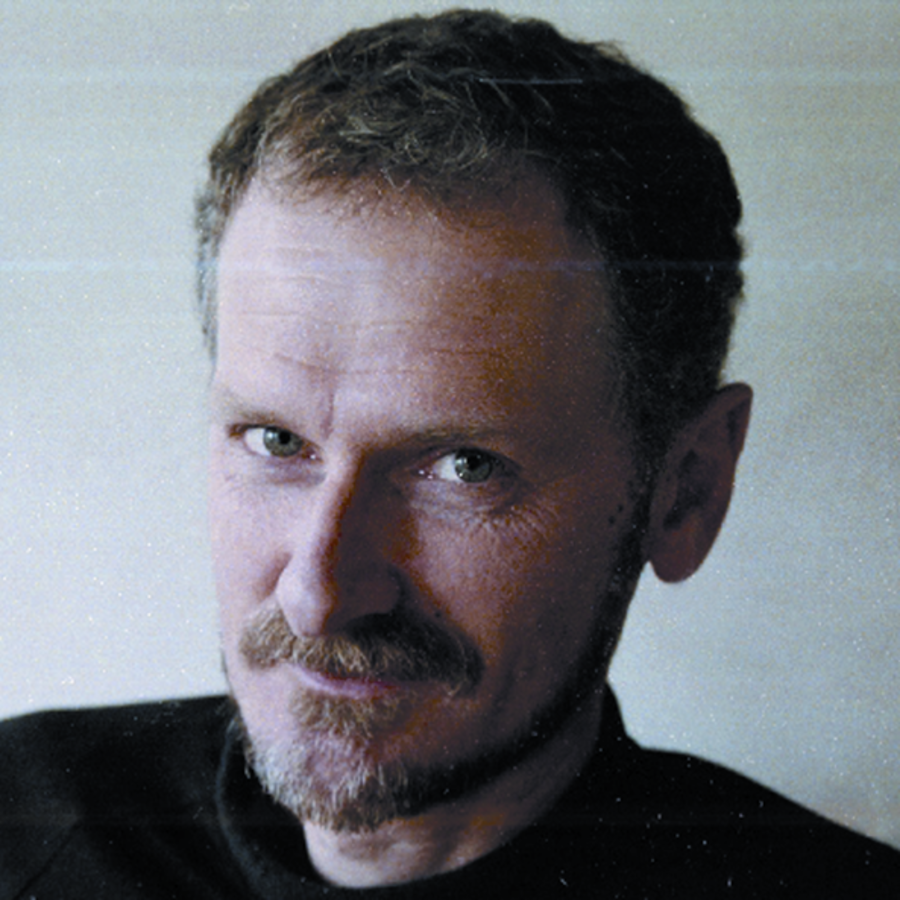
Jan Andersen is an Australian author with a background in book editing, complementary medicine, and nonfiction writing. After studying Arts and Law at Monash University, she worked as an editor before pursuing freelance work and becoming a clinician specializing in chronic fatigue syndrome. She later earned a Master of Creative Writing and returned to fiction with Searching for Wouter, inspired by her interest in seventeenth-century European history and Australia’s Dutch past.