How to Make Your Ancestor, a Culinary Murderer, into a Lovable Character
A Guest Blog Post by Angela Page
“My father pressed olive oil, fought the Mafia, crossed the ocean 16 times, and killed a Nazi squadron with a poisoned marinara sauce,” my Italian grandfather said often at the dinner table. For years that was about all I knew about Raimondo, my great-grandfather, an Italian immigrant from the Abruzzo province. He died a few years before I was born, and I heard from many family members that he was a “larger-than-life” character.
The Nazi occupation of the family home in the village of Carunchio and subsequent murder of the squadron had always piqued my interest. When I started writing and producing short films in Hollywood, a director said, “Your great-grandfather’s story would make a great film. Go write it.”
As a writer of comedies, a war drama was not my wheelhouse, but I rose to the challenge. I knew that Raimondo had left New York in the late 1930s to retire in the village among the olive groves that had been in the family for generations. That would be my jumping-off point for the script entitled Feast.
I did extensive research on the Nazi occupation in central Italy and stumbled upon Mussolini’s 1943 downfall, arrest by the Italian government, and subsequent rescue by Hitler. The sequence of unusual events while Mussolini was in custody is a little-known WWII episode. I was inspired to write a creative nonfiction satire piece, Bad Summer for Benito, which was published.
The well-planned rescue from Gran Sasso in the Abruzzo also entailed backup ground troops.
I imagined that the Nazi squadron, who forcibly occupied our family home, was on their way to assist the Duce’s rescue mission. According to my sources, they chose the home of Raimondo because he was the village mayor, a chef, and spoke English.
Fortunately, I was able to get introductions to Italian academics and historians in the Abruzzo province. They have written extensively on many aspects of the war, the occupation, village life, and the partisans. Together with my own research, I felt able to construct a feature screenplay.
My Feast script was a finalist in several competitions and even in development before Covid. It has no battles, only a tale of an elderly Italian mayor who takes matters into his own hands when Nazis occupy his home in 1943.
One Italian director suggested I “write the book,” a thought I tucked in the back of my mind. A few years later I thought seriously about novelization, and it became a compelling project. Then it dawned on me that the Nazi poisoning incident should be part of a longer work and a bio. There were so many aspects of Raimondo’s life that were equally cinematic and dramatic, especially after a trip to Italy that filled in many blanks.
I discovered the truth behind the boasting by my grandfather that his father, Raimondo, successfully fought the mob from harassing his employer. Raimondo was the chef at the Banca Stabile, an immigrant bank in New York City’s Little Italy. According to a cousin, Raimondo worked for the mob collecting protection money. That explains why in 1935 he brought, in today’s money, almost two hundred grand back to Italy. Armed with some new juicy facts, my fictional historic bio, Enrico G, was underway.
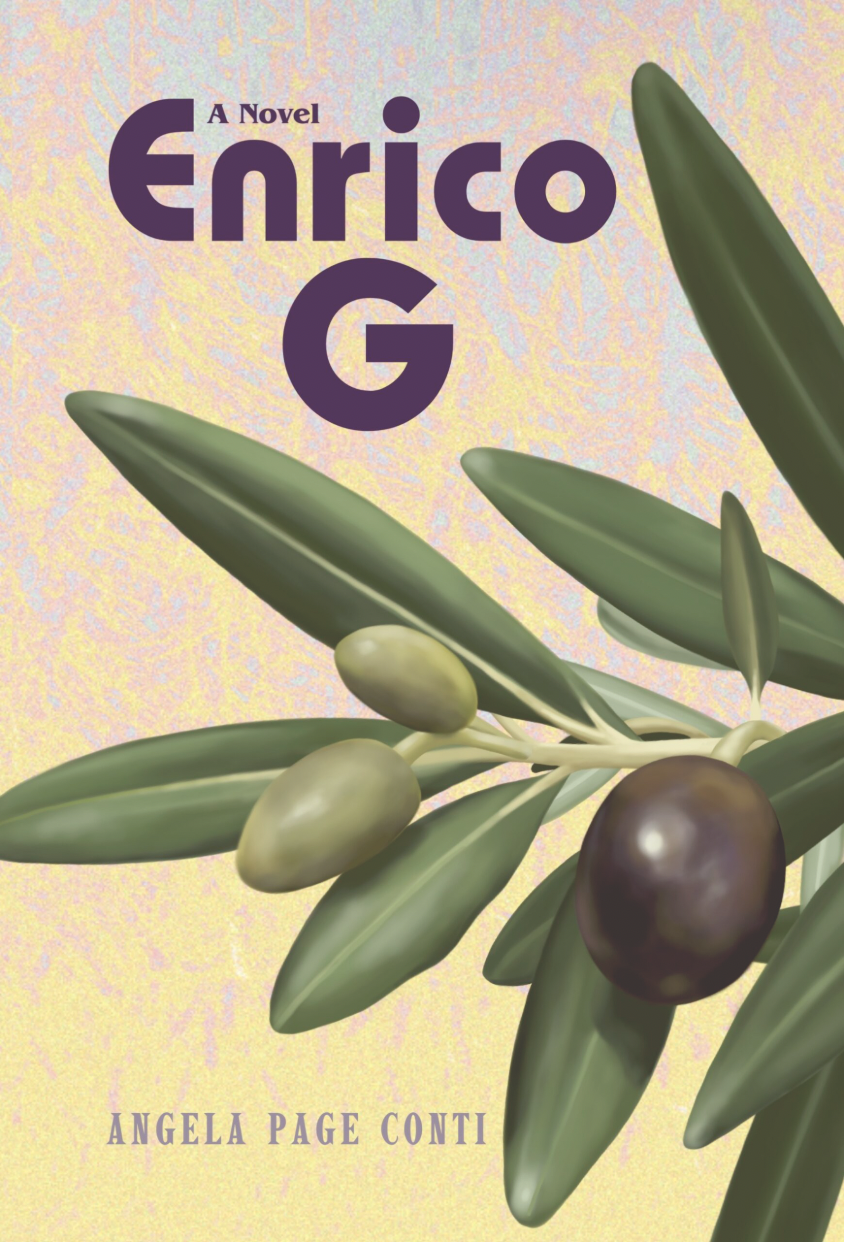
Raimondo was born in 1871 after the unification of Italy. He sustained family upheaval early when his own father was arrested for the murder of a neighbor. There are variations on this story by relatives. Did the neighbor fall off his horse and hit his head, or did my great-great-grandfather slug him? In any case he was sent to jail in Rome and later released in an amnesty by King Umberto.
By the 1890s, Italy was in economic turmoil and the villages in central and southern Italy were being abandoned by those seeking a better life in the Americas. Family members followed each other on the harrowing journeys by ship. One through line in the book is how Raimondo, aka Enrico G, was so emotionally connected to the village and the olive groves.
As I researched ship manifests from the 1890s to 1935, I was able to pin down 8 of his 16 voyages Raimondo made between Italy and the U.S. He never paid passage as he worked his way as a galley chef. I took note of the names of the crew, the shipboard menus, and the passengers in the different classes. I accessed accounts of the immigrant steerage experiences.
There were many noteworthy events during Raimondo’s life: the Russian flu of 1889 followed by the Italians invading Ethiopia, WWI, the Spanish Flu, and the 1929 stock market crash. These were all valuable backdrops for the protagonist’s two worlds. The desire to maintain the olive groves and to retire peacefully in Italy was also a running theme. But Raimondo moved back permanently to the village in time for Mussolini’s Italy and WWII.
Fortunately, years before, I had visited the village of Carunchio. I stayed with Raimondo’s son, my great-uncle, and his wife. I had just been married and visited with my new husband, so we enjoyed learning about the Abruzzese wedding customs. During our visit it was clear many subjects were off-limits about the family’s past, but I was able to experience the village and the relatives who remained.
In the book I take liberties with character names and changed or switched around living and dead relatives. From the Italian Ancestry site I had names going back to the early 18th century. The churches kept meticulous records. Enrico is my late grandfather’s name, and I felt it was fitting for my character.
I must admit my own Italian family was not very amusing or comical. However, I married a native-born Italian who was funny, as was his family, so I crafted my character, Enrico G’s, dialogue accordingly.
The family dynamics in Enrico G were based on actual events and typical Italian immigrant circumstances. I included the first generation’s struggles and successes while chasing the American dream, modeled on true stories. For the first immigrant generation’s politics, I took inspiration from the other side of my family (Spanish immigrants). There were several family members that explored communism and socialism in the 1920s and 1930s, including a relative that attended “Commie Camp” in Vermont and was a cartoonist for the Daily Worker.
I took great pleasure in depicting my own grandmother and her Sicilian/Neapolitan family when she married Enrico G’s son, my grandfather. Her family was an eccentric clan. One of my favorite scenes is my great-uncles—a poet, a pianist, an actor, and an accountant—interrogating Enrico G at the dinner table.
To give the bio more context it was critical to interject some sexual hanky-panky within a historical context. It was also important to include women who were abused, denied education, and discovering their true selves. Strong women paved the way for Enrico’s success.
There was plenty of opportunity for dark comedy and satire given Enrico G’s many adventures and circumstances. Although, given the moral dilemmas around his treatment of women and work for the Mafia, I was concerned that he would be judged harshly. But readers have fully embraced his humor, good nature, and outlook.
“A character with a zeal for life, love, and adventure...”
“A charismatic, driven and irreverent character...”
“A terrific character whose thoughts often made me chuckle.”
“You will feel like he is sitting with you, but at the same time you are living it with him.”
“A fascinating blend of hero and a bit of a disaster.”
I have been concerned about my family’s reaction to the book. So far all the descendants have been on board with airing the family lore, the elevated drama, and the fictional additions to our saga.
It’s lucky to be connected to this fascinating man. He took the risk to venture forth and establish a base in New York where his son, my grandfather, stayed and married my grandmother. If he hadn’t made that decision I doubt I would be writing this.
Related article by Angela Page: Bad Summer for Benito
About the Author
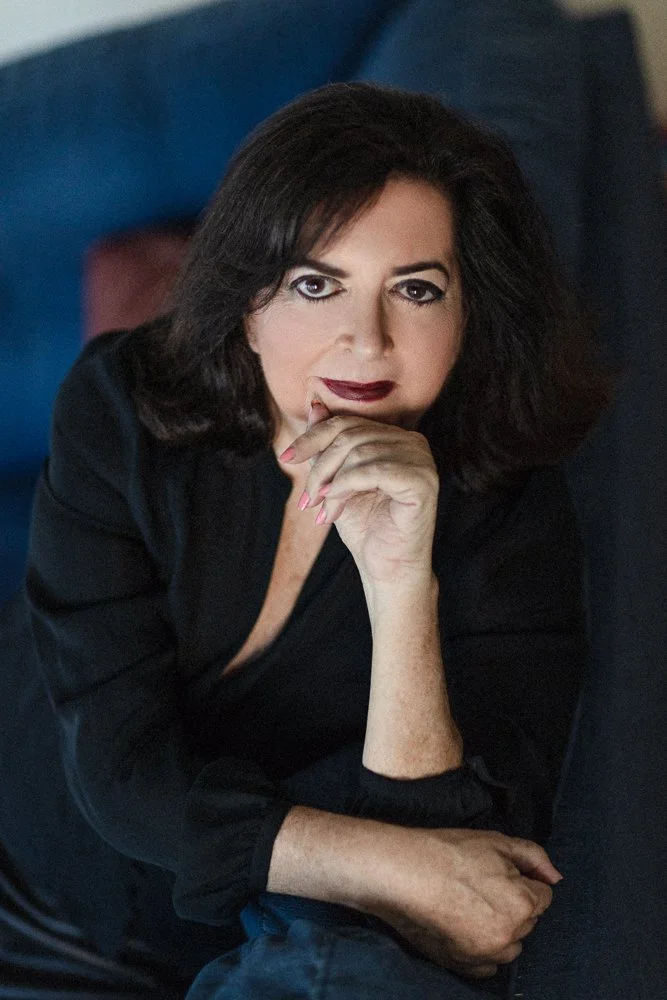
Angela Page is an award winning Latina and Italian American writer and producer with lengthy experience in multinationals such as Microsoft and Honeywell. Spanish native speaker and fluent in Italian and Portuguese. Graduate of NYU’s Stern School of Business, The London School of Economics and the Lee Strasberg Institute. President of the So. Florida chapter of WNBA (Women’s National Book Association).