History Through Fiction Short Story Contest 2026

There is something especially fitting about historical fiction in short form.
A novel can build a world brick by brick, but a short story has to work differently. It must arrive with force. It must trust a gesture, an image, a voice, or a single moment of decision to carry the emotional and historical weight of a much larger world. When it succeeds, the effect can be extraordinary. A few pages can recover a forgotten life, illuminate a neglected corner of the past, or let a reader feel, all at once, the pressure of history and the intimacy of human choice.
That is one reason History Through Fiction is so pleased to announce its fourth annual short story contest.
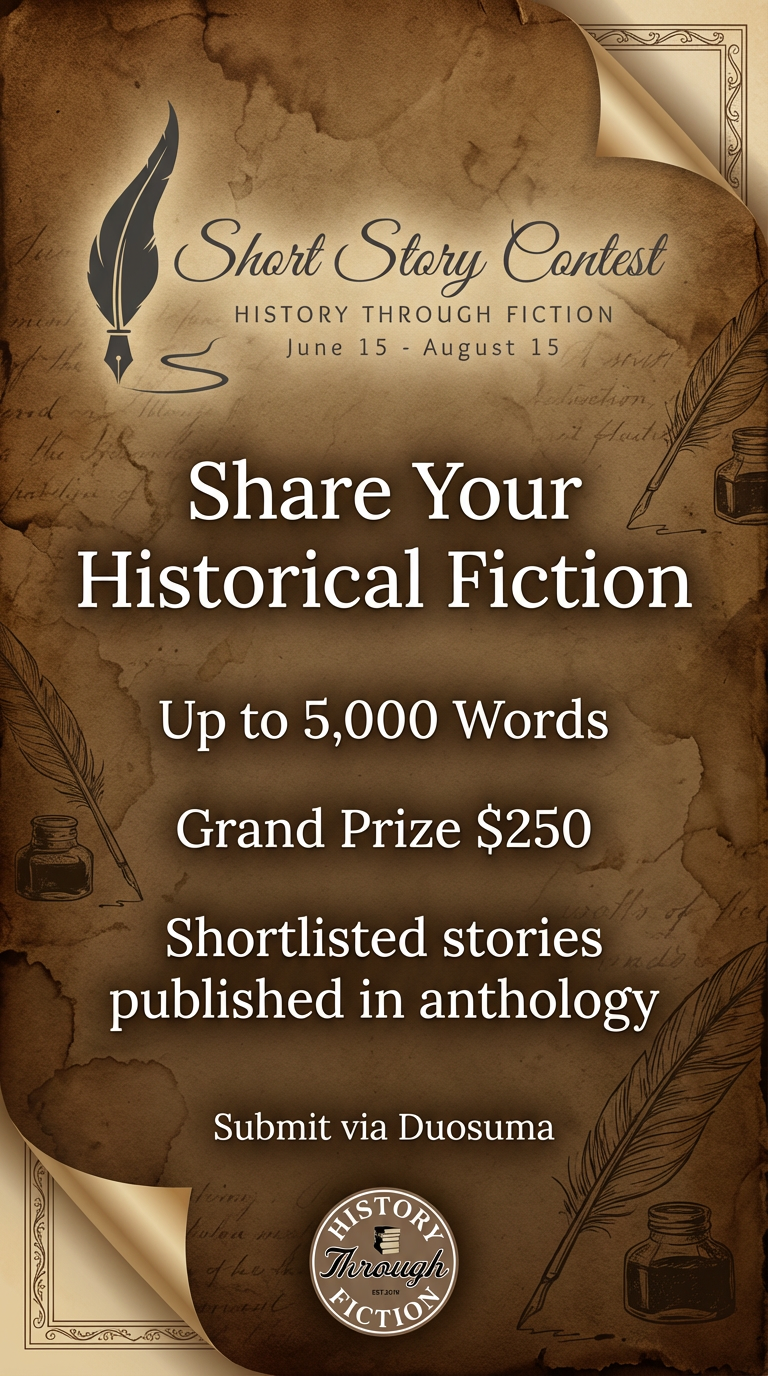
From June 15 through August 15, 2026, we are inviting writers to send us their historical fiction short stories for a chance to be published in our next paperback anthology, receive editorial feedback, and compete for cash prizes—including a $250 grand prize.
For writers, contests like this are never only about competition. At their best, they are also about opportunity: the opportunity to be read closely, to place your work in conversation with a larger writing community, and to imagine your story becoming part of a book that carries many voices from the past into the present.
A contest with a growing legacy
One of the most encouraging things about this contest is that it already has a history of its own.
The first History Through Fiction short story contest produced a grand prize winner in Ellen O’Brien, whose story The Hills That Hold Me went on to be published through the Historical Readers Club.
The second annual contest led to History Through Fiction’s first paperback anthology, An End of Troubles, named after the grand prize-winning story by Hilary Coyne.
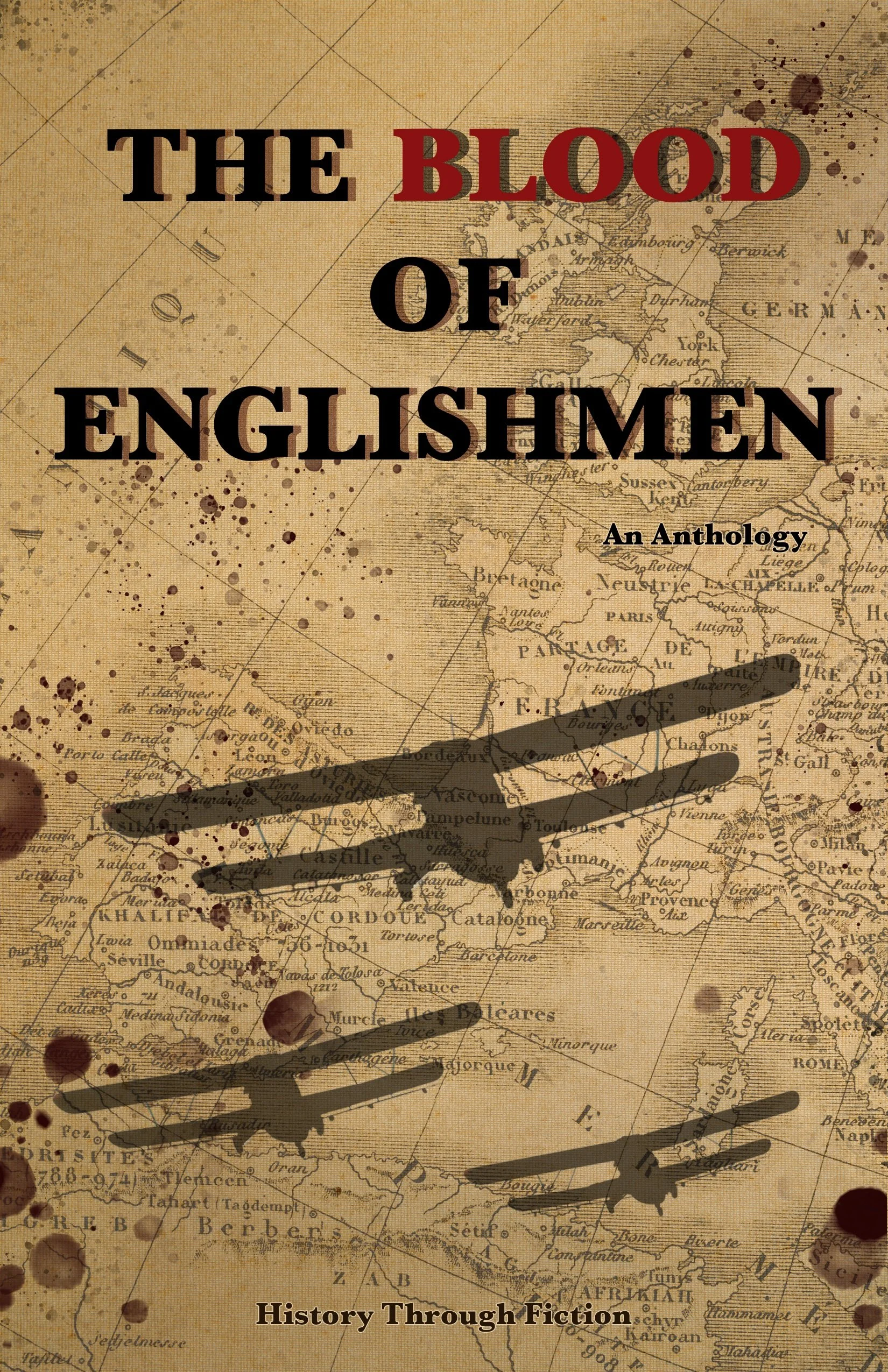
The third annual contest resulted in the publication of the second anthology, The Blood of Englishmen, whose title came from the grand prize-winning story by Cecil Beckett.
That progression matters. It means the contest is not simply a call for submissions that disappears once the deadline passes. It has become part of the larger History Through Fiction mission: to create space for historical fiction that is thoughtful, vivid, and emotionally resonant, and to help strong work find readers beyond the contest itself.
For prospective entrants, that should be heartening. A short story submitted here is being considered not only as a standalone piece, but as part of an ongoing literary project that values both craft and community.
What writers can expect this year
This year’s contest opens on June 15, 2026, and closes on August 15, 2026.
Every submission will be reviewed by the History Through Fiction editorial team, and each story will also receive direct feedback shaped in part by a volunteer judge. That means writers are not simply sending work into silence. They are entering a process designed to offer meaningful response as well as recognition.
Here is the contest timeline as currently planned:
June 15, 2026: Submissions open
August 15, 2026: Submissions close
September 15, 2026: Longlist announced and feedback delivered
October 15, 2026: Shortlist announced
November 15, 2026: Runner-up and grand prize winners announced
March 2, 2027: Anthology release
For shortlisted writers, the opportunity is especially significant. All shortlisted stories will be published in the paperback anthology, and each shortlisted author will receive $75. The runner-up will receive $150 and publication, while the grand prize winner will receive $250, publication in the anthology, and the distinction of having their story title become the title of the anthology itself.
That final detail is one of the contest’s most memorable traditions. A winning story does not simply stand apart; it helps name and shape the larger collection that follows.
Submission guidelines at a glance
For writers already considering an entry, the core guidelines are refreshingly clear:
Word limit: up to 5,000 words
Time period: the story must take place before the year 2000
Historical setting: any historical setting is welcome
Publication status: stories must be previously unpublished
Multiple submissions: accepted
Subgenre: any subgenre of historical fiction is welcome
File types: PDF, .doc, or .docx
Anonymous judging requirement: remove your name and other personally identifying information from the manuscript
There is also a submission fee structure to keep in mind:
$20 early bird fee through July 14, 2026
$30 standard fee beginning July 15, 2026
In addition, contest announcements will be shared through the History Through Fiction newsletter. Submitters may unsubscribe at any time, but the newsletter remains an important channel for updates throughout the contest cycle.
Why a short story contest still matters
For many writers, the most difficult part of finishing a story is not the drafting. It is the moment after: deciding where the work belongs, whether it is ready, and whether anyone will meet it with the seriousness it deserves.
A good contest can help answer that uncertainty.
Historical fiction short stories occupy a special place in the literary landscape. They ask for compression without shallowness, research without overexplanation, and emotional precision without excess. To write one well is to practice some of the hardest and most valuable skills a writer can develop.
That is why a contest like this can be so useful, even apart from the prizes. It gives writers a reason to revise with purpose. It creates a real deadline. It offers the possibility of publication. And perhaps most importantly, it invites writers into a community of people who care about what historical fiction can do: recover voices, complicate inherited narratives, and make the past feel immediate again.
For readers, the contest matters for a different reason. It helps bring new stories into the world—stories that may travel across centuries and continents, and stories that may dwell in moments history books only glance at. Some of the most memorable historical fiction begins not with a famous name, but with a single human question asked in the right place and time.
How to prepare before submissions open
If you are already thinking about entering, now is a good moment to begin.
Revisit the historical world that most compels you. Ask yourself whether the story you want to tell truly belongs in short form—or whether its emotional force might actually grow stronger through compression. Look for the moment of change, the point of fracture, the decision, revelation, or loss that gives a short story its shape.
Then revise with clarity. Historical fiction does not need to prove the quantity of your research. It needs to make the reader feel that the world is lived in, specific, and true. The best stories usually trust well-chosen details, strong character work, and a sense of stakes that emerge naturally from the historical moment.
And before submitting, make sure the manuscript itself is ready on practical terms as well: clean formatting, no identifying information, and careful attention to the guidelines.
A new anthology begins with a single story
Every anthology starts the same way: with one writer deciding that a story is worth finishing, worth polishing, and worth sending into the world.
That is the invitation at the heart of the fourth annual History Through Fiction Short Story Contest.
If you have been carrying a historical story in your mind—whether it unfolds in a battlefield camp, a drawing room, a factory town, a prairie settlement, a harbor, a school, a train carriage, or a kitchen—this may be the right time to bring it forward.
Read through the contest details, mark the dates, and start preparing now so your work is ready when submissions open on June 15.
Learn more and review the contest page: History Through Fiction Short Story Contest
Submission window: June 15–August 15, 2026
Grand prize: $250 and publication in the anthology
The past is full of voices still waiting to be heard. This contest is one way to help them find their story.